
Christian Info News, October 1997
Musicians and fans keep Heard's memory alive
BC Christian News, · Arts
By John Cody
A LEGEND among his peers, Mark Heard never found fame among the general public. Yet it's rare to meet a lukewarm fan -- once exposed to Heard's worldview they are affected not just by what's on the CD, but also in their view of everyday events.
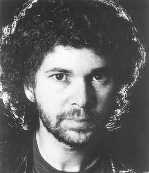
Mark Heard
Mark Heard
Heard, born in Macon, Georgia in 1951, played guitar and piano in a succession of rock and R & B bands throughout his teens. After moving to a more folk-based style, he released a self-titled debut album in 1975. (Extremely rare, it was reissued in altered form three years later as On Turning to Dust).
After studying at Christian philosopher Francis Schaeffer's Swiss retreat, L'Abri, in the mid-'70s, Heard began to perceive the world in ways that would have enormous repercussions on his writing.
In 1979 he was "discovered" by Christian rock pioneer Larry Norman. The Norman-produced Appalachian Melody was a big step professionally, serving notice that Heard was more than a one-dimensional 'Jesus loves you' artist. A perceptive writer, his bluntness and refusal to portray issues in black and white terms were not always welcome in the Christian music industry.
Fingerprint, recorded exclusively for the European market, was issued in 1980, remaining unavailable in North America for 15 years. Heard played nearly all of the instruments on the album, which had an acoustic slant.
Eye of the Storm (1983) was a return to the acoustic format. Two years later he put out Mosaics, the final original album released exclusively to the Christian market. With two compilations Acoustic and the curiously titled Greatest Hits, Heard served notice that he was through with the Christian music industry. The song 'Stuck in the Middle' describes his awkward position: "I'm too sacred for the sinners / and the saints wish I would leave / only God will take me like I am."
Like Sam Phillips, who exited the Christian scene a year later, he felt there was no chance to be a complete artist within the rigid industry. All these albums sold respectable numbers, yet Heard never saw a penny in royalties. To subsidize his income, he began working as a producer, working with 15 other artists, including Pierce Pettis, Brooks Williams and Vigilantes of Love.
In 1986 Heard hooked up with Dan Russell, who at the time was working with U2 as well as managing The Call. Russell got him signed to A & M subsidiary What? Records, recording under the nom de disc Ideola. Tribal Opera, in which Heard played all the instruments himself, was electric and angry, with an energy never apparent on earlier releases. Alienation and frustration were the predominant themes.
In 1990, after only four releases, What? Records dissolved, in part due to frustrations over attempts to release material into the Christian marketplace, which resulted in disagreements over lyrical content.
Russell then formed Fingerprint Records, a label designed to get Heard's music to the public without any interference. The debut release, Dry Bones Dance offered up a mix of Cajun roots coupled with desperate emotional paeans. Packing a powerful punch, it stands as his most complete statement. Those aware of his work felt Heard would finally gain widespread recognition, but the disc went unnoticed.
The introspective Second Hand came in 1991. Primarily acoustic, the album explored personal relationships, and contains two of his most moving compositions in the title track and 'Look Over Your Shoulder.' This stellar release led to an invitation to open on a Bruce Cockburn/Sam Phillips tour. Days before the first show Heard's father died, forcing him to pull out of the tour.
While talks with major labels continued, Heard's last album during his lifetime was released, again with Fingerprint. Satellite Sky showed the profound effect his father's passing had on him. Sonically and lyrically this is the hardest of his albums to digest, but conversely one of the most rewarding.
In support of Satellite Sky Heard played a rare show at Cornerstone, an annual festival in Illinois that features artists on the fringe of the Christian scene. Midway through the performance Mark suffered a heart attack, but managed to finish the set before collapsing backstage. Following a second attack, he passed away six weeks later, in August 1992.
Fingerprint released High Noon the following year. A wonderful primer, the disc offers a generous sampling of tracks from all three Fingerprint albums and adds three unreleased songs. A collection of 12 tracks from the early years, Reflections on a Former Life was issued by another label, but with meagre playing time and minimal packaging the disc smacked of opportunism.
In 1994 a tribute video, Strong Hand of Love, featuring footage of a benefit concert held to help pay Heard's medical expenses (he died uninsured, incurring costs of $90,000) plus interviews with various friends including Bruce Cockburn, Bill Mallonee of Vigilantes of Love, Pierce Pettis, and Victoria Williams). The same year brought a companion tribute disc of the same name, including studio performances of all of the above plus Buddy and Julie Miller, Phil Keaggy, The Choir and several others. A second tribute album was released last year.
A double disc set, Orphans of God, collected most of the tracks from Strong Hand, augmented by a further 20 performances, including Colin Linden, Brooks Williams, Olivia Newton John and The Williams Brothers.