
BCCN: Wetlands
BC Christian News, · Top Stories
• BC Christian News • JUNE ISSUE 1998 • VOL. 18 #6 • Formerly "Christian Info News" •
Couple is helping preserve wetlands in Lebanon
- - - - - - - - - - - - - - - - - - - - - - - - - - - - - - - - - - - - - - - - - - - -
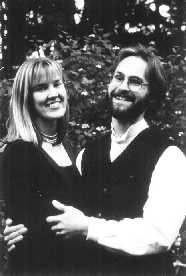
Karin and Alain Boisclair-Joly are two young Canadian volunteers working in Lebanon with the A Rocha Trust, a Christian wildlife and habitat conservation group. Karin is from Vancouver, and Alain from Quebec. They have spent the past few months in Qab Elias, a town near the Aammiq Marsh in the Bekaa Valley. They are helping to establish a field study centre, which will act as a focus for environmental research and education. This is Karin's account of their early weeks in the area.
Lebanon's mysteries still enchant us, but are no longer as startling as they were at first. The mosque's pre-dawn loudspeaker music, which can leave one wide-eyed in the dark and wrapped in the spell of those eerie soaring voices, rarely wakes us as it used to do. We now hang our laundry off our balcony and wave to our neighbors on other flat rooftops.
It is second nature now to carry our passports everywhere, ready for inspection at c manned by variously uniformed officials. We have found people to be very friendly, even when language is a barrier. We have been invited in for traditional coffee by strangers, had young boys offer to carry our groceries and been given unsolicited rides from the country into town.
 |
Every conversation with the British families in Qab Elias begins and ends with an analysis of the weather. It is now of importance to us too, because of the Aammiq Marsh. The marsh, the largest and most significant wetland in the 450 kilometres between a site in Israel and one in Turkey, is dependent on precipitation as well as spring water for its well-being.
I will not forget our first visit to the marsh. The day after we arrived we were taken on one of the marsh-mapping expeditions. From the top of a tall, rocky knoll named Qalaat el Mudiiq, we gazed down on this watery haven we had come to help protect. It was smaller than I expected, a narrow band meandering across the valley for four and a half kilometres. We were shown all the farmers' drainage ditches that have reduced the size and depth of the marsh, including the huge new ditch that arrows off into the distance. Some of these are for irrigation of the adjacent fields, while many were cut into the marsh in order to make those adjacent fields. To our delight, the field most recently separated from the marsh was demonstrating a desire to return to it; a large spring-fed pool was slowly spreading across it!
While we watched buzz-ards and kestrels circling, we could hear reports from hunters' guns. The ground is littered with empty cartridge cases wherever one goes, al-though hunting is banned by law. More than 100 bird species run the gauntlet of hunters each spring and fall as they come to rest at the wetland during their migration. We ran into professional hunte who have dug pools and built hides on the marsh land. Peering through a reed bed at them, we could see mallards trapped by a wire at the pool side, unwittingly acting as decoys.
In another part of the marsh, we encountered a fire raging across dry reed beds; a shepherd had lit it as he tended one of the two 100-head sheep herds grazing the marsh that day. The practice permits new reed growth for the approximately 6,000 sheep that graze the marsh annually, but ruins the wetland habitat.
Since that day we have rejoiced to see large flocks of duck wheeling over the marsh, and held our breath as a great white egret settled to the ground before us. The shrill squeak of voles accompanies our sightings of beautiful creatures new to us: black stork and bluethroat, tree frogs, lizards and terrapins, jackal and fox, red anemones and wild narcissi. The avenue of trees teems with songbirds and the reed beds hide waterfowl.
The marsh is lovely now and the spring has not even officially begun, nor the migration. The more we walk it and leap the ditches to ex-plore further, the more it reveals its inhabitants, large and small, all dependent on this source of water for life.
Winter rains and snow-melt from the mountains flooded the marsh in February and made it less accessible to hunters and sheep. Our hopes rose with the water. We now worry as unseasonably warm temperatures have started to dry it again.
We have seen the junction where the Ha River, polluted and stinking with raw sewage from Qab Elias, meets a large drainage canal full of clear, sweet spring water pouring out of the marsh; we have noted how the former backs up into the wetland at high water.
Farmers and their machines re-dig ditches and scatter poisoned grain to combat the huge population of crop-damaging voles. We have seen a young male pallid harrier dying slowly from his toxic-vole meals. A barn owl shot by superstitious hunters now lies on our balcony, bones whitening in the sun.
Our colleagues are experimenting with Arabic names of the A Rocha Aammiq project. One I particularly like translates as 'springs of life.' How appropriate, and how urgent is its need for protection.