
BCCN: 'Thread of faith'
• BC Christian News • JULY ISSUE 1998 • VOL. 18 #7 • Formerly "Christian Info News" •
Canada's 'thread of faith'
- - - - - - - - - - - - - - - - - - - - - - - - - - - - - - - - - - - - - - - - - - - -
By David F. Dawes
"MUCH OF what is written about the prominent people in Canada's history fails to ask the crucial question: Why? Why did these men and women live as they did? Why did they take risks and make sacrifices? Why were they moved to great acts?"
As an answer to his own question, Chilliwack's Michael Clarke has produced Canada: Portraits of Faith, a lavishly illustrated book which presents biographies of extraordinary Christian men and women. The book is a "three year labor of love" for Clarke, president of Reel to Real Ministries.
His introduction further clarifies the concern which motivated the project: "Ignoring the role of faith in the lives of so many great Canadians overlooks an essential ingredient in the remedy for our present-day cultural malaise."
The book consists of concise portraits of 52 individuals, emphasizing their significance in Canadian history and the role played by their faith. Among the 39 writers who contributed biographies are several from B.C., including: John Stackhouse Jr., newly-appointed Sangwoo Youtong Chee Chair of Theology at Regent College; Trinity Western University professor Bob Burkinshaw; Ted Gerk, head of the Pro-Life Society of B.C.; and Lloyd Mackey, founder of BC Christian News.
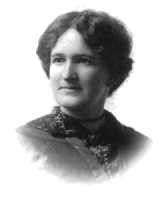 |
Each article is accompanied by full page portrait; most of them are vintage paintings, some well over a century old. The book was printed and designed in Chilliwack, and released in April; it has already sold out its first print run of 5,000 copies.
This brings Clarke particular satisfaction, considering that the project was turned down by major publishers which, he says, "felt that the book had no market."
Canada: Portraits of Faith is now being sold in bookstore chains such as Chapters, W.H. Smith and Coles. It has been recommended by Jean Charest, David Mainse and Brian Stiller, among others.
It has also caught the attention of the secular media. The Edmonton Sun describe it as "visually stunning and intellectually powerful," and stated: "If nothing else, Portraits of Faith should give the reader a sense of how much impact Christianity has had on Canada. The Christians portrayed in the book helped found medicare, numerous hospitals and universities, and ensured women could vote. How foolish then, that we now insist that Christians leave their faith at the door."
The reason for the book's success, Clarke speculates, is that "it seems to have identified a longing to know more about our nation's story."
That story, as the book makes clear, has an impressive breadth and depth, encompassing entrepreneurs, preachers, social activists, nuns, politicians and writers. It is a story, he contends, whose telling is long overdue.
"Christians at one time had a very significant voice in the marketplace of ideas. It's time to return to the public square. We shortchange our culture when we as Christians stay in our insular subculture."
To remedy this, the book presents a pantheon ranging from 17th century Jesuit martyr Jean Brebeuf and Jeanne Mance, co-founder of Montreal, to author/activist Nellie McClung and Alberta premier Ernest Manning. It includes several high-profile figures, such as Governor General Georges Vanier, tycoon Timothy Eaton, NDP leader Tommy Douglas and John Buchan, author of many novels, including The 39 Steps.
More obscure individuals are also recognized, such as the 19th century Ojibwa missionary, Henry Bird Steinhauer.
Some examples will likely come as a surprise to many people.
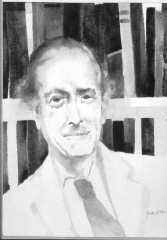 |
One of the latter is the renowned "prophet of the media," Marshall McLuhan, author of The Gutenberg Galaxy. His biography states: "McLuhan applied his pronouncement of 'the medium is the message' to Christ. It is not only the sayings of Christ that are important, he maintained, but his very person . . . For him, "all human technologies were negligible compared with the coming of Christ." McLuhan wrote: "The incarnation was the ultimate extension of man, the ultimate technology."
Several British Columbia notables are included: William Duncan, 19th century missionary to natives in northern B.C.; his contemporary, Father Charles Pandosy, who ministered to natives and planted the first fruit trees in the Okanagan; Premier John Robson, one of the people most responsible for B.C. joining Canada; and the colorful chief justice Matthew Begbie, who was "undeservedly referred to as the hanging judge," according to David R. Williams, adjunct professor and author in residence for the University of Victoria's Faculty of Law.
One particularly controversial figure is William 'Bible Bill' Aberhart, the Alberta founder of the Social Credit Party and a noted Presbyterian broadcaster. The biography by John Stackhouse delineates his gradual alienation of the evangelical community:
"Aberhart taught that baptism should be performed in the name of Jesus only, with no mention of God the Father or the Holy Spirit . . . [He] went further, assuming the title apostle, and . . . began to denounce other Canadian denominations."
Michael Clarke says Aberhart's inclusion in the book was essential.
"He certainly moved away from evangelical views to more aberrant ideas; but he is an integral part of the Christian history of Canada. If you want to have credibility inside and outside the church, I think it's important to tell the whole story, warts and all. We took great pains to make sure we upheld historical integrity and accuracy; we wanted the book to stand up to academic scrutiny. We didn't want a whitewashing of Canada's history from only a 'preacher's perspective.' I don't think you need to embellish to make God look good; he's already awesome enough."
While the book extols the value of Canada's biblical heritage, he hastens to add: "The purpose is not to turn the clock back; the book isn't saying 'if only we could go back to 1854.' The purpose is to show the thread of faith woven into our cultural fabric, and to show that the same God that empowered these people is the same God available to us today."
Clarke concludes: "I think if we understand the sovereign hand of God on this nation, as demonstrated in the lives of these individuals, we can then begin to have a recognition of God's providence and his direction for our future."