
BCCN: Corrections Canada's Allard will focus on restorative justice
BC Christian News, · Top Stories
• BC Christian News • DECEMBER ISSUE 1998 • VOL. 18 #12 • Formerly "Christian Info News" •
Corrections Canada's Allard will focus on restorative justice
- - - - - - - - - - - - - - - - - - - - - - - - - - - - - - - - - - - - - - - - - - - -
By Lloyd Mackey
MORE THAN any place else, perhaps, Corrections Canada is the focus of whatever is right and wrong in our justice system.
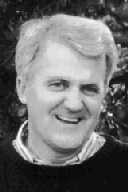 |
It was that awareness that led Pierre Allard, Correction's 'chief chaplain,' to decide, a couple of years ago, to take a closer look at the subject of restorative justice.
The result was a sabbatical from his work as director-general of Corrections Canada's chaplaincy service, during which he earned an MDiv at Queen's Theological College in Kingston, Ontario. His research concentrated on a restorative ministry approach to corrections.
This fall, Allard has been appointed to the post of deputy commissioner of Corrections Canada. In that role, he will be in a unique position to bring his professional and spiritual insights to the service's larger task -- administering the nation's prisons and related correctional programs.
Allard looks forward to raising awareness for restorative justice within Corrections Canada. That is a professional task. Apart from that, however, his faith nudges him to encourage Canadian seminaries to include the study of restorative justice by future pastors.
Allard was ordained as a Catholic priest, and served as a chaplain to university students during the late '60s in New Brunswick. A pivotal point in his pilgrimage was his re-examination of the nature of the church -- although not his faith in Christ -- which led him to seek acceptance of his ordination vows by the Baptist Convention of Ontario and Quebec. That the Baptists did so, rather than forcing him to repudiate his previous Catholicism and be reordained, was of considerable help in relating to Protestant and Catholic -- and other -- chaplains in Corrections Canada.
Allard began his prison chaplaincy work in 1972 at Archambault near Montreal. His experience at that fortress taught him about the opposite to restorative justice. He saw inmate life at its darkest, often with little hope for rehabilitation.
For a decade, starting in 1977, Allard was chaplain at Dorchester in New Brunswick. His director-general role began in 1987.
But it was not simply his profession that awakened him to the concept of restorative justice. Through his involvement in the International Prison Chaplains' Association (IPCA), he met chaplains from 80 countries, many of them with primitive and inhumane conditions -- not to mention a substantial number of political prisoners.
Allard's international contacts have been enhanced, as well, through his membership in the Lausanne Committee for World Evangelization, which sponsored major congresses in 1974 and 1989 in Lausanne and Manila, respectively.
In 1980, Allard's own brother was murdered and thrown into a field. Alienated through the experience, he felt like a victim.
Allard's comments about restorative justice are peppered with references to people like:
• Charles Colson, who was the keynoter at the IPCA 1995 world conference held in Ottawa;
• Mennonite victim-offender mediation advocate David Gustafson, based in Langley;
• Wilma Doerksen, founder of Victims Voice, whose book Have You Seen Candace grew out of the murder of her teenage daughter;
• CAVEAT founder Priscilla de Villers, whose daughter was murdered also, in Hamilton. CAVEAT (Canadians Against Violence Everywhere and Terminating has been a leading advocate of victims' rights. While much of what occurs in the victims' rights movement comes from the law-and-order sector of society, proponents of restorative justice see that movement as a vital part of the accountability and restoration process.
For Allard, in his new position, the challenge of bringing a faith perspective is an exciting one. And he sees the restorative justice issue as timely in its impact, both in the Canadian corrections system and in the Christian community.