
BCCN: Steveston's sentinel of history
BC Christian News, · Top Stories
• BC Christian News • JANUARY ISSUE 1999 • VOL. 19 #1 • Formerly "Christian Info News" •
Steveston's sentinel of history
- - - - - - - - - - - - - - - - - - - - - - - - - - - - - - - - - - - - - - - - - - - -
By Esther McIlveen & Harold Steves
No matter where people have been reared, many have a dream of living in a 'small town.' The longing for a small town may well be an archetype in the unconscious of the individual.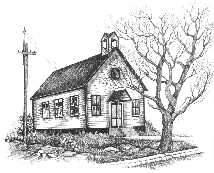
Steveston, a part of Richmond which was once a Japanese fishing village, has become the symbol of that 'small town,' where you feel connected to the people, to the land and water, and to the buildings. It's a place where you can hear cows mooing, see herons rise and serenely disappear into the azure sky, feel the tug of a kite at Garry Point, munch fish and chips among the boats at the waterfront, and watch the sun set over the dyke. People nod and call each other by name.
Every small town used to have a church at its heart. The church represented home. As Emily Dickinson felt, "Home is synonymous for God." The church was the place where you were baptized as an infant, belonged as a teenager, later were married and eventually buried.
Steveston has a church like this. The Steveston Church was built over a century ago, and has stood in the centre of town, durable and revered, like a sentinel of history. It was the church where Japanese and Native Indian fishermen and Caucasian settlers worshipped together. It has been featured in many old photographs.
It was built in 1894 by volunteer labor, at a cost of $700. It began as a Methodist Indian Mission, with Caucasian settlers joining the congregation for services. A Japanese Methodist Mission was built at the Phoenix Cannery in 1895, and became the first hospital when a typhoid epidemic broke out. The two church congregations were amalgamated in 1953, shortly after many Japanese Canadian families returned to Steveston from the internment camps where they had been detained during World War II. This reflects our multicultural society in Steveston today.
The people of Steveston echo memories about this church. One woman in a local bank was the last one to be married here. When a larger church was built in 1978, and the original church building was sold, one man who attended the church removed all the indoor light fixtures and kept them. He felt that some day the church would once again be used for its intended purpose. Another person kept the original sacramental wine glasses.
One man, whose wife has died, visits the church on the anniversary of his wedding.
The preceding passage was adapted from an essay in Time Echoes Softly, an illustrated book by Michael Duncan about the history and natural beauty of Steveston. It was produced by The Father's Garden, to raise funds for the restoration of the Steveston Church. Call (604) 272-1571.