
BCCN: Higher courts will decide Trinity Western, Surrey cases
• BC Christian News • FEBRUARY ISSUE 1999 • VOL. 19 #2 • Formerly "Christian Info News" •
Higher courts will decide Trinity Western, Surrey cases
- - - - - - - - - - - - - - - - - - - - - - - - - - - - - - - - - - - - - - - - - - - -
By Peter T. Chattaway
IT'S DEJA VU all over again. Two court decisions that could have a serious impact on the role that religious people are allowed to play in the public school system are being appealed by the parties that lost them.
The B.C. Court of Appeal ruled December 30 that the B.C. College of Teachers had stepped outside its proper jurisdiction when it rejected Trinity Western University's proposed five-year teacher education program because of Trinity's policies on homosexuality.
 |
The court upheld an earlier ruling by the B.C. Supreme Court, which ordered the College to approve the program. But the College is now asking for leave to appeal the case to the Supreme Court of Canada. If leave is granted, the case could drag out for another year or two. That means Trinity has to put its program on hold again, perhaps indefinitely.
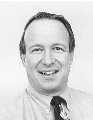
TWU executive vice president Guy Saffold said he was optimistic that Trinity would win the case again, using the same arguments it had made twice before.
"We prepared from the very beginning for a trip to the Supreme Court, recognizing that was a possibility, and we built our case very carefully," he said.
Meanwhile, the Surrey school board is appealing the B.C. Supreme Court's December 16 decision that they reconsider approving three books about same-sex parents -- Asha's Mums, Belinda's Bouqet and One Dad, Two Dads, Brown Dads, Blue Dads -- for use in kindergarten and grade-one classrooms, but without taking the religious concerns of parents into account.
The school board's appeal may not get past the gate. Joe Arvay, the lawyer representing the teachers who wanted to use the books, claimed he did not receive the school board's notice of appeal until four days after the January 15 deadline. That could delay the appeal for several weeks and prevent it from going to the B.C. Court of Appeal altogether.
But board vice chair Gary Tymoschuk said the school board's lawyers filed on time, sending their package by courier to Arvay's office the day before the deadline.
"As far as I'm concerned, I think Mr. Arvay's trying to make this an issue, and I don't see it as an issue, nor does our council see it as an issue," said Tymoschuk.
He added, "I'm reluctant to lay blame, but I do know that with regard to couriers, they don't usually take four to five days!"
Trinity Western
The Trinity dispute began in June, 1996, when the College refused to accredit Trinity's proposed teacher education program on the grounds that the university's "community standards" -- which encourage respect for all persons but prohibit such practices as extra-marital sexual activity, abortion and involvement in the occult -- could produce teachers who discriminated against homosexuals.
Without the BCCT's accreditation, Trinity education students must take their fifth year of studies at Simon Fraser University. Trinity appealed the College's decision to the B.C. Supreme Court, which ruled in Trinity's favor in September, 1997 and ordered the College to approve the program. The College then took the case to the B.C. Court of Appeal, which upheld the earlier ruling in a split 2-to-1 decision.
Justice Michael Goldie, writing for the majority, noted that a number of Trinity's former education students already teach in public schools, and that there is "not one bit of evidence that any one of them has behaved in the classroom in a manner incompatible with the standards of the Canadian community."
Trinity has received support from a variety of sources. The B.C. Civil Liberties Association and the Catholic Civil Rights League both intervened on Trinity's behalf in court, and an editorial in The Vancouver Sun advised the BCCT to "give up [the] fight against TWU" and "find better things to do."
However, Madam Justice Anne Rowles argued that teachers educated at Trinity could be perceived as discriminatory. In her dissenting opinion, she wrote that, while such teachers may be tolerant of homosexuals, "the public interest in the public school system may also require something more than mere tolerance."
BCCT registrar Doug Smart declined comment, pending a news release that had not yet been distributed at press time. He did say, however, that Justice Rowles "set out the reasons why we have to appeal. Her dissenting opinion points out that there is a different way of looking at this."
Representatives of the BCCLA and the CCRL said they would continue to assist Trinity, funds permitting. "Unfortunately, when you call for something more than tolerance, you gut tolerance altogether," said Michael Markwick, former executive director of the CCRL.
BCCLA executive director John Westwood said it was "totally inappropriate" for regulatory bodies such as the BCCT to apply Human Rights legislation. He added, "In any case, since Trinity Western is a private institution, it has a perfect right to limit participation and membership to people who share its views and are willing to live by its code of conduct."
Now that the case is being taken to the highest court in the country, Trinity may also get help from the Evangelical Fellowship of Canada, which has been observing the case but has not yet taken an active role. "The stakes grow at each court level," said EFC director of national affairs Bruce Clemenger.
Surrey school board
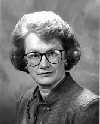 |
Meanwhile, Surrey school board chair Heather Stilwell said she was concerned that B.C. Supreme Court Justice Mary Saunders' ruling -- that religious considerations have no place in a secular school system -- could undo the efforts that have already been made to promote multiculturalism and to accommodate parents of all faiths.
"How do you separate people's culture from their religion? You don't do that, it's not possible," she said, citing as an example the fact that Sikh children are allowed to wear their turbans and to carry the kirpan, a ceremonial dagger, even though these things violate school regulations against hats and weapons. "Those exemptions are made taking into consideration the religious concerns of the Sikh community," she said.
Stilwell also expressed concern that parents who opt for alternatives to classes on sexuality may lose that freedom, too. "If a parent wants their child out of sections of the Personal Planning, and the reason they want their child out of there is a religious one, I believe that this Justice is telling us that we can't take that into consideration," she said. "Anybody who attends church, synagogue, temple will have their motives questioned."
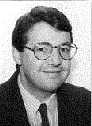
The BCCLA, however, argued that the school board -- which, unlike Trinity, is a public institution -- did not have the right to ban the disputed books. "It's a different kettle of fish," said Westwood. "It's not okay to discriminate against gays and lesbians, and it's not okay to import religious considerations into the curriculum or into the decision-making. That's why, with the same set of principles, we take different positions in each of the two cases."
 |
People on both sides of the issue have pointed out that the Surrey school board wouldn't have had to deal with the books in question in the first place if Minister of Education Paul Ramsey had put them on the provincial list of teaching resources, as gay and lesbian teachers have asked him to do.
But Tim Stevenson, MLA for Vancouver-Burrard and an openly gay United Church minister, told the gay newspaper Xtra West that books of fiction are not placed on such lists. He also encouraged voters upset with the school board to vote the conservative trustees out of office in this November's civic election.
Murray Warren, the media contact for Gay and Lesbian Educators of B.C., declined comment.
Vancouver lawyers Iain Benson and Brad Miller, commenting on the school board case in Lex View, a periodical legal opinion published by the Centre for Renewal in Public Policy, argued that Justice Saunders made a mistake in interpreting "secular" to mean "non-religious" instead of "non-sectarian." In doing so, they said, she "is making new law, effectively dragging liberal principles in an illiberal, anti-religious direction."
This direction, they added, would effectively exclude the more than 90 percent of Canadians who say religion is an important part of their lives. "To begin from the position that religion has no place in public deliberation is not only not warranted by the Charter, but attacks it from within," they wrote.