
BCCN: Concern for women who make our clothes
BC Christian News, · Top Stories
• BC Christian News • APRIL ISSUE 1999 • VOL. 19 #4 • Formerly "Christian Info News" •
Concern for women who make our clothes
- - - - - - - - - - - - - - - - - - - - - - - - - - - - - - - - - - - - - - - - - - - -
By David F. Dawes
THE PROBLEMS of female garment workers were the focus of a recent visit to British Columbia by a Guatemalan activist.
 |
Olga Rivas is a representative of GRUFE, an organization advocating better treatment for women workers in Central American clothing factories. She spoke March 13 at Gordon Presbyterian Church, in Burnaby; the event was sponsored by Ten Days for Global Justice, an inter-church organization focused on world development concerns. She also spoke at a number of other locations.
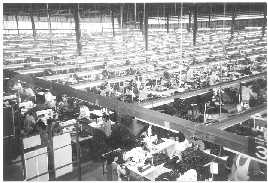
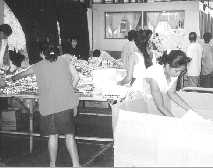
Central America has almost 70 garment factories, or maquilas; 80 percent of the 240,000 maquila employees are women. According to Vancouver's Trade Union Group (TUG), "Maquila owners have become infamous for their abuses of workers' rights. Workers in maquilas endure long hours, forced overtime and unhealthy working conditions -- for minimum pay." To address these concerns, GRUFE has been sponsoring a campaign called 'Employment -- Yes, But with Dignity.'
Rivas identified several problems facing maquila workers: being fired for getting pregnant; dismissal for political beliefs; poor access to the social security system; and violence from maquila owners. She also said unions were generally smashed soon after their formation.
She said that spiritual support was a key factor in sustaining many of the women: "Going to church is like a resource -- a place where they can get answers for some of their problems."
 |
There has been some progress in Nicaragua. A law was recently passed, governing work in the Free Trade Zones, which states: "Employers must insure that all workers are given fair conditions of work without discrimination based on pregnancy, race, religion, age, disability or political beliefs." The law obligates employers to guarantee workplace safety, and protection from "physical, mental or verbal abuse."
TUG's Barbara Wood declares that the law was taken "almost word for word" from the Code of Ethics created by Central American activists with the Network in Solidarity with Women Maquila Workers.
Despite such improvements, however, Ten Days and TUG maintain that unacceptable conditions are still prevalent in Guatemala and elsewhere. They are calling on large brand name marketing companies and the Canadian government to "take responsibility for ending sweatshop abuses" in Central America.
Rivas is appealing for Canadian churches to promote the Wear Fair Campaign sponsored by Ten Days. Among other things, supporters are asked to fill out cards stating: "As an ethical consumer, I want to support retailers who are taking their share of responsibility for eliminating sweatshop labor . . . What steps is your company taking to guarantee that the apparel you sell is produced by workers who receive a living wage, have the right to organize and have safe and humane working conditions?"
Ten Days urges people to send the cards to companies such as The Bay, Sears Canada, Wal-Mart and Mark's Work Wearhouse.
Call Ten Days for Global Justice at (416) 463-5312.