
BCCN: Prayers are offered up for war-torn Yugoslavia
• BC Christian News • MAY ISSUE 1999 • VOL. 19 #5 • Formerly "Christian Info News" •
Prayers are offered up for war-torn Yugoslavia
- - - - - - - - - - - - - - - - - - - - - - - - - - - - - - - - - - - - - - - - - - - -
By Walter Bergen
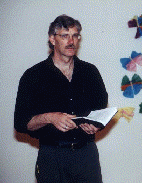 |
MEMBERS OF Langley Mennonite Fellowship were joined by worshippers from the Fraser Valley April 22 for an evening of 'Prayers and Reflections for Yugoslavia.' Worshippers were seeking an alternative to the violence presently engulfing the region.
Yugoslavia, which means 'Land of the South Slavs,' was formed following World War I. Unfortunately, the people of that land did not draw their borders; outside powers did. People who had existed in communities of mixed cultures and religions for hundreds of years, with frequent major and minor conflicts, became one new nation.
Serbian Orthodox, Croatian Catholics and Bosnian Muslims shared the same language and racial background, but had never been united politically before 1918. The new state remained fractured until communists, led by Josef Tito, emerged as a dominant and unifying force at the end of World War II.
Through a delicate balancing act, Tito held the various competing nationalistic forces within a federation, from 1946 until his death in 1980. Then, the delicate political compromise between various confessions and communities began to unravel. Tito had failed to establish a free press, judicial system or other institutions where re-emerging nationalistic tensions could be addressed.
Yugoslavia's disintegration accelerated in 1990. In 1991 Slovenia and Croatia seceded from the federation. Both Croat and Serb political leaders used this period of transition and instability to unleash hate-filled radio and TV broadcasts, reviving memories of historical 'offences' and using them for political advantage.
In a phobic climate, war began. First in Slovenia, then Croatia and then Bosnia --with ethnic and nationalistic propaganda as the major trigger, militias attacked and tried to form safe ethnic enclaves. People feared the 'other' nationality or religion would force its rule over everyone else. All sides committed atrocities. The present tension and conflict in Kosovo and Montenegro is a continuation of these recent events.
Pastor Henry Krause called the evening vigil as a response to a request by MCC Europe director Hansuli Gerber for Christians in Europe and North America to set aside a time each week to fast and pray.
In his opening comments, Krause said, "In time of conflict we don't know what to do, how to be faithful. We feel powerless to stop violence. When we act, when we repent and pray, we begin a path of faithfulness to the God of peace."
Worshippers were invited to take pictures of evangelical Yugoslavian refugees and refugee workers to their pews and "sit with them, symbolically worship Christ with them."
The story of Ivo Markovic was read as part of the vigil. Markovic, a Catholic priest from Sarajevo, visited his ancestral home and the Muslims who now inhabit his former birthplace. He inquired of their welfare, and learned that they too were displaced. MCC partners with Markovic, who leads a ministry of reconciliation called Face to Face.
Sladjana's Journey, an MCC video, was shown; it is the story of two Serbian children who are from Croatia and had to flee their homes with their parents. (MCC B.C. has just learned they had to flee their new home in Serbia due to the bombing.)
A statement by a Serbian activist was read. Speaking in 1994, Jasmina Tosic, co-director for Bread of Life, a ministry to refugees in Serbia sponsored by Baptist and Pentecostal congregations in Belgrade, reflected on her history and that of the Mennonites: "You Mennonites have learned from your mothers and fathers to forgive the harsh injustices of the past. You can build a new future because you forgive. This is the heritage we want to have in Christ: Forgiveness and a new future."
Krause read several appeals from Eastern Europe. Ecumenical Patriarch Bartholomew called on the warring sides to "cease fire immediately and permanently. We beseech them to use mutual understanding and mutual concession to resolve peacefully their regional, international and worldwide disputes, in order that the God of peace and mercy might bless them and all people."
Worshippers shared in a litany; and a ritual partaking of bread and salt, a traditional Slavic blessing of peace and prosperity, concluded the service.
Worshippers were encouraged to donate toward refugee assistance, and write letters to their Members of Parliament and the Prime Minister expressing their views.