
BCCN: The Requiem is alive and well in Rutter's hands
• BC Christian News • AUGUST ISSUE 1999 • VOL. 19 #8 • Formerly "Christian Info News" •
The Requiem is alive and well in Rutter's hands
- - - - - - - - - - - - - - - - - - - - - - - - - - - - - - - - - - - - - - - - - - - -
By David F. Dawes
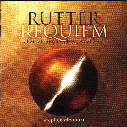
• Cambridge Singers: Rutter - Requiem & Magnificat, Collegium, 1998.
• Choir of King's College, Cambridge: Rutter - Requiem, EMI Classics, 1998.
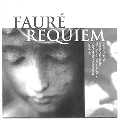
• Winchester Cathedral Choir: Faure - Requiem, Virgin Classics, 1998.
 |
THE REQUIEM is one of the more daunting forms of sacred choral music. Many of the major classical composers have tried their hands at it, including Bruckner, Donizetti, Mozart, Verdi, Schumann, Cherubini and Berlioz; the results have often been awe-inspiring, aesthetically and spiritually.
Based on the Catholic Missa pro defunctis, the liturgical Mass for the Dead, the traditional requiem explores several themes: a plea for eternal rest; the wrath and judgment of God; deliverance from hell by Christ, through the archangel Michael; the holiness of God; and the remission of sins through Christ's sacrifice and mercy.
Since the mid-19th century, some composers have experimented with the form. Brahms, in A German Requiem, jettisoned the Catholic text in favor of a cross-section of scripture from the Lutheran Bible; and Britten's War Requiem combined the Catholic text with poems by Wilfred Owen.
 |
Some composers, such as Fauré and Durufle, have omitted the 'Dies Irae' (Day of Wrath) section of the text. An imposing return to the traditional form was provided in the 1980s by Krzysztof Penderecki, in his Polish Requiem.
One notable artist who prefers to bypass the wrath of God is British composer John Rutter. His beautiful 1985 Requiem has recently been issued in two different editions, as has his arrangement of Faure's Requiem.
In addition to his omission of the 'Dies Irae,' Rutter has augmented the standard Latin text with Psalms 130 and 23, and portions of the Book of Common Prayer.
This is especially effective in his version of the 'Agnus Dei.' The traditional text implores the Lamb of God to grant eternal rest to the dead; this is followed by Rutter's additions: "Man that is born of a woman hath but a short time to live . . . In the midst of life, we are in death . . . I am the resurrection and the life, saith the Lord."
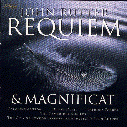 |
Rutter himself conducts the Requiem on the Collegium release, inspiring fine work by the Cambridge Singers, the City of London Sinfonia, and sopranos Donna Deam and Caroline Ashton. The recording also includes Rutter's Magnificat, featuring soprano Patricia Forbes. This edition is a recent compilation of releases from 1986 and 1991.
Again abetted by the City of London Sinfonia, the EMI recording of the Requiem features the superb Choir of King's College, Cambridge, under Stephen Cleobury's direction; the treble soloists are Edward Skalatvala and Thomas Harries. The CD also features several of Rutter's other outstanding sacred pieces.
In the 1980s, Rutter took on the task of editing Fauré's Requiem, restoring it to its original 1893 orchestration. The composition is better known in its concert form, featuring a large orchestra and chorus. The smaller ensemble in no way diminishes the musical and emotional impact of the work, adding a welcome intimacy which emphasizes the sweet-spirited tone of the piece.
David Hill ably conducts the Winchester Cathedral Choir and the Bournemouth Sinfonietta; excellent solo work is contributed by Simon Keenlyside (baritone), Kenan Burrows (treble) and Richard Studt (violin), and soprano Nancy Argenta especially shines on the 'Pie Jesu.'
This is a wonderful performance of this exquisite work, as close to perfection as you're likely to get this side of your own eternal rest.