
BCCN: Spong says evangelicals 'hostile'
• BC Christian News • AUGUST ISSUE 1999 • VOL. 19 #8 • Formerly "Christian Info News" •
Spong says evangelicals 'hostile'
- - - - - - - - - - - - - - - - - - - - - - - - - - - - - - - - - - - - - - - - - - - -
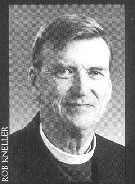 |
John Shelby Spong, Bishop of Newark, New Jersey and author, most recently, of Why Christianity Must Change or Die, spoke at Vancouver School of Theology July 13. The controversial liberal theologian spoke with Peter T. Chattaway the next day.
PTC: Your book is subtitled "believers in exile", and I'm wondering if your book would have any meaning for anybody who was not born a believer in the first place -- somebody who was born outside the church, doesn't have the tradition or the background that you've had to wrestle with. Would all this talk of Christian symbols matter?
JSS: My sense is you would need to ask them. I can tell you only what my audience is. I write for people like my own children, and my audience is those people who have at least a memory of their life in the Christian community and still miss it, who've sort of moved beyond it and into the secular city. My daughter, who has a Ph.D. in physics from Stanford, says, "Dad, the questions that the church keeps answering are questions we don't even ask any more." It's that sort of dislocation. I write to try to say that the experience of God is real, but the explanations of that experience will vary in every generation, and what we've done is to literalize the explanations which are in scripture and the explanations which are in creeds, and we've turned them into doctrines and dogmas. There's nothing wrong with that, except that if you literalize any historic period's definition of the God experience, then it will die. The God experience needs to break open every explanation in every generation to continue to live, and that's just the nature of the way it is. Since this book came out, the response to this book has been unbelievable to me, and it's been overwhelmingly from people who are outside the church. The more inside the church they are, the more negative the response has been, which I find interesting, and what I'd like to suggest is that the negative response from those insiders comes from people who don't even know that the audience I'm trying to address is real.
PTC: Is your book designed to help those people find their way back into the church?
JSS: That's what they say, when they write me letters. Over and over again, the positive letters will say, "Maybe now, I can worship God with integrity again. Maybe now I don't have to keep my fingers crossed with words I don't really believe." And this morning [in class], I began to work on those words, like the idea of Jesus as a human sacrifice to God to pay the price of the sins of the world, I think, is a barbarian idea, and not the way I want to understand the Christ at all, and based upon what I think is bad anthropology. I don't believe we're born in sin, I don't believe sin is original. I think we are unfinished, still-evolving creatures. I'm a post-Darwinian man, not a pre-Darwinian man. So I think you've got to find a way to sing the Christ story in the worldview of the third millennium, and I don't find that. And I grew up an evangelical fundamentalist. That's my home. That's where I came from. I've read the Bible every day of my life since I was 12 years old, and made great chunks of it committed to memory so that I can quote you chapter and verse like every fundamentalist I've ever known. I grew up about a quarter of a mile from Billy Graham, lived in the same city as Jerry Falwell, had my first cousin defeat Pat Robertson's father for a seat in the United States senate in 1966, so all of those religious-right figures are people that I've had some relationship with.
PTC: There was one page in your book where you discuss how people are born -- random chance leading to one out of millions of sperm, etc. -- and at the bottom [of the page], you say, "Baptism in the postexilic church becomes then not a ritual that purifies us of the sin of Adam but rather a ritual that calls each candidate to be all that that person was created to be." And then, in the next sentence, "It becomes a powerful starting point for entry into nontheistic worship." What does it mean to say that a person was _created_ to be something if you're a nontheist?
JSS: I don't think creation is a response. The world _is_. Let's start with that reality. I'm not like the philosopher, Herbert Spencer, who kicked a rock and said, "That proves the world is real." I _assume_ the world is real. The issue of theism is, Is God external to the world and operating upon it from an external position? I believe God is in the _heart_ of the world. I think God is more than the world is. I wouldn't be a pantheist. I wouldn't say that all that is equals God; I would say that God is in and through all that is, and not external to it. To be biblical about it, I think that when the First Epistle of John says that God is love, and that anybody who abides in love abides in God, that's the way that I understand God. That is the presence, the power, the source of love that creates life in this world. God is beyond the limits of my humanity, but I don't know how to articulate that. I said last night that if horses had gods, they would look like horses, because a horse is the highest thing that a horse can imagine. Human beings' gods look very much like human beings writ large, and I think that's inevitable, but I don't think you literalize that. I would like to find different ways to talk about God except as a supernatural human being somewhere up in the sky who is able to do supernatural things like miracles and magic. And the world I live in is a world that has developed intellectually -- from Copernicus to Galileo to Newton to Darwin to Freud to Einstein to Stephen Hawking or whoever else constitutes your pantheon of premier intellects throughout the history of at least the western world -- and as the reality that these people help us to find comes into shape, we suddenly realize that the reality out of which the Christian faith emerged is no longer real, even for us. So if you have to separate the Christian message from the context of the first century, then you've got to find a way to speak it. Let me say it this way: if Jesus came to Vancouver in 1999, my assumption is you'd have the same experience that first-century Jewish people had, because I don't think that the God experience is going to change. But if you went to describe it, you would certainly not describe it in Jewish terms, because that's not a part of who you are. You would not say "Christ our Passover sacrifice," you would not call him "the lamb of God," which is Jewish Yom Kippur symbolism. So what I'm trying to do is destabilize traditional explanations without destroying the essential experience that cries out to be explained, and then to say, that if you're going to be a Christian in the third millennium, you've got to find a way to talk about this experience in language that doesn't make your mind turn into a first-century pretzel in order to make it understood.
PTC: First-century pretzel? JSS: Well, take the story of the ascension that I talked about last night. That doesn't make any sense to space-age people. In order to take that story literally, I would have to put my mind into a first-century three-tiered-universe pretzel, in order to understand it. And I don't think God is a God of falsehood. God is a God of knowledge and truth, and I think the job of the church is to seek God's truth and not to be afraid of it, whether it comes from psychology or whether it comes from biology or whether it comes from physics. It's still God's truth.
PTC: When Christianity Today reviewed your book, they said taking survival tips from someone such as yourself might be an ill-advised idea because Episcopalians are the denominational equivalent of the Titanic, was how it was phrased, I think: your membership is declining, whereas churches with a more orthodox position seemed to be growing.
JSS: Well, I would not expect anything different out of Christianity Today.
PTC: But if you look at the Lambeth Conference, for example, the fact that the conservatives won on some key issues is credited to the explosive growth of the church in Asia and Africa.
JSS: That's true, but if you put the number of Christians in the world, including all the evangelicals, against the world's population, Christianity is losing what the business world would call "market share" -- that is, the percentage of Christians in the world's population has gone down. I've been in Africa, on a number of occasions -- indeed, I ordained Desmond Tutu to be a bishop in South Africa in 1976, with eight other bishops (I didn't do it all by myself, but I was one of his nine consecrators). My experience in Africa is that education is limited. I did a BBC interview with an African bishop, I think from Nigeria, and he said, "We don't have books in Africa. We have very few of the tools of learning. The scientific revolution that has embraced the western world has not embraced us." There's still a high level of superstition in the African people. There's still a high level of superstition in what I would call right-wing religious people in this country, because I don't think they've embraced the intellectual scientific revolution. There's 150 years of critical biblical scholarship that has not gotten into evangelical circles yet, and I think we've got to take that seriously. I don't believe, for example, that Africa, where they still practice female circumcision, where polygamy is rampant --
PTC: Among Christians?
JSS: Oh yeah. Among bishops. Not officially, but quite unofficially, and it's part of the culture. Indeed, in the Lambeth Conference of 1988, a resolution was introduced to support polygamy in Christian situations in Kenya and Uganda, and I voted for it. I voted positively on that issue, and the reason was that, because of tribal wars, the males are in short supply and the females are in large supply, and polygamy is one of the ways that they take care of that socially, because there are no jobs for women, because women don't get educated in Africa. So the only way a woman can survive if she's not married is to be a prostitute, so the alternative is polygamy or prostitution, and if you put those together, I prefer polygamy. At least the woman is sort of taken care of. But I would much prefer that they develop a social order where women get educated and women can find jobs and women can support themselves without being dependent on a man. We're dealing with that kind of situation. And what happened at Lambeth [in 1998] was conservative elements in the United States and in Canada and in England, evangelicals combined with third-world bishops for whom issues like homosexuality have not been raised. I wrote a book on homosexuality in 1988, and before I wrote that book, I went to Cornell Medical Centre in New York, and I worked with doctors over there and I read everything that they knew and I interviewed them extensively. There's not a doctor at the Cornell Medical Centre who thinks homosexuality is a choice. Not a one. They think it's a given, they think it's just like being left-handed. They think it's the way the brain is organized, the same as left-handed people. Well, when you become convinced of that, as I am, then you can't treat homosexual people the way we used to treat them. When I grew up in the South, a homosexual person was either mentally sick or morally depraved and they chose to live this deviant lifestyle, and so they had to be condemned in the name of morality. I don't believe that any more. I think there's some homosexual people that live their lives in a very destructive way. There are some _heterosexual_ people who live their lives in a very destructive way, and if you want to compare destructiveness, we ought to compare the prostitutes and pimps on 42nd Street in New York with the bathhouse scene in the gay community in San Francisco. Both of those are what I would call depraved acts of human sexuality. But if you're going to compare faithful monogamous marriages, like I have with my wife, in the gay community [that] would be [analogous to] a faithful lifetime committed relationship, and I think they ought to be blessed and they ought to be recognized legally. But that's because I start with an assumption that gay people are born with this homosexual orientation, and that they can't be changed. I don't believe any of these organizations that think they change. I think they're all fraudulent. I think they're money-raising fraudulent activities.
PTC: All?
JSS: Every one of them.
PTC: Do you think it's possible that someone who's basically straight might, for whatever reason, be living a gay lifestyle, and that that might be a problem?
JSS: I've heard that argument, but I don't believe it. I heard a woman argue that she was straight, but she lived in a lesbian relationship. And I said, "Well, tell me about that." And she said, "Well, I was sexually abused by my father when I was a child, I was sexually abused by an uncle when I was 12, I was gang-raped by a group of men when I was in my teens, and I will never allow myself to be vulnerable to a man again, so I'm going to live in this lesbian relationship." All I can say is that's anecdotal. I can't prove that one way or another, that's her testimony, but her partner, who is a lesbian, says, "She's as lesbian as I am." I think the only people that can be changed are bisexual people, and I think they're very few in number. I think the bisexual can decide which side of the lever to operate on, and obviously there are some social advantages to operating on the heterosexual side, because you don't get persecuted, beat up, fired and everything else. There's a price to pay for being gay. I didn't choose to be heterosexual. I just woke up when I was 13 or 12 and girls didn't seem obnoxious any more. Up until that time, I didn't want to be around girls. I was in a woman-hating club and all that sort of stuff as a little kid, and I didn't choose it, I just woke up. And I wonder why heterosexual people think homosexual people wake up and say, "I'll decide to be homosexual because I think being queer is fun." It's not fun. It's persecuted in this society.
PTC: I don't want to get stuck on this one issue --
JSS: But it's the Lambeth issue. That's where I was responding to your Lambeth question.
PTC: Okay. But I do know a number of evangelicals who accept that a person can _be_ gay, and some would even say that there's no need to change that. They say that the Bible is focussed only on activity, and not on whatever a person's orientation happens to be.
JSS: I don't believe that. I don't believe either that evangelicals act that way. I know a member of this group, one of my class, who is a celibate male priest who is persecuted by evangelicals today, and he says, "I haven't had a sexual relationship in 40 years." He says, "I'm what they say they accept, but the fact is that I'm a self-affirming gay." He's open about being a gay man. He's also open about being a celibate gay man. He says, "There's no love that comes from evangelicals to gay people." Whether you practise or not, that's all propaganda to make them look better. That's like it used to be in the South, when we said, "We really like _good_ Negroes." But the fact is, we didn't let any Negroes stay in public places or eat in public restaurants. What we try to do is perfume our prejudices so they don't look quite so bad. But if you think that being homosexual is depraved or evil or unnatural -- it's perfectly natural if you happen to be gay. It wouldn't be natural for me, but it's perfectly natural if you happen to be gay.
PTC: But at the same time, you were talking about those depraved lifestyles, straight or gay, and you get people talking about being sex addicts, and there is something almost "natural" about that, as well, perhaps, if a person's brain develops along different lines.
JSS: No, the biblical norm is, you judge it by your fruits. You have to live in such a way as to enhance your humanity. Whether you're gay or straight, you want to enhance your humanity and be whatever it is that God created to be in all of its fullness. And when you begin to use people as objects to relieve your sexual passions, you're dehumanizing them and you're dehumanizing yourself. People say alcoholics have an internal predisposition towards drinking. Yeah, but they've got to take in the destructive beverage, and they know what it does to their life, it doesn't enhance it. They may not be able to help it, and they may need to be true to it, but you can't argue that therefore it's natural to be an alcoholic, because it's not. It's destructive. It's not destructive to be gay.
PTC: But nature is destructive.
JSS: So? What's your point?
PTC: Well, if you take the rationalistic, nontheistic worldview and you exclude anything "supernatural", and then you look at the world around you and simply observe what happens in nature, you find that there's a lot of destruction, and you find that there's even self-destruction, and those things are, in one sense of the word, very "natural".
JSS: Not a lot of self-destruction. I think in nature, death comes fairly naturally at the end of your span of time, unless you become somebody's lunch. But trees have a span of life and then they die. Fire can come and burn up a whole forest. But it all goes back into the churning lifeforce of nature. But let me just tell you that I don't know a competent theologian in the world that uses supernatural categories in this century, because that's just not the way theologians think. Unfortunately, it hasn't gotten down to the grassroots yet. I think God is real, but I don't think of God as a being, supernatural above the sky somewhere. I think God is present in you, Peter, and present in me, and beyond anything that you and I will ever be, and at this moment you and I have an opportunity to enhance the life of one another. We also have the chance to diminish the life of one another. That's in every human interchange.
PTC: Last night, a number of people brought up the question of fear. A lot of responses to your own book have been based on fear and prejudice. And I wonder if there might be a bit of that going the other way. When you combine words like "fundamentalist," "evangelical" and "shrill" all in one phrase, you reinforce this notion of evangelicals as a very reactionary bunch, a very hostile bunch.
JSS: Is that real or is that propaganda? I would argue that it's real. The hostility towards homosexual people comes almost totally from evangelical Christians today, or right-wing Roman Catholics. The hostility towards abortion and family planning, also the murders at abortion clinics, are almost all inspired by what I would call right-wing religion. The religious wars that go on in this world are all by people who think, "My god is better than your god, and so there's something wrong with you if you don't worship my way." I don't feel that way about evangelicals. I wouldn't want to excommunicate evangelicals from the church. I just don't want them to define God for me. I'm not at all interested in changing evangelicals. I don't even write for them. I write for those who are repelled from Christianity by evangelical practices, and I understand that, because I lived through that.
PTC: But are you perhaps perpetuating the repulsion, when instead perhaps you could be finding ways to bridge the gap?
JSS: No, I don't think so. I think the way you deal with that is you submit evangelical ideas and my ideas to a jury of knowledgeable people and let that debate take place. I don't think I'm right. I would never claim that I have the final answers. But I think what you need to do is to say, "Okay, let's see if these ideas are correct. Let's submit them to whoever we would recognize as experts." Now the problem with evangelicals at this point is they don't recognize anybody as an expert who isn't an evangelical. For example, I said last night that there's not a biblical scholar in the world, Protestant or Catholic, who is recognized as a scholar, that would say that the birth narratives of Matthew and Luke are literal history. Not a one. And people immediately say, "Oh, but there's this and this," and they're evangelicals, and I say, "Who in the world recognizes them as scholars?" And only evangelicals recognize them. The fact is, there is, in every discipline, whether it's geology or physics or biology or theology or biblical studies, there is a coterie of internationally recognized experts who have studied the sources, and that should be the people that we are listening to, not the propagandists. I read an article by N.T. Wright -- do you know Tom?
PTC: I've interviewed him.
JSS: There was an article in Christian Century where he's trying to defend the literalness of the virgin birth stories. I think that's off the wall in ignorance.
PTC: And he isn't recognized as a scholar by other scholars?
JSS: I think he's recognized as an evangelical -- scholar. I guess they'd use the word. But I've endorsed the book he wrote with Marcus Borg [The Meaning of Jesus: Two Visions]. It's got a quotation from me on the back of it. I think it's a fantastic book. And I think what Tom does is that he articulates, very well, the traditional Christian view, and the reason I'm so happy that book is out is that Marcus articulates, very well, the changing Christian viewpoint, and I want people to read them side by side and see which one is going to stand the test of time, and I don't believe it's going to be Tom's. I'm sorry _I_ didn't write that book with him, because I think I could have done very well. I think we would have had a good time doing it. But he and Marcus were classmates, and so they start with a friendship that overcomes their [differences], and the book reveals that. It's a really sweet book. And as I say, the good thing about that book is that it's going to be read by both sides of the aisle. Evangelicals will read it because Tom is in it, liberals will read it because Marcus is in it, so there's going to be some cross-exposure, and that's very positive.
PTC: One thing that comes out in the book is that the two of them worshipped together before they got to the task of writing it, and one question that occurs to me is whether you see yourself worshipping with someone like Tom Wright.
JSS: Oh, sure, I do that all the time. I've got evangelical churches in my diocese. I am their bishop. I worship there every time I go for confirmation. That's never a problem, for me. One of my criticisms of the Jesus Seminar is that so many of the Jesus Seminar have really given up on church. That's the reason I like Marcus so much. Bob Funk isn't a regular attender at worship, and a lot of them are what I would call college biblical scholars; they teach in universities, they're not part of a religious tradition. I face a congregation of believers in worship twice every Sunday of my life. I celebrate the eucharist, lead them in the creed and the prayers. The tension in my life is between my knowledge and that worship tradition and trying to bring them together. I'd never give up either one. Tom's the Dean of Lichfield. That's a fine cathedral, in a diocese that I've lectured in. He's got an encyclopedic mind of knowledge, but I don't think he's grasped the real issues, and he doesn't think that I'm in touch with the tradition, so it's all fair.
PTC: I happened to read your book around the time Marcus Borg's _The God We Never Knew_ came out, and he was able to reference people like Tony Campolo and say, "Here's an evangelical whose theology I disagree with, but there are certain things we can work together on," but I got the impression reading your book that you would be more interested in changing Tony Campolo's theology.
JSS: Not at all. I'm not interested in changing anybody's theology. I'm interested in speaking to those who have rejected Tony Campolo's theology or Jerry Falwell's theology. But I'm perfectly happy for people to worship God in any way that they want to, so long as they don't say that I've got to worship God the same way they do. I serve a diocese of 40,000 people. 130 churches. I've got churches that are more Anglo-Catholic than the Pope. I've got a church that calls itself St. Anthony of Padua Episcopal Church, which is very right-wing, and it doesn't allow women to do anything, and it certainly wouldn't allow a woman priest ever to come there, and I've got evangelical churches that sing and do clappy things all the time, and I think that's wonderful. If it meets those people, wonderful. And I tend to love both of them.
PTC: You talked last night about "transforming the world." If you can't tell people how to worship, then what does "transforming the world" mean?
JSS: My sense of the mission of the church is not to convert everybody to be like me, but to enable everybody to be like themselves. I want you, Peter, to be totally Peter Chattaway. I want you to be all that you're capable of being. I want you to live your life fully. I want you to be able to love yourself and other people totally, and I want you to have the courage to be yourself. And that would be true whether you're male or female, black or white, gay or straight, Christian or Buddhist. I do that because of my understanding of who God is, and my understanding of the God I meet in Christ. Other people might do it out of a totally different motivation, but that's my motivation. And that means that I'm not interested in converting you to think like me. Indeed, I think that evangelicals reach some people that I could never reach. I think I reach some people that they could never reach. I'm not interested in fighting a war with evangelicals or fundamentalists.
PTC: And yet you give your books titles like "Rescuing the Bible from Fundamentalists."
JSS: That's because I'm trying to reach an audience that's repelled from Christianity by fundamentalists. And it didn't say "rescuing the bible from the fundamentalists," it said, "rescuing it from _fundamentalism_." And incidentally, Harper titles my books. This book, my title for it was "Believers in Exile", and they changed the title.
PTC: Do you think perhaps you overplay the, for lack of a better word, ignorance of earlier generations? For example, you say the virgin birth stories were based on an old, patriarchal notion of procreation [in which the mother contributes nothing to the child], but when I first read that in your book, my mind was immediately thrown back to an article in a 1992 issue of Bible Review, which looked into Hebrews 11, where it says that Sarah had a seminal emission by faith. The ancients didn't know about the _details_ of cells and so forth, but they knew about semen, and they knew about menstrual blood, which they believed was a kind of semen.
JSS: I'm just saying that, in the virgin birth tradition, that's the assumption that underlies it. If you don't have that assumption, you don't have the virgin birth. Virgin birth means that the male agent provides the divinity. It was only after we discovered the female egg cell that they began to say, "Jesus gets his humanity from Mary and his divinity from the Holy Spirit." It's a very late development. But that doesn't make sense, genetically. He would be neither God nor man, in the genetic pattern, because I am not my father or my mother, I am a blend of my mother and father's genes, so Jesus would be the blend of divine and human genes, literally, and be not God, because God doesn't have human genes, and not human, because humans don't have divine genes, so he'd be neither God nor man, and that's exactly what Christianity says that Jesus is _not_. What we've tried to say, in our very limited language, is that in and through his full humanity, we have experienced the fullness of God. And we debated for 300 years to try to figure out how that could happen, because God was external to life. So the debate was how the external God got into Jesus, and I think that's a nonsensical debate in our world.
PTC: And yet, even there, in the first-century, when Paul speaks before the Athenians, he says God is the one in whom we live and move and have our being. There is that awareness that God isn't just "out there."
JSS: Oh yeah, I agree. But all I'm trying to say is that the definitions of God as internal are very minor. What I'm trying to do is raise them -- not that they weren't there -- I'm trying to raise them in the [popular] consciousness. And we've done the external height images to the detriment of the internal images. The mystics didn't. The mystics have always understood this. And I keep thinking that I'm moving in that direction.
PTC: So -- to get back to the first part of my last question -- you don't think that you're overplaying the ignorance of earlier generations?
JSS: I'm not interested in that. What I'm interested in is communicating the gospel to people that live at the end of the 20th century. And I think that what we've done is to identify ancient explanations, which are now bankrupt, with the essence of the Christ experience. That's why I think "Christianity Must Change or Die" is an accurate description of the book. I think if Christianity doesn't change, it will die. I love the man last night who said, "My church isn't going to change, and it's pretty obvious my church is going to die." He's dealing with a congregation of elderly people and there aren't any more young people coming in. That's exactly what's going to happen to his church. But I see the church dying even within the evangelical traditions. I don't believe that statistical success means much of anything. A lot of people have written articles saying that the diocese of Newark has declined. That's absolutely not so. Our population has declined, in northern New Jersey, and our ethnic population has grown; we've been inflooded by Puerto Ricans and Asians and Indians. I've got cities where the whole population is Asian, and what's happened is that out of these cities has moved all the old Anglo-Saxon types who were Episcopalians or Presbyterians, and they're building Buddhist temples or Moslem mosques. But in terms of the population of northern New Jersey, we have the same share of the population today we had 20 years ago, but the whole population's gone down. You can go down to Texas, where the population's booming, and the Episcopal church is not keeping up with the population growth. It's growing, but it's not keeping up with the population. I think statistical analysis is a lousy way to fight the argument anyway. I'm not interested in whether we're growing. I'm not interested in whether we grow; in fact, I think the church, if it's faithful, will get smaller, not larger. To stand up for black people in the South, in my early ministry, did not make the church grow. To stand up for women when women were being clobbered by male dominance did not make the church grow. The first time I named a woman lay reader, people refused to receive communion on her side of the altar. And the first time I ordained a gay man to the priesthood, it certainly upset the church, because people who felt that was evil dropped out. I'm proud of that, I'm not apologetic about that. I want to do what's truthful. I'm not interested in building the kingdom, I'm interested in serving the God of truth. I don't identify church growth with the kingdom of God. As I said this morning, all the biblical images are that the church is to be the leaven in the lump, the salt in the soup, the light in the darkness. We're not supposed to conquer the darkness with light or have everybody say, "Oh, what wonderful leaven is in this bread!" I can't find the salt when I look at the soup, but I just know that it's there. I think that's the way Christian witness ought to be in transforming this world. So I'm not impressed with statistical arguments that say evangelistic churches are growing and mainline churches are not. I think the churches that promise certainty -- which I don't believe they can deliver -- have a tremendous appeal to insecure people. But I don't think that means that they're right. I like to remind folks that, on Good Friday, the vote was unanimous to one, but I still believe Jesus was right and the people who voted against him were wrong.