
BCCN: Sacred music -- old, new and neglected
BC Christian News, · Arts
• BC Christian News • SEPTEMBER ISSUE 1999 • VOL. 19 #8 • Formerly "Christian Info News" •
Sacred music -- old, new and neglected
- - - - - - - - - - - - - - - - - - - - - - - - - - - - - - - - - - - - - - - - - - - -
By David F. Dawes
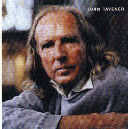 |
• Academy of Ancient Music: John Tavener -- Eternity's Sunrise; Harmonia Mundi, 1999.
THIS CD presents five world premiere recordings of works by one of the most accomplished and vital contemporary composers. Since embracing Russian Orthodoxy in 1977, John Tavener has expressed his faith through works such as 'The Lament of the Mother of God'; 'Thunder Entered Her'; 'Hymns of Paradise'; 'God is With Us'; 'Resurrection'; 'Ikon of Light'; and 'Prayer to the Holy Trinity.' This recording continues his reverent and consummately creative odyssey.
The title piece, commissioned by the Academy of Ancient Music to mark the group's 25th anniversary, combines repeated alleluias with lines by William Blake, including: "He who kisses the joy as it flies / Lives in eternity's sunrise." Most of the composition is sung slowly and meditatively; the singing periodically becomes more urgent, augmented by handbells; the overall effect is exquisite.
'Song of the Angel' features an echoing, soaring vocal; a violin follows the voice like a second skin, at times in unison, and sometimes in harmony.
'Petra: a Ritual Dream' is a yearning, almost melancholy setting of words by Greek poet Giorgios Seferis, featuring evocative lines like "your blood spreads white wings over black clouds."
'Sappho: Lyrical Fragments' might seem out of place, with its invocation of pagan deities and lesbian implications. But the poet's words of love are elegant, and not in the least prurient; and the singing is equally graceful.
'Funeral Canticle' features slow, peacefully mournful choral passages, with occasional brief solo vocals evoking Gregorian chant with a slight Middle Eastern flavor.
Under Paul Goodwin's direction, the Academy's choir and period instruments greatly enrich the music; and outstanding work is contributed by sopranos Patricia Rozario and Julia Gooding, and violinist Andrew Manze.
Summing up his aspirations for the album, Tavener quotes St. Isaac the Syrian: "When we reach love, we have reached God; our road is ended and we have crossed to the Island which is beyond the world." This gorgeous music, no doubt, will be heard on that island.
• Maria Cristina Kiehr: Monteverdi -- Pianto Della Madonna; Harmonia Mundi, 1999.
Claudio Monteverdi is best known for his great 1610 choral work, Vespers of the Blessed Virgin. His solo motets have not received the attention and respect due them; they reflect Monteverdi's dedication to the Counter Reformation, and the Roman Catholic Church's determination to promote music which stressed the importance of words, as opposed to ornate harmonies.
This collection features 10 of these pieces, written between 1624 and 1655 -- including tributes to martyrs, saints and the Virgin, as well as songs of praise.
The title piece, translated as 'The Madonna's Complaint,' is taken from the composer's last collection of sacred music, Selva Morale (1640). Monteverdi utilized the music of 'Lamento d'Arianna,' which he had written for a 1608 opera based on Greek mythology; what was once Ariadne's lament after her abandonment by Theseus became a powerful expression of Mary's fear, grief and faith in response to the crucifixion. The piece has a musical complexity which does justice to the variety and depth of the ideas expressed in the lyrics; it is accompanied only by harp, often played in the lower register to underscore the pathos.
Maria Cristina Kiehr's voice is rich and extraordinarily supple, never losing its purity of tone as it negotiates Latin tongue-twisters and challenging melodic lines that are sometimes dauntingly fast. With warm and solid accompaniment by the Concerto Soave chamber ensemble, this brilliant Argentinean soprano has done a masterful job with this very difficult -- and unjustly neglected -- material.
• Choir of King's College, Cambridge: Rachmaninov -- Vespers; EMI Classics, 1999.
More properly called All-Night Vigil, this 1915 Russian language master work is based on the vigil observed on Saturdays and special occasions in Russian Orthodox tradition. The a cappella piece is usually sung by mixed voices; this is the first version recorded by a choir consisting solely of men and boys, and it is fitting that this venerable, deservedly admired ensemble should have that honor.
Sergei Rachmaninov took much of the text from various Psalms; he augmented the standard 'Magnificat' with an Eastern Orthodox refrain; and he also included 'Hail, Gladdening Light,' a third century Greek text.
The material is very comprehensive, biblically; this is exemplified by 'Blessed Art Thou, O Lord,' which astutely combines the resurrection with affirmations of the trinity, salvation and the virgin birth. Most of the music is closely modelled on chants from Orthodox tradition; this version opens with a brief passage invoking the trinity, not always included on recordings of the work.
It's hard to find a highlight, since it is all so beautifully sung; but if pressed, I would choose 'Praise the Lord, O my Soul,' which features the only female vocal, provided by alto soloist Margaret Cameron; the rich, triumphant cascades of melody in 'To Thee, Our Leader in Battle'; and 'Hexapsalmos,' with its brilliant, echoing crescendo very slowly subsiding into delicate contemplation. This is a magnificent recording, in every way.
• Vasari Singers / Haffner Wind Ensemble of London: Max Kuhn -- Missa Brevis, Serenata, Elegie; Guild Music, 1998.
20th century Swiss composer Max Kuhn wrote a number of choral works; this CD features two of his a cappella sacred compositions, and a variety of instrumental works.
'Man Lives But a Little Time' is a motet with a suitably sombre tone, whose sobriety is mitigated by the occasional increase in intensity, especially during the Hallelujah portion.
'Missa Brevis,' composed in the 1950s, was the second mass Kuhn produced; the work shows both imagination and sensitivity to the subject matter. The meditative Kyrie starts quietly and builds up to a heartfelt 'Christe Eleison.' The Gloria includes a striking, brief passage featuring some nice counterpoint between two simultaneous, distinctly different melodic lines. The Credo is appropriately assertive; the Benedictus starts quietly, then bursts into energetic Hosannas; and the Agnus Dei has a slow and determined quality.
Of the instrumental pieces, the whimsical 'Serenata for Wind Quintet' is the most interesting. And soloist William Fong shines in the delightful and dizzying Presto from 'Five Piano Pieces,' in which the piano chases the melody all over the keyboard like a drunken bumblebee.
The music is generally free of the 20th century love of dissonance. Melodically, it is both lyrical and adventurous. The Vasari Singers are fine, although one of the tenors sounds a bit strained in the brief solo passages; but this doesn't seriously mar the overall beauty of the performance. All told, this is a welcome sampling of this composer's work. x