
Contemporary music and worship -- the view from Iona
BC Christian News, · Top Stories
• BC Christian News • DECEMBER ISSUE 1999 • VOL. 19
#12 • Formerly "Christian Info News" •
Contemporary music and
worship -- the view from Iona
- - - - - - - - - - - -
- - - - - - - - - - - - - - - - - - - - - - - - - - - - - - -
-
John Bell is a minister in the Church of Scotland, and a leader in the Iona Community. He is also a world-renowned composer of contemporary music and liturgy, and led a workshop on the subject at Kerrisdale Presbyterian Church November 3. Peter Chattaway interviewed him earlier in the day for BC Christian News at Vancouver School of Theology.
BCCN: What is worship, in your definition?
John Bell
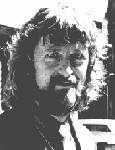
JB: Yeah, well, the thing about definitions is that you try to come up with one, and then you think, "Oh, I actually should have said this or that." I think worship is essentially an experience of value, where we give to God the value which God has in our lives, or which we believe God deserves from our lives, and in which we discover ourselves valued by our Maker.
On the one hand, you have the wonder of the Creator and the Redeemer of the world, and on the other hand, there's this discovery of yourself as a child of God. And that's not a primarily intellectual thing, that's an experiential thing. Worship is, I believe, only worship when it's experiential.
If it's tied solely to the intellect, which is a great Calvinist temptation -- the right doctrine -- well, that's very good for the proportion of humanity who are into doctrine, but that doesn't touch people who have a low IQ or people who are, for one reason or another, marginalized socially or physically.
BCCN: Where would lyrics fit into worship?
JB: If you sing, you're doing experiential things. If you listen, it's a primarily intellectual thing. And a lot of worship has people listening to one person, who will play and will read the Bible and who will preach and announce the hymns, at least if you come from my background, which is Presbyterian.
Singing is important because singing is formative, in that it forms a community -- it gives them a sense of identity . . . in singing texts out loud, we develop our theology.
We forget the most rhetorically astute and significant sermon in a matter of hours, but you remember for your life, 'Jesus loves me, this I know, for the Bible tells me so,' because you sing it several times.
And I think that's where the importance of the lyrics, or the text, of the hymns comes in, because they shape our theology. Or they diminish it. They may present us with a picture of God who is some kind of bombastic, militaristic ogre. And if you're brought up in certain communities where there are soldiers' hymns and a soldier God and a Captain Jesus, that's been done.
Or it could be that some of the particular hymns we sing at Christmas, for example, will give us a notion of Jesus which is totally unbiblical: a baby who doesn't cry when he wakes up, a boy who lies in his mother's arms until his bar mitzvah, looking into her face. That's what we sing about! 'Away in a Manger' [and] 'Once in Royal David's City' are sub-Christian texts, when you get past the first verse, because they give a depiction of a child who is not the incarnate Son of God; he's a rather sickly, wee boy who needs to seek help.
So we never think Jesus is angry, we never think Jesus would be fun at a party, we never think Jesus has a passion for social justice, we never feel that Jesus has a place in his life for women, because all the hymns, by and large, associate Christ with 'meek' and 'mild' and 'suffering' and, by implication, 'thin' and rather retiring.
BCCN: One of the big debates, in North America anyway, is between more traditional hymns versus praise choruses. Is Iona beyond that discussion?
JB: No, I think we're involved in that discussion. I think that we have an advantage; one of the things that my community has espoused from its inception 50, 60 years ago, and which my colleagues and I, who work on the resourcing of worship music, have taken to heart, is that we always have to have diversity.
So commonly, in the worship of Iona Abbey, on the Island, or in the worship that my colleagues and I encourage and lead, there will be traditional hymns that maybe go back to the 14th century . . . there'll be TaizÈ chant, there'll be songs from the world church, there'll be other songs.
And when you have that variety, then you're the church! If you only have TaizÈ chant, you're not the church, you're a sect. If you only have praise songs, you're not the church, you're a sect, whose God is no bigger than your theology. And if you only use praise songs, your theology is not big, it's very small.
Now if you sing, for example, 'Give me oil in my lamp, keep me burning,' there's nothing in the Bible that says that. That's a song for a corpse that is going to its cremation. 'Give me oil in my lamp, keep it burning,' is biblical.
'Jesus, we enthrone you,' or, 'Jesus, we ask you to be Lord above our praises' -- yeah, you could maybe find in Revelation some words that lead to that, but I want to ask, where is the incarnate Jesus? Because the Christ who is in heaven is also the Christ who has holes in his hands. And where is the Christ who did the loving and the affirming and the encouraging and the provoking? Where is the Christ whose evangelism was in the language of the marketplace? Because if you do not allow that Jesus to be present in our worship, we are not entering into a full relationship with God, who decided to come down [from heaven].
I use praise music, along with other music, but you never get out of the keys of A or D, it's usually three chords -- and the choruses, by and large, don't give you a great deal to think about. And if you take seriously the fact that what we sing is what we believe, and also that what we sing is what we will remember, I think that the songs which the church sings, they have to see as the songs which make people go to heaven if they never go back to church. Because that's what they'll remember.
And if there's no song of lament, no song where you say, 'Where are you, God, and how long is this going to go on?,' like the Psalms -- Psalm 22, or Psalm 13, or 14 other Psalms -- we're being holier than Jesus if we don't have that. But if we don't have songs that intercede for the world, if we don't have songs that pray not just for humanity but for the globe and if we have nothing much that extends our understanding of Christian discipleship beyond the confines of our own soul, and to evangelizing the world and the stewardship of creation, then we end up leaving out Jesus. . . . My concern is that we don't just have one diet of sweet things, which we enjoy and savor.