
BCCN: Unchristian to evangelize in a multifaith society?
BC Christian News, · Top Stories
• BC Christian News • JANUARY ISSUE 2000 • VOL. 20 #1 • Formerly "Christian Info News" •
Unchristian to evangelize in a multifaith society?
- - - - - - - - - - - - - - - - - - - - - - - - - - - - - - - - - - - - - - - - - - - -
By Peter T. Chattaway
 |
EVANGELISM IS a good thing, even in a pluralistic culture -- though it may depend on how one defines evangelism. Two articles, both written by high-profile British Columbian Anglicans, addressed this topic in the December 1999 issue of The Anglican Journal.
Michael Ingham, bishop of the Diocese of New Westminster and author of Mansions of the Spirit, argues that the Anglican church embraced a form of pluralism at the Lambeth Conference in 1998.
The bishops there, Ingham writes, agreed to 'Thirty Theses on Inter-Faith Relations,' a document that rejected conversion and proselytism but allowed for witnessing.
"Lambeth was clear that conversion is God's business, not the church's, and implicitly recognized that it happens both away from, and in the direction of, Christianity," he writes, adding, "The exploitation of poverty or weakness by Christian (or any other) agencies to 'win souls' was declared unacceptable. So was the targeting of Jews, Muslims or any other groups.
"Instead, we commended attitudes of openness and listening toward other world religions and willingness to work together with them to eradicate evils like poverty, hunger, violence, exploitation, greed and environmental despoilation. This calls for a shift from a history of hostility to a future of partnership."
Ingham says the call for partnership comes not only from the "global interfaith movement" but also from "Christians living as religious minorities in non-Western countries." In those contexts, he writes, evangelism is seen "primarily as a 'witnessing to Christ' through diaconal acts of service and mercy toward others, and through joyful unapologetic preaching of Christ but without the hidden agenda of proselytism."
Ingham goes on to argue that "religious competition" is "unnecessary," although he does say Christians ought to be proud of their "distinctiveness."
 |
He writes: "Christian revelation is unique in proclaiming a God who 'humbled himself, and became obedient unto death, even death upon a cross' (Phil 2:8). The centrality of divine humility and suffering in Christian faith shapes our lives in profoundly singular ways, requiring of us sacrificial love, rejection of power politics, commitment to justice and unconditional acceptance of people God has created, however unlike us they may be."
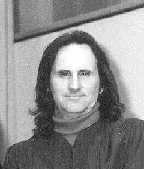
Ron Dart, a parishioner at St. Matthew's Anglican Church in Abbotsford who teaches political science and philosophy at the University College of the Fraser Valley, argues for an "enlightened inclusivism" instead.
Dart notes that Christianity has dealt with pluralism before. The faith emerged at a time when the Romans fostered a climate of pluralism and religious tolerance, provided of course that Rome's political dominance was not threatened.
Dart also notes that the very meaning of 'evangelism' needs defining. "Evangelism means, at root and core, the good news, but, there are many who differ on what the good news is and what it means," he writes.
Pluralism and syncretism offer a form of good news, says Dart, but at some point they end up becoming intolerant and self-contradictory: both positions "tend, at the outset, to remove the ultimate truth claims of each [religious] tradition," and yet they "claim that their approach is the ultimate and best one, the preferred one."
Thus, he says, the underlying issue "is not should we do evangelism in a multifaith society, but whose version of the good news will we speak in the public square?"
Dart compares Christianity to "a great feast and banquet, an eternal round dance in which each and all are generously invited. . . . Anglicans, in a subtle and nuanced sense, do affirm that in Christ, the dance, banquet and wedding feast we are putting on is the best in town, and we are only too keen and eager to invite others. We, also, realize that others think, as they should, that their feast provides the finest food. It is neither honest nor helpful to suggest that each feast merely provides different but equally valid morsels and food."
Although Dart does not go into great detail on the forms evangelism might take, he does say that Christians cannot "serve our ancient faith [and] religious pluralism; it is impossible to serve two masters. The sooner this fork in the road is seen and acted upon, the less baffled we will be by the cacophony of voices that call and woo us down all sorts of diverging trails. Should we do evangelism in a multifaith society? I think the answer is obvious."