
BCCN: Box set tells the story of black gospel music
BC Christian News, · Arts
• BC Christian News • MARCH ISSUE 2000 • VOL. 20 #3 • Formerly "Christian Info News" •
Box set tells the story of black gospel music
- - - - - - - - - - - - - - - - - - - - - - - - - - - - - - - - - - - - - - - - - - - -
By John Cody
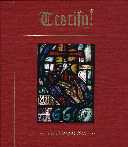
• Testify!: The Gospel Box, Rhino, 1999.
THIS IS the real deal. Spanning 1942-1997, Testify! clocks in at well over three hours. Boasting 50 tracks, a 68 page booklet containing individual track notations, essays and photos, the package is a veritable history lesson on black gospel music.
The African Methodist Episcopal Church, formed in 1817, was the first denomination established by and for blacks. While the Negro spiritual was already widespread, the style of worship employed here had more in common with the conservative white churches of the day. Following the Civil War, it was common for blacks to ignore their musical heritage, attempting instead to assimilate into mainline worship through Anglo-American hymns.
A lengthy struggle existed between those who preferred negro spirituals and adherents of the more staid European forms. A significant boost to the music's stature came in 1895, when Czech composer Antonin Dvorak claimed that a truly indigenous American music existed in the black spiritual. It would take another decade before the music would begin to achieve widespread acceptance.
The first significant alternative to the conservative, less demonstrative Baptist and Methodist orthodoxy came about in 1906 via the Azusa Street revival and subsequent growth of Pentecostalism. The Holiness movement stressed the emotional side of the worship service, which was closer to African tradition. Musicians were considered to be exercising divine gifts, and experimentation in instrumentation and form was generally well-received, allowing unencumbered growth.
Cross-pollination meant boogie woogie rhythms could meet head on with praise lyrics. From the boisterous 'holy roller' to the more staid 'jubilee quartet,' this was the beginning of gospel's golden era.
One result of this creative climate was that Thomas Dorsey came to the church. Already a successful pianist, writer and accompanist for a number of blues singers, Dorsey began writing hymns in the 1920s, and was eventually accepted within the Baptist community. Later known as the Father of Gospel Music, he would continue to write the occasional risqué blues number. Thus 'It's Tight Like That' sits alongside standards like 'Take My Hand, Precious Lord' and 'If You See My Savior' in his formidable catalogue.
The struggle between sacred and secular has always been a contentious issue in the African-American community. The same elements that made this music unique resulted in its wholesale rejection by more conservative members of the church.
Whenever Christians try to incorporate contemporary culture into the gospel message they run the risk of being misunderstood. Conversely, for those willing to listen, the songs crossed all denominational lines, evincing the true power of music.
Opening with 'Praise the Lord and Pass the Ammunition' and 'Stalin Wasn't Stallin',' both from World War II, temporal issues are addressed alongside the spiritual. The thread continues through the decades, with civil rights songs like the Fairfield Four's 'Don't Let Nobody Turn You Around.'
Martin Luther King's assassination brought an end to the optimistic perspective, and while the tradition continues today in acts like Sounds Of Blackness, by the early '70s a darker social climate found better expression through mainstream acts like Marvin Gaye and Stevie Wonder.
Only half of the tracks included are from gospel's golden era. By disc three drum machines are common, and subtlety is an all-too-rare commodity.
The understated feel so common in early tracks is missing on the majority of recent material. There are too many divas, and too few willing to just sing the songs.
While the track list is a veritable who's who of black gospel, a few acts are conspicuous by their absence: no Soul Stirrers, Pilgrim Travelers or Sister Rosetta Tharpe. There are also a few interesting inclusions, including R & B legend Laverne Baker teaming up with Alex Bradford & The Bradford Singers on 'Precious Lord.'
Rhino released Jubilation!, another splendid three volume series, in 1990. It is well worth seeking out, as only a dozen tracks are duplicated between the two packages. For the most part the previous set's first two discs concentrated on black gospel from the '40s and '50s, along with a third devoted exclusively to country gospel. Though less encompassing, it makes for a more satisfying listening experience. Testify!, due to the wider time frame, suffers at times from a lack of cohesion. That caveat aside, both packages are highly recommended.