
BCCN: Church seeks forgiveness
BC Christian News, · Top Stories
• BC Christian News • MARCH ISSUE 2000 • VOL. 20 #3 • Formerly "Christian Info News" •
Church seeks forgiveness
- - - - - - - - - - - - - - - - - - - - - - - - - - - - - - - - - - - - - - - - - - - -
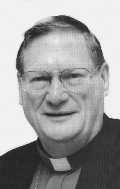
On August 30, 1999, the Supreme Court of British Columbia ruled against the Diocese of Cariboo, the Anglican Church of Canada, and the federal government. The Church was found to be 60 percent vicariously liable for the actions of staff at the St. George's Residential School in Lytton over 30 years ago. The Crown was found to be 40 percent at fault. Bishop James D. Cruickshank was interviewed by Ann Bemrose-Fetter for PMC.
PMC: You've been in the centre of major lawsuits about residential schools. What have you learned about reconciliation from all that's happened?
Bishop Cruickshank: First, let me give you some of the background to ministry with indigenous people in our diocese, and how everything came to a screeching stop when we were suddenly called to court.
When I came to the diocese eight years ago I gave absolute priority to native ministry. It's something that's always been incredibly important to me. When I was a kid growing up in Prince George I was a hunting and fishing guide for eight summers. I did that with native people, so I've always had a sense of feeling part of their story and life.
When I came to the diocese I put a sign up in the local store during my very early days that said that I was very anxious to meet with the adult survivors of St. George's Residential School. The fact that I used the phrase "adult survivors" was a clue that I wanted to listen to their stories and that I wanted to be with them rather than against them.
PMC: How did you start your listening?
Cruickshank: I went to quite a number of healing circles. I was often treated there as if I were the abuser because I represented the church. And I heard many, many very painful stories. And then after the healing circle I was given hugs and tobacco as a sign of friendship, and life would go on.
At one point I was part of a healing gathering that involved several hundred people. It was sponsored by the chief and the local medical doctor and myself, representing three different models of heal ing. We heard many more stories and we looked at many different aspects of heal ing and types of healing.
Finally, at that event, I gave an apology that I stand beside. Our Primate [Michael Peers] also gave an apology there. These apologies were later used against us in court.
Anyway, I then hired an abuse counsellor to follow up the apologies so that they weren't just words. I was able to get a native priest to come into the parish for the first time. And many other things were done that clearly were in the direction of healing.
PMC: But then something changed.
Cruickshank: Three years ago, a person from outside our diocese laid charges against us. A man named Floyd Mowat was the plaintiff and the charges were against Eric Clark (the abuser) who was already in jail, and also against the Diocese of Cariboo, the National Church, and the Crown.
Then we went through all the very difficult, time consuming and expensive phases of interrogatories, and discovery, and finally to court. During that time, of course, we had to curtail a lot of our
work. Anything that looked like we were doing something positive could be used against us – things like apologies, that kind of thing.
The judgment came down on August 30, and I guess you know about that. The judgment is available on the Internet. The church was seen to be 60 percent liable and the government 40 percent.
PMC: That must have been a shock.
Cruickshank: It's a pretty devastating judgment because we argued that the Crown had been Eric Clark's employer. They hired him and fired him, paid his pension and his paycheques and all the rest of it, but the judge ruled that we were vicariously liable.
PMC: What are the implications of that kind of vicarious liability?
Cruickshank: There are incredible implications, not only for the church but for all volunteer organizations. This judg ment really widened the net of who is vicariously liable. That has implications for hockey teams and Boy Scouts and Girl Guides and all the rest of it.
Vicarious liability is including more and more people. It could raise very serious questions and do great harm to the whole volunteer sector at the very time that our government is asking for more volunteer work as a way of managing our country. That's the big issue in this thing.
PMC: It must have been difficult to raise questions about how to apportion lia bility without appearing to endorse the abuse that happened.
Cruickshank: Exactly. It has been tremendously important, first of all, to stand totally beside the indigenous people as our brothers and sisters in Christ. In no way, nor at any time, did we ever suggest they were not abused. Dur ing the court case that part was never challenged.
The court case was not about whether or not they were abused. The abuse happened, and we're sorry that it happened. The court case was about who employed Eric Clark, and therefore who was negligent.
PMC: What do you do now?
Cruickshank: The first step is to con tinue the healing process. Our concern is that there be no racist backlash, and that we continue to make some concrete and definite steps as we move together with the indigenous people in our diocese towards the healing process.
Then we have to determine exactly what our assets are. The Diocese of Cariboo doesn't have any financial resources. Most of our liquid assets have now gone to legal fees. We now are looking at trying to make clear what, in fact, are our diocesan assets, so that they can be made available to those who were victims, and of course the lawyers who look after their needs.
We're engaged in a very difficult process now. We go to court again on the 31st of March. That case involves seven people and has the potential to do us in as a diocese, as far as our assets are concemed.
The third thing is to make it absolutely clear to every parish that when people put money into the collection plates it does not go to law firms. It goes to the ongoing ministry of the parish. The ongoing ministry is separate from assets. That's very confusing to people, so we've had to make that clear.
Finally, we're trying to make contact with as many people as possible to look at a different way of handling this kind of thing in the future. It's too late for Cariboo, but the adversarial model doesn't work. It's too expensive, too lengthy and doesn't benefit the victims.
There are real questions about equality because those who get at you first get most of the money. Those who come later on, who have been equally abused, only get what's left. In fact they may well get nothing, because there'll be nothing left before we're finished this thing.
PMC: So what have you learned from all this?
Cruickshank: What I've learned is that our justice system is not very just. The fact is that the people who were abused do not benefit a lot from this. When the assets of Cariboo are divided up more will go to law firms than will go to the people who are victims.
Right from the beginning there's a separation between what I believe we ought to be doing and what in fact is happening.
I believe that our role as a church, as people who give pastoral care to those who are marginalised, or hurt or broken in any way, is to be concerned with listening, with forgiveness, with reconciliation. Fi nally what we really are concerned about is healing. The goal of it all is healing.
PMC: And healing doesn't come out of the justice system?
Cruickshank: I look at the system that involves us in litigation. It's about a winner and a loser. It's about retribution. It's about punishment. But primarily it's about money. That's the issue. It's not about healing. It's about money.
PMC: What do we need to be doing instead?
Cruickshank: When I'm saying my prayers, and looking at the bigger picture, the question I've tried to ask is how to be responsible. How do we be responsible persons? How do we be a responsible church?
Something I learned in my own life, when I was going through a difficult time and was getting some help, is that you can't be responsible as long as there's self-pity or blame.
How do we be a responsible church by not feeling sorry for ourselves as the poor little Diocese of Cariboo? How do we carry on not blaming native people, or lawyers or anyone, but just saying, "Let's get on with it," in some way?
PMC: That's hard to do when the system only wants to talk about money.
Cruickshank: In reflecting on that I've been trying to imagine what it would be like for some native people who went to residential school, and got beaten up. Maybe it was because they didn't hold their hands right when they prayed, so they'd get their hands slapped with a ruleL Maybe they were abused culturally or racially or emotionally. The Christian gospel isn't going to have much play in their healing process.
They might have come from an abusive home, or a dysfunctional home. All of a sudden a leader arises out of that same situation. They're not going to lis ten to native spirituality. So maybe for some of them, they're not going to be able to say they've been heard until they've got a cheque in their hand, and there is retribution, and other people have been hurt by their hurt.
In that way, I've been trying to under stand why getting some money is important to them, even though in the long run I don't believe it will bring about healing. I've been trying to understand where they're coming from when they want cash in their hands.
It's a long stretch, but I've been saying maybe no other ways of healing seem open to them. They need to know that someone else has been hurt. You know, our diocese has been really hurt, and maybe they need to know that before their own healing can proceed.
PMC: How's morale in the diocese?
Cruickshank: I've learned that the people of the Diocese of Cariboo are made of awfully good stuff. I hear them saying,"The church is more than build ings. If we lose our buildings we might end up being stronger than ever." I hear people saying maybe our buildings are inadequate, or in the wrong places, and other things like that.
The other thing I've learned about is the generosity and good will of people in other denominations. The Cariboo Presbytery of the United Church have written and said, "We need you to know that we're with you all the way, and want to support you. Any of our buildings will be available to you if you need them."
The Administrator of the Roman Catholic Diocese of Kamloops, which is about the same area as Cariboo (they have no bishop right now), came to me to say that all the Catholic churches are available to us right now, too.
Gifts of prayers and money have come from all across Canada, and from other countries. I've learned that the church is a very loving, inclusive, great family of goodwill. I knew that, but I'm experiencing it in reality now.
PMC: What do you think forgiveness will look like?
Cruickshank: There need to be several steps. What we're looking at is reconcilia tion and a number of things go into that.
You begin by hearing the stories that's the first step. Then you feel the pain, and participate in the pain. You suffer vicariously with Christ, I think, in all of this. Then you offer an apology that has to be genuine and be followed with some actions.
My apology ended with the request that some day, when they're ready, that the elders will forgive us. The call for forgiveness has to come from others. I hope that it will come.
The fact that gifts were given to me at the healing gathering gave me hope. They gave me a little green jade bear. It's the sign of strength and healing. Everybody in the large circle touched the bear before it was given to me. I understand that as a re sponse to my apology: "You are forgiven."
But remember that people are at different stages in the whole thing. Some have heard the apology, but hear it only as words and cannot forgive because they're hurting too much. Some believe that, until there has been retribution and punishment to the person who did the hurting, they can't forgive.
I think that's not the way I understand forgiveness, but some people understand it that way. To be fair, that's an area I haven't wrestled through yet. So I have to lay my understanding of the process of forgiveness – that out of forgiveness comes reconciliation – beside other people's understanding.
One native perspective might be, "It's just those people talking again. They talk but they don't act." So what concrete actions can take place to be the signs that the apology was real? Will the things we do really be the signs that they need, rather than the things that we think they need? There's lots of unresolved stuff in all this that I can't answer in a pure way.
PMC: It's a process that takes a long time. Sometimes it's tempting, pastorally, to hope for quick solutions in order to diminish pain, and in order to accomplish something that we can own. How do you find God revealed in the situation?
Cruickshank: The judgment came down Aug 30. If you look badk at the lectionary texts we've had in last part of year A, most of them have been about Exodus.
Between the time when we were served and the final judgment, whidh was a period of three years, I felt like I was a telephone that was on hold. And I'm not a person who likes to be on hold. It was very difficult.
When the judgment came down, however, and it was dear, I had a new image. It was an image of wilderness. In the wilderness, you don't know what direc tion you ought to go, and there are snakes and scorpions. You get bit at from all directions. Everything is unknown. You know that God is there, but God is very far away. You kind of wish you could go back to the way it was before.
But maybe how it was before was bondage, and we didn't even know it. We have a vision of what the Promised Land will look like.
In the long run, though, you become very close to God. Every text has new meaning to it.
The only thing that is certain in all this is that God is still God, and God has a purpose for God's own people. We have to prune all the other stuff away and remind ourselves what the church is really all about.
What really counts? What really matters? Separating ministry from assets might be a good thing to do.
PMC: What's the role of the pastor in this kind of situation?
Cruickshank: I have to say I'm incredi bly proud and strengthened and encouraged by the clergy leadership in the diocese. Clergy have really risen to this, almost without exception. There are a few situations where it's been particularly tough for them–especially places where they have brand new big churches, for example. Overall, though, the clergy have been remarkable.
Some who were ready to leave and go other places have decided to stay. Some have even come here because they feel they're needed. Isn't that remarkable?
The truth is that no matter what hap pens to our assets, God's work will be proclaimed, the bread will be broken, and we will care for people inside and outside the church. Some clergy are even excited by that possibility. It's drawn the very best out of them. They're prepared to hang in there and lead. If we need to be pruned we'll be pruned, but we'll be stronger than ever.
Some of the most powerful preaching has happened ever since the judgment came down because clergy are using the biblical way of reflecting on our situation. That's good news!
PMC: It is good news. And it is true that we come back to the faith that we can lose these assets, but we will always find a table. There's always bread, and wine, and water.
Cruickshank: Yes, these images take on new meaning. I think we're becoming more solidly a biblical church, because the texts have given us strength and encouragement, reminding us always that God is still God. We're God's people. God needs us and loves us and will be with us in the desert. So that's been the mood of the diocese.
We're re-holding our heads up, actually, and quite well in spite of the fact that there's danger ahead. There are snakes and scorpions, of course, there's no question about that. But there are oases too.