
BCCN: Jesus inspires two soundtrack albums
BC Christian News, · Arts
• BC Christian News • MAY ISSUE 2000 • VOL. 20 #5 • Formerly "Christian Info News" •
Jesus inspires two soundtrack albums
- - - - - - - - - - - - - - - - - - - - - - - - - - - - - - - - - - - - - - - - - - - -
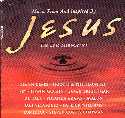
• Various: Music From and Inspired By Jesus: The Epic Miniseries, Capitol/Sparrow, 2000.
THE VERDICT is still out on how true to the Bible the upcoming CBS mini-series Jesus is, but this past month I've been listening to Music From and Inspired By Jesus: The Epic Miniseries (airing May 14 on BCTV) and spiritual truths are found among the positive pop.
The orchestral opening theme and Andrew Lloyd Webber's 'Pie Jesu' don't fit with the other artists and their tracks, but they add to the plethora of styles that bounce all over the map. From the pop radio single 'I Need You' by young country crooner Leann Rimes to the R & B cover of Earth, Wind and Fire's 'Shining Star' by Yolanda Adams, the album covers a lot of ground. Unfortunately, many of the lyrics could be heard as songs of human love and relationship rather than for their true meaning.
The most blatantly Christian message comes, oddly, from secular artist Edwin McCain as he sings "Son of God, our Savior and King / You're taking away the sins of the world / So I'll raise my voice and sing." But Steven Curtis Chapman, Avalon and Jaci Valesquez do offer great songs among secular peers like Hootie & The Blowfish, Lonestar, Edwin McCain and 98ö.
The standout track is dc Talk's cover of the Norman Greenbaum classic 'Spirit in the Sky,' which has already caused some controversy among Christians who associate the song more with the psychedelic rock'n'roll era rather than the life of Jesus -- even though the trio got Greenbaum's permission to change the lyric, "I've never been a sinner, I've never sinned" to "You know that I'm a sinner, we've all sinned." The message of the song seems clear to me.
-- Kevin Pollard
• Patrick Williams: Jesus: Original Score, Angel/Sparrow, 2000.
THE JESUS mini-series playing on CBS this month is the first major production to be based on the gospels since Franco Zeffirelli's Jesus of Nazareth was broadcast on NBC back in 1977. And it seems the new film will be, in some ways, a more modest affair. That is certainly true of the soundtrack.
Patrick Williams has more than 180 credits to his name, almost all of them in television. It's difficult to evaluate his score without seeing the action it is supposed to accompany, but it sounds more emotional, more intimately involved in the lives of the film's characters, than the loftier music Maurice Jarre composed for Zeffirelli.
'Joseph Dies,' for example, strikes a tragic note, presumably conveying the sadness Jesus feels at the death of his earthly father. Williams also conveys the spiritual significance of Jerusalem's holy places with a hint of wordless choral singing in 'Temple, the Early Days.' Other tracks sound a bit too sparse; they may work well within the film, but on their own, they don't fare so well.
Filmmakers in this genre often borrow existing sacred music. In The Gospel According to St. Matthew (1964), Pier Paolo Pasolini used Congolese hymns and Bach's Passion to convey Christianity's global impact. George Stevens reportedly offended composer Alfred Newman by rejecting a section of his score in favor of Handel's 'Hallelujah' chorus for a pivotal moment in The Greatest Story Ever Told (1965).
Here, the sacred work in question is Andrew Lloyd Webber's 'Pie Jesu,' performed by Sarah Brightman. On the disc, it is sandwiched between 'Taken to Pilate' and 'The Passion,' and I have no idea how the producers plan to incorporate this beautifully sung piece into this otherwise grim part of the story. But it should be interesting to see. -- Peter T. Chattaway