
BCCN: God's grace shines through Gesualdo's harmonies
BC Christian News, · Arts
• BC Christian News • OCTOBER ISSUE 2000 • VOL. 20 #10 • Formerly "Christian Info News" •
God's grace shines through Gesualdo's harmonies
- - - - - - - - - - - - - - - - - - - - - - - - - - - - - - - - - - - - - - - - - - - -
By David F. Dawes
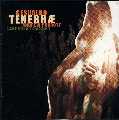
• Taverner Consort: Gesualdo - Tenebrae, Sony Classical, 2000.
DON CARLO Gesualdo, Prince of Venosa, was one bad dude. In 1590, he scandalized society by murdering and then mutilating his adulterous wife and her lover. He also attained notoriety of a more benign sort, as a composer of madrigals. Beginning in 1603, he began publishing sacred music. His Tenebrae for Good Friday, published in 1611, is among the more innovative and daring music in the tradition of Gregorian chant. It features remarkably odd, even dissonant harmonies, which somehow work.
This CD is a very tasteful presentation, featuring Gesualdo's nine polyphonic motets interspersed with the standard, monophonic chants that were sung in churches on Good Friday. The contrast between the chants, sung in unison with lower voices, and Gesualdo's gorgeous, high-voiced multiple harmonies, is stunning. The all-male Taverner Consort, under Andrew Parrott's direction, do an outstanding job.
As royalty, Gesualdo had power and wealth -- and therefore no real need to obtain anyone's approval. The fact that he produced such extraordinary music of repentance may very well indicate that he underwent a transformation. This CD is a good reminder that God can use anyone -- even a killer.
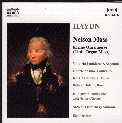
• Hungarian Radio and Television Chorus: Haydn - Nelson Mass, Naxos, 2000.
One of Franz Joseph Haydn's more celebrated sacred works was first performed soon after Admiral Nelson's defeat of Napoleon, and so became associated in the public's mind with the British hero. The actual title was Mass in Anxious Times; however, there is no trace of anxiety in this great music. The impassioned choruses invoke a faith in the fact that God will prevail.
Beginning with an assertive Kyrie Eleison ('Lord Have Mercy'), this performance acquires a creative and emotional momentum which peaks during the Credo ('I Believe'), with a chorus extolling the resurrection; the finale, Dona Nobis Pacem ('Grant Us Peace'), has a joyful feel, as if God has already granted the request for peace.
There is outstanding ensemble work by several soloists, especially soprano Viktoria Loukianetz. She also shines in the CD's finale, a short Haydn work entitled Little Organ Mass. Excellent work by conductor Bela Drahos.
• Clare College Choir: Illumina, Collegium, 1999.
Under Timothy Brown's direction, this superb British ensemble once again triumphs, with a fine distillation of the sacred choral tradition, spanning the centuries from some of the earliest known compositions to 20th century masterworks. Composers include Giovanni da Palestrina, Hildegard of Bingen, Sergei Rachmaninov, Thomas Tallis, John Rutter, William Byrd and Josquin Despres.
The standout piece is Gyorgy Ligeti's extraordinary Lux Aeterna ('Eternal Light'). Near the beginning is an exquisite crescendo, which conveys a sense of light bursting outward. The remainder of the piece consists of layers of prolonged, ethereal notes; technically, much of it is dissonant -- but paradoxically, it is so peaceful that there is nothing jarring about the dissonance. All of these great works are beautifully sung, as one expects with this choir.
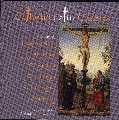
• The Cathedral Singers: Catholic Latin Classics, GIA, 2000.
This Chicago choir, under the able direction of Richard Proulx, presents a good collection of sacred material, concentrating mainly on the 18th and 19th centuries. There are some justly famous pieces, such as Cesar Franck's Panis Angelicus and Franz Schubert's Ave Maria.
Catholic Latin Classics is also distinguished by the welcome inclusion of excellent material by more obscure composers -- such as Anthony Werner, Samuel Webbe, Antonio Lotti, Theodore Dubois and Maximillian Stadler -- and several by the renowned and prolific Anonymous.
The CD offers a notable bit of musicology, presenting O Bone Jesu as the work of one Marc Antonio Ingegneri; this lovely a capella piece was once attributed to Palestrina -- which is understandable, considering the quality of the music. Another highlight is Ave Verum Corpus -- proof that Mozart is almost certainly in heaven.