
BCCN: Personal reflections on tragedy and hope in Payatas
BC Christian News, · International
• BC Christian News • OCTOBER ISSUE 2000 • VOL. 20 #10 • Formerly "Christian Info News" •
Personal reflections on tragedy and hope in Payatas
- - - - - - - - - - - - - - - - - - - - - - - - - - - - - - - - - - - - - - - - - - - -
 |
By Christina Chiu
I FIRST learned of Payatas in July, while watching images on television. The Patayas dump in Quezon City, part of metropolitan Manila, had collapsed onto the nearby houses of squatters, kiling 218 people. I saw people being pulled out of the mountain of putrid garbage; survivors being resuscitated; the dead being put into body bags; and traumatized survivors wailing and weeping.
I remember praying with my supervisor at Servants, and crying tears that flowed together with the tears of the people at Payatas and with Jesus tears. I remember the anger I felt as I read about Quezon City Mayor Mel Mathay blaming the residents of Payatas for this tragedy because they were obstinate, greedy and unwilling to relocate from Payatas.
On the other hand, I felt admiration as I read about the residents of Smokey Mountain in the Tondos slums, who organized to bring relief through food and clothing; they also stated that they were planning to raise awareness and advocacy to help the displaced families in their rehabilitation and quest for justice. They have committed themselves to deliver a strong statement of support for the people of Payatas, in whatever steps they will take to demand a concrete, long-term government action on their plight.
These people, who have suffered in ways similar to the waste pickers of Payatas, have much more compassion, and a much better understanding of the issues than many of those in government. One of their community leaders, Gorumba, states:
The problem is not about lack of shelter, but about lack of jobs. Close down Payatas and move the residents out but they will end up flocking to the next site where garbage is piling up, for lack of other forms of livelihood.
This is in sharp contrast to the response of the politicians, such as President Estrada. He demonstrated an apparent lack of concern in his State of the Nation address July 24, stating: We must by all means prevent another Payatas by encouraging the reduction, segregation, recycling and composting of garbage; and by using alternative state-of-the-art technologies.
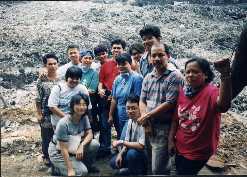
My colleagues and I were able to participate in giving some relief. It was even more rewarding to be able to visit Payatas and meet with the pastors there. We were brought closer to the human reality.
We were able to contribute our time, resources and labour and to see positive results. We were able to reach our goals, and perhaps even to accomplish more than we had hoped to.
I was impressed to see 20 pastors and volunteers from their churches being organized and mobilized under the Payatas Pastors for Christ movement. It was encouraging to see Christians working together to provide distribution of relief goods, and to visit families and provide one-on-one counseling for individuals who have been traumatized.
The most encouraging part for me was when I learned how the Payatas residents had answered the accusations of the mayor. They stated that they had collectively planned for, bought and are about to develop a relocation site for themselves with little or no help from the government.
They set up an Urban Poor Savings Association. Through this organization, they secured a three-hectare property in San Isidro, Montalban. When the land is developed, some 300 families will be moving at least 10 kilometres from the garbage. After that, jobs will be generated, and skills will be taught so that people will no longer have to scavenge through garbage to sustain their lives.
These experiences have reinforced for me the value of an incarnational missional approach, and of community development. As they say in the Philippines: Pulong, Tulong, Sulong (dialogue, self-help, progress) these things empower people.
Christina Chiu is a member of the Vancouver Eastside Vineyard who is working with Servants to Asias Urban Poor.