
• BC Christian News • MARCH ISSUE 2001 • VOL. 21 #3 • Formerly "Christian Info News" •
Reflections on ecumenism in action
 |
AS A FELLOWSHIP of 342 churches in some 120 countries, from virtually all Christian traditions, the World Council of Churches (WCC) is ecumenism in action. I was privileged to be one of two Canadians chosen to be a steward at the WCC's Central Committee meeting in Germany, in February.
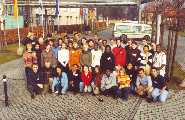
Stewards are youth from 18 to 30 years old, who are leaders in their churches. Our function was to help the meeting run smoothly -- doing such things as photocopying documents, dealing with the media, confirming flights for the delegates and running computers.
For three days, I stayed in Neuruppin, one hour from Berlin. My group of six stewards toured the city, witnessing the ways the Lutheran church in the area is dealing with urban problems.
I had never before realized that racism is on the rise in Germany, and that neo-Nazis are becoming increasingly threatening. I had also never realized the extent to which churches are having difficulty in Germany. According to the pastor we worked with, East Germans were not used to being allowed to choose their religious affiliation; as a result, many people weren't involved in churches at all. Beautiful churches stand cold and almost empty.
I spent a week at a retreat centre outside Berlin, where the stewards gathered to truly live ecumenism. We discussed violence -- and what it means in our different cultures -- in light of the WCC launch of the Decade to Overcome Violence, which was to occur the following week.
We heard from Ephrem, an Ethiopian; for him, violence meant war in his country. Arthur, from Niue -- a small island close to New Zealand -- explained that violence in his context means alcoholism, and spousal and child abuse. Many declared that violence means racism in many forms.
We had many questions and few answers; but sharing our stories made it easier to see clearly in our own contexts. We had cultural nights, where each region was given half an hour to share an aspect of their culture with the group.
At the 10-day Central Committee meeting in Potsdam, we watched the leaders of our churches discuss the same things we had talked about the week before. In many instances, they came up with similar conclusions. I began to wonder if these discussions occurred only in theory, and whether ecumenism happened only at the grassroots level.
I was wrong! Several days after the meeting, many clergy from different denominations -- including Norman Shanks, leader of the Iona Community -- were arrested in Scotland, for demonstrating against nuclear weapons. This showed me that ecumenism happens at all levels of the church -- and that the church can make a difference in overcoming violence.
The meeting taught me a lot. Now, when I hear news of an event in another country, I listen much more carefully -- because I know someone living there, and I wonder how their lives are being affected.
I also learned that God transcends language and culture. When each denomination shares their unique ways of worshipping God, we have a clearer picture of who God is -- and we're better able to express our love for him.
I now have a much clearer sense of the value of the church in the world. We are not helpless in our contexts, if we think of the Christians all over the world praying and working for us. When we work together, great things can be done!
Kelly Duncan is communications coordinator at Vancouver School of Theology.