
• BC Christian News • APRIL ISSUE 2001 • VOL. 21 #4 • Formerly "Christian Info News" •
A tale of changed cities
THE UNEXPECTED success of two regionally produced videos has brought the 'community transformation' concept to the attention of many Christians -- in B.C. and worldwide -- attracting both interest and some questions.
Transformations and Transformations II: The Glory Spreads, (which will premiere in Seattle April 30) were produced at the Sentinel Group in Lynnwood, Washington, and distributed nationally through Sentinel Canada in Saanichton, B.C., under former Anglican minister Alistair Petrie.
Petrie says Sentinel Group originally produced only 5,000 copies of the video, which depicts the dramatic transformation of four cities worldwide, birthed in part through years of prayer, unity and perseverance by local believers. The idea was to distribute the videos globally to encourage people to pray with greater expectation.
Today, less than two years after the first Transformations video was released, more than 150,000 copies circulating in about 150 countries have been seen by at least 50 million people, Petrie says. Prime ministers, presidents, governors, mayors, and citizens in cities around the globe have viewed the video, often on secular television. Petrie calls the video's success "totally staggering."
Community transformation, the concept these videos so vividly trace, is the idea that entire cities and villages can be completely changed on every level of life, including political, sociological and spiritual. This is not a state of complete sinlessness, rather a visible and measurable impact on all areas of life in the city that demonstrates the reality of God at work, explains Denys Blackmore, coordinator of the City/ Community Transformation track of Vision Canada under the Evangelical Fellowship of Canada (EFC). The track helps leaders nation-wide plan for transformation in their own communities.
 |
Canadian connections
On the heels of Transformations comes the second video, which is generating considerable anticipation. Transformations II has its Canadian premiere in Victoria May 3, showing the following two days in Vancouver. Conference organizers attempted to secure Canada Place for the screening in Vancouver, but were unable to do so. Instead, there will be two showings, May 4 and 5; the first as part of the conference, the second free to the public. The film then continues on a tour of more than 70 cities worldwide.
Transformations II moves from community to regional transformation, highlighting Canada's own Arctic as a region undergoing complete change. Billy Arnaquq, a Full Gospel pastor in the Arctic for 13 years, is interviewed in Transformations II.
Arnaquq told BCCN that, in the Arctic, "every community is being touched" by God's power. Believers are now chartering their own aircraft and reaching out to Labrador. "The momentum is just flowing," he said. "Every time we have a conference, we look for the biggest building in every community. There are so many Christians in the Arctic, sometimes I just think it's too easy."
Towns such as Pond Inlet, which used to be known as "drunk" communities, have been totally changed, he says. It is the "unbreakable" unity, commitment and love between leaders of different denominations that "allows God's Spirit to move," he believes. Arnaquq will be one of five Innu taking turns as speakers on the Canadian Transformations tour, which stops at Ottawa, Toronto and Edmonton after B.C.
Arnaquq, who lives in Qikiqtarjuaq, NWT, says this transformation touches the political and sociological arenas of his community. The mayor and all the city councillors of Qikiqtarjuaq are now Christians, he says. James Arreak, finance minister of Nunavut, is a Christian and will be one of the Transformations conference speakers as well.
Transformations II also focuses on Uganda, a nation with significant B.C. connections. On December 31, 1999, with the country's president in attendance, Christians gathered in Uganda's biggest stadium to covenant the nation to God for the next 1,000 years.
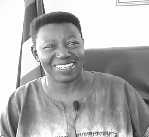 |
The man reading the declaration, Laban Jjumba, started Intercessors for Uganda, and now operates the African House of Prayer. Jjumba is a friend of Silas Mubanda, coordinator of Vancouver@Prayer, an interdenominational ministry.
Once home to despot Idi Amin, Uganda now has many Christian government leaders. There is even a minister of ethics and integrity, Miriam Matembe, who is interviewed in Transformations II. Matembe is Mubanda's sister-in-law, elder sister to his wife Margaret.
'Slice' of story
As exciting as these videos are, local organizers insist they need to be seen in perspective. The community transformation movement inspired the videos, not the other way around, says Murray Moerman of Outreach Canada, one of the organizations promoting the transformation process in this province. The videos show a "slice" of what can occur in a community, Blackmore says, but do not give a complete picture of the years of sacrifice, prayer and hard work preceding the exciting events the videos depict.
Blackmore believes Canada is in the early stages of the transformational process. There are encouraging signs of change across the country, he says, such as increased hope, growing unity among denominations, growth in prayer movements and a sense that Christ's Great Commission can actually be accomplished.
Proponents believe that following principles derived by observing trends common to cities in transformation can aid in fostering a transformational process. These principles include such things as united prayer; public reconciliation; unity among leadership; public power encounters; and the use of 'spiritual diagnostics' to aid in prayer.
Leaders in several communities in the Lower Mainland have met together to begin to discuss some of these principles. In Maple Ridge, church leaders have met to study City Reaching, Jack Dennison's book on community transformation. The Vancouver House of Prayer and the War Room in Kelowna are examples of accelerating prayer movements.
One of the hallmarks of transformed communities is a unity between denominations that is still respectful of differences. Organizers in B.C. have made concerted efforts to invite leaders from the broad spectrum of the church, making phone calls and meeting with leaders individually to address concerns, say organizers Gwen McVicker of the Salvation Army and David Richardson of African Enterprise.
Concerns
Richardson says there are concerns about the movement that need to be heard and understood. A primary issue is that enumerating principles of transformation that have worked in other cities creates a "model cum recipe cum process" for what is essentially a work of the Holy Spirit.
Ed Hird, of St. Simon's Anglican Church in Deep Cove, says he has some "unresolved reservations" about the transformations movement -- questions he doesn't feel have been answered, despite meeting to discuss them with organizers. He feels the movement is "tipped a little too far in the direction of what we can do to make revival happen."
"We live in a culture of fads," Hird says. "Every two to three years there's a new fad, and it's going to bring revival; everybody gets onside and there's all these big meetings, and then it kind of gets discarded and you go on to the next thing. Transformations is sweeping the world . . . It's another of what I would call the 'revival-or-bust syndrome.' People put all their chips in this latest thing that's going to do it, and then they almost can't live with themselves when it doesn't come through."
He adds that while he doesn't believe this is what transformation leaders envision, there is a lot of potential for this to happen. Once a movement gains momentum, Hird believes, the real questions "often don't get taken seriously . . . even the meetings are largely, in my sense, promotional meetings rather than serious investigative meetings." Nevertheless, he adds, "I deeply respect the people involved with this, and I'm not questioning their integrity as Christians."
Others, including Justin Cooper, president of Redeemer College in Hamilton, Ontario, reflect this critique. While he appreciates the movement's focus on a "comprehensive" rather than a "truncated" evangelism, he sees a tendency to treat the movement as a formula to be adopted and implemented.
Echoing West Vancouver pastor Alan Roxburgh, who recently spoke at Redeemer, Cooper says that while this is not something "endemic" to the movement, it is a tendency of westerners coming out of modernity to look for "technique."
The church cannot rely on recipes, Cooper says. "It's about hearing from the Lord . . . Otherwise it will just be some local churches' program for 2001, and when it's done, you can set it aside -- and you'll be looking for the new gimmick for 2002."
Richardson agrees it is theologically "erroneous" to try to "encapsulate and formulate a sovereign work of God." Nobody, he adds, is trying to say it is a "magical formula." He hopes the "checks and balances" of the whole church coming together to discuss such concepts will bring clarity to these and other thorny issues.
David Reed, professor of pastoral theology at Wycliffe College in Toronto, has concerns about the movement's 'spiritual mapping' diagnostic tool -- specifically, its assumptions about 'territorial spirits.' He sees a cultural shift that embraces the spiritual nature of the world as a 'new cosmology' that the church must address.
While Reed sees larger benefits to drawing the church together in unity, he cautions that there is a tendency to read one's prejudices into the spiritual dynamics of a city, thus potentially missing the demonic in one's own middle-class culture that may be sustaining many of the evils in a city.
Revival is "remarkably not under our control," says Hird. People may seek to imitate structures that worked elsewhere, but "structures alone don't create the new wine."
David Richardson encourages anyone with questions about the movement to attend the video presentations, and says the leadership team would welcome input from local leaders