
Many faces of Catholicism
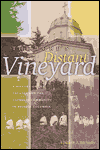 |
• Vincent J. McNally: The Lord's Distant Vineyard, University of Alberta Press, 2000.
SUBTITLED 'A History of the Oblates and the Catholic Community in British Columbia,' this book fills in a major gap in the history of the Catholic church, and of religion, in our province.
The Missionary Oblates of Mary Immaculate emerged in France as a response to the liberalism and anti-clericalism flowing from the French Revolution. That they were able to adapt to the anglophone -- and religiously apathetic -- culture they found on Canada's frontier west coast is surprising.
However, the Oblates persevered, and had a major impact on the Catholic church in B.C.. Even now, according to the author, they make up the great majority of the clergy in the dioceses of Prince George and Whitehorse -- and, with the exception of the diocese of Victoria, B.C.'s dominant male religious community. Adam Exner, archbishop of the archdiocese of Vancouver is an Oblate.
The author is sympathetic to the Oblates, but offers a critical assessment, for example, of their evangelization of B.C.'s native people through residential schools.
At 443 pages, with extensive bibliography, appendices and footnotes, this will not be read by most. But those who want to know how the Catholic church in B.C. was formed will want to delve into this useful work.
• Raymond J.A. Huel: Proclaiming the Gospel to the Indians and the Metis, University of Alberta Press, 1996.
In this book, Raymond Huel, who introduced The Lord's Distant Vineyard, wrote a history of the Missionary Oblates of Mary Immaculate in Western Canada, from 1845 - 1945. Both books were published by the University of Alberta Press as part of the Western Oblate History Project.
• Patrick Jamieson: In the Avant-Garde , Ekstasis, 2002.
This weighty local publication considers 'The Prophetic Catholicism of Remi De Roo.' Author Patrick Jamieson knows his subject well, as he edited Island Catholic News during De Roo's last 12 years as Bishop of Victoria (1987 - 1999).
Since he was appointed to that post at just 38 years old, in 1962, De Roo has been recognized as a 'progressive' well beyond B.C. Admirers saw him as a prophetic voice; critics, of whom there were also many, felt he was leading the church astray.
In the Avant-Garde is by no means an objective account of De Roo's career. Jamieson describes his subject as a "Canada's most outspoken and controversial Roman Catholic bishop . . . a genuinely revolutionary figure at the heart of an ultra-conservative institution."
• Peter McDonough and Eugene C. Bianchi: Passionate Uncertainty , University of California Press, 2002.
The Society of Jesus remains the largest and most controversial religious order of men in Catholicism. However, since the 1960s, Jesuits in the United States have lost more than half their members and have experienced a massive upheaval in what they believe and in how they work and live. This book examines the current state of the Jesuits in the United States.
• Michael W. Higgins and Douglas R. Letson: Power & Peril: The Catholic Church at the Crossroads , HarperCollins, 2002.
The authors are clearly expecting some negative reaction to what they describe as "not an exercise in deconstruction, but a summons to hope." They tackle a range of issues. Among their challenging comments is that the "Vatican . . . seems more intent on pontificating, on providing the last word, than entering into respectful dialogue."
Higgins and Letson, both Canadian authors with a number of books and a wealth of academic experience, offer "a call for positive dialogue so that through honest and open discussion, we who are Church might all come to understand just a little bit better how to make the Church a more credible witness in a world increasingly in need of evangelization."
• George Weigel: Witness to Hope, Cliff Street, 1999.
This massive, 1,000-page biography of Pope John Paul II has been very well received, and would provide a good counterpoint to Power & Peril. At the very least -- whatever one thinks of its perspective -- Witness to Hope is well written and offers a wealth of background on the world's most prominent Christian.
• William J. La Due: The Chair of Saint Peter, Orbis, 1999.
This history of the papacy is both well researched and accessible to the average reader. It tells the story of individual popes, but also explains how the papacy has attained its present form.
• John L. Allen, Jr.: Cardinal Ratzinger, Continuum, 2000.
Subtitled 'The Vatican's Enforcer of the Faith,' this work would share a similar outlook with the authors of Power & Peril.
John Allen says, "The brand of Catholicism I picked up -- faithful but evolving, open to dissent, engaged with society -- was what I assumed was meant by the term 'mainstream.'" He says the majority of Catholics he associates with would "probably ordain women and married men, permit birth control and stop demanding loyalty oaths," a position which he says is endorsed by "a solid majority of Catholics in the Western world."
But that certainly does not describe the views of the current pope. So why is he writing about the the Vatican's most powerful theologian?
Allen wants people, especially those who have little sympathy for Pope John Paul II's conservative regime, to "do more than impugn one another's motives." He believes Ratzinger is sincere in his views, and would like others who share his more liberal views to better understand the forces that have shared Ratzinger's outlook. Allen hopes his book will encourage a respectful dialogue between conservatives and liberals.
• William J. Callahan: The Catholic Church in Spain, 1875 - 1998, Catholic University of America, 2000.
This in-depth study (nearly 700 pages) considers the resistance of Spain's remarkably traditional Catholic church to the forces of liberalism, republicanism, socialism, anarchism and intellectual pluralism from the late 19th century until the present.
Given the strong opposition to modernity within both the clergy and the laity of the Catholic church -- to the extent that they allied themselves with the fascist Francisco Franco -- it is surprising that the church has been fairly successful in adapting to Spain's current conditions.
• Bob O'Gorman & Mary Faulkner: The Complete Idiot's Guide to Understanding Catholicism, Alpha, 2000.
If the intricacies of the Catholic church leave you bewildered, this could be the place to start. For example, 'Catholicism: It's a Big Tent,' addresses the truly amazing range of views to be found within the orbit of Catholicism.
With chapter subheads such as 'Dazzled by Habits, Collars and Other Funny Clothes,' 'Mary Loses Center Stage' and 'The Poop on Popes,' the Idiot's Guide might seem a little irreverent. But the book is packed with useful information, in bit-sized portions. Fr. Andrew Greeley, professor of social sciences at the University of Chicago, describes it as "excellent."
--