
• BC Christian News • JULY ISSUE 2001 • VOL. 21 #7 • Formerly "Christian Info News" •
Witchcraft poses dilemma for Christians
HARRY POTTER is okay -- on his own. The books are quite well written, and the magical elements should not be too much of a stretch for anyone who has read Christian favourites such as C.S. Lewis and J.R.R. Tolkien.
But Harry does pose a couple of problems for the Christian community. On the one hand, his is the friendliest possible face of witchcraft -- the imaginary kind that we see in TV shows like Bewitched and Sabrina the Teenage Witch -- at a time when our culture is becoming too comfortable with witchcraft in its real-world form.
Christians must make a clear distinction between fantasy involving witchcraft -- which can broaden our children's imagination -- and other popular depictions of witchcraft, which are inimical to Christian faith.
On the other hand, Christians have persecuted witches over the centuries. We have, quite rightly, a guilty conscience and, if we are wise, we will tend to hold our collective tongue when the subject of witchcraft comes up.
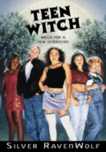
And it has definitely come up. Just cast an eye over the well-stocked 'Magic' and 'Witchcraft' sections at Chapters, where titles such as Spells for Teenage Witches, Teen Witch and The Complete Idiot's Guide to Wicca and Witchcraft entice impressionable young readers into the world of Wicca, paganism and New Age spirituality.
Spells for Teenage Witches, for example, is a disarming 96-page how-to book which will no doubt turn up as a 'cute' birthday present to accompany Harry Potter books, or as a stocking stuffer for children eagerly awaiting J.K. Rowling's next offering.
The opening words encourage the novice witch to "Empower yourself through witchcraft. Seize responsibility. Act upon your desires to change your life and the world." Carrying on the positive theme, the author adds, "So long as your thoughts are pure and you mean no harm to others, the spells in this book can do just that." The start of a long, slippery slope, no doubt, for some unsuspecting youth, including untutored Christians.
Alongside these 'seeker sensitive' books are more serious, and even more disturbing, works. An Encyclopedia of Paganism and Magic, features a woman half-clad in a black blanket, with a skull at her foot, and a spear in her hand.
The Encyclopedia of Wicca & Witchcraft is less flashy, but even more complete, with almost 500 pages of entries on topics as diverse as the 'Cult of the Great Goddess,' 'Jack-in-the-Green' ("an ancient figure representing the season of growth and abundance"), ' 'Moon Magic' and 'Silver Circle, Centre for the Old Religion' ("Modern Witchcraft is a happy mix of religion and magic, but Silver Circle puts more emphasis on the religious side."). The Origins of Modern Witchcraft makes a case for Wicca, based on ancient pagan roots, as a world religion alongside Christianity, Islam and Buddhism.
Links between earlier forms of paganism and current versions of pagan witchcraft may not be as direct as some of their proponents would have us believe, but myth motivates at least as well as fact. And one element of the myth, unfortunately based firmly on fact, is that pagans and witches have been persecuted by Christians.
Resources
There are other books which educate us about, rather than promote, witchcraft. Witchcraft in Europe, 400 - 1700 (Penn, 2001) is a 450-page anthology which would be perfect for any Christian who would like to gloss over the hundreds of years of terror carried out in the name of our faith.
In The Triumph of the Moon (Oxford, 1999), Ronald Hutton argues, "If [modern pagan witchcraft] is the child of any single phenomenon, it is the belated offspring of the Romantic Movement." It "honours and embodies certain aspects of the world -- most prominently the feminine, the night, the wild nature -- which had been subordinated, feared or derided in Western culture since the triumph of Christianity, and in some respects since the dawn of history."
Hutton's purpose in The Triumph of the Moon is to provide a systematic overview of what he describes as "the only religion England has ever given the world." He has done a good job, covering a wide range of topics such as Goddess worship, high and low magic, and relevant folklore. He also looks closely at individuals and movements that have played a role in creating the modern pagan witchcraft movement.
Hutton is fairly even-handed, although he seems sympathetic to the movement, and is less than positive about conservative Christianity.
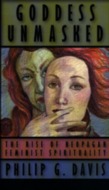
Goddess Unmasked: The Rise of Neopagan Feminist Spirituality (Spence, 1998), by Philip Davis, a religious studies professor at the University of Prince Edward Island, is "an exploration of one of the striking religious success stories of the late 20th century. In the 1950s, no one had heard of Goddess spirituality; now . . . the Goddess is being proclaimed and celebrated in important sectors of modern society, and she show no signs of retreating to her previous state of obscurity."
Davis is much less sympathetic to the "Romantic, neopagan idealization of the female over against the male" than Hutton. He is particularly concerned with the inroads it has made into some parts of the church. Like Hutton, he documents his points generously.
Anyone wishing to gain a grasp on neopagan spirituality -- and put Harry Potter in perspective -- would do well to read Goddess Unmasked alongside The Triumph of the Moon.