
October 2001
'A crackpot letter to all those lost souls'
• Jim White: No Such Place, Luaka Bop/Virgin, 2001.
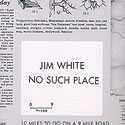
Jim White's debut, Wrong Eyed Jesus, was a highlight of 1997. Seemingly out of the blue he produced one of the most intriguing discs of the year, featuring southern-drenched tales populated by characters reminiscent of Flannery O'Connor's best works, touching upon spiritual matters in a inventive manner.
His sophomore release continues in the same vein, but adds to the equation with sonic assistance from trip hop producers Moorcheba, Q-Burns Abstract Message and others.
While the combination may seem peculiar, it's a resounding success. Much like Moby coupling field hollers with electronica, White's quirky yet solid writing -- juxtaposed against this setting -- results in a fresh, natural sound that defies easy classification. How about alt folk noir trip hop?
White grew up in Pensacola, Florida -- America's leader in churches per capita -- or, as he describes it, "one hell of a churchy town." After getting involved with drugs he came to the church, figuring "if I was going to be strung out, it might as well be on Jesus."
From the beginning, there were problems: "I thought it would be easy, close your eyes and fall into the arms of the Lord, but no matter how hard I tried to embrace it all . . . the end times prophecy, the miraculous healing, the whole maghilla, I never could quite get up to speed. I failed miserably every time I tried talking in tongues, or performing miracles. I just couldn't cut the Jesus mustard."
Yet, like O'Connor, White effectively cuts to the core of the human condition, with tales of redemption and the dark side of life. Summarizing the disc, he explains, "This is a crackpot love letter to all those lost souls out there like me who won't settle for wrong, but have no clue how to get to right."
• Mike Knott: The Life of David, Metro One Music, 2001.
Mike Knott's latest release is every bit the equal of his previous work. Inspired by the biblical king and Knott's own struggles, songs deal with love, regret, struggle, and hope. As usual he pulls no punches. Unfortunately, as good as it is, it's destined -- like Richard Thomson -- to sell to the faithful fan base, garner rave reviews, and disappear. More's the pity, as 20 years on, Knott continues to produce music that deserves to be heard. -- John Cody