
November 2001
Hope for mass conversion of India's 'untouchables'
BC Christian News, · International
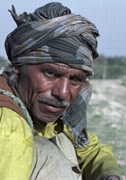
THE HINDU-BASED caste system of India has been in place for several thousand years. The lowest caste, the Dalits -- now numbering some 300 million -- are famously known as 'the untouchables.'
According to Gospel for Asia, the Dalits "are trapped in . . . a life with no education, no safe drinking water, no paying job, frequent forced labour, no rights to own land or homes, no access to worship at the local temple." Further, "although laws have been passed in India forbidding caste discrimination, little has been done to prosecute offenders."
Over the past few years, many in the Dalit community have decided to renounce the caste system by leaving Hinduism. It is widely anticipated that large numbers of them -- possibly millions -- will soon be embracing other faiths as an alternative. Dr. Joseph D'Souza, president of the All India Christian Council, writes: "The Dalit federation reports that there has been a huge response to their 'Quit Hinduism' campaign . . . Church leaders from around India report that Dalits are contacting them and expressing their desire to come into the Christian faith."
A massive Dalit rally is scheduled November 4 in New Delhi. Observers expect many in attendance to accept Buddhism; others believe thousands will embrace Christianity.
Noted Indian evangelical and author Vishal Mangalwadi has been observing the movement with much excitement. The following is an modified version of a statement he recently issued to India's Christian leaders:
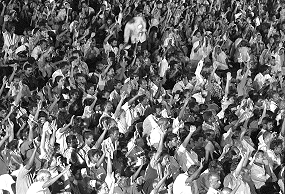
A few years ago, Dalit spokesperson Ram Raj, who is leading a million Hindus to embrace Buddhism, approached some national Christian Leaders in India. He appealed to them to issue a nationwide call for Dalits to quit Hinduism and to become Christians if they wanted to. Raj has declared himself a Buddhist; however, he knows that many of his brothers and sisters prefer to become Christians. Raj specifically gives them the freedom to choose whichever religion they wish, and he is capable of persuading the Dalit federation to accept this.
Raj has become friends with various Christians, and has repeatedly challenged many Christian leaders to baptize at least 20,000 Dalits at the rally November 4. Some of us feel we should participate wholeheartedly; however, certain Christian leaders oppose this idea for various reasons.
Whatever one's rationale for not baptizing, the fact is that if the church refuses to receive Dalits who quit Hinduism November 4, then most Dalits will hear only one message: "You are not good enough to be accepted by Christ and his church." Many will decide that Buddhism is their only hope. The church will lose an historic opportunity to lead large numbers of Dalits to salvation, as well as to be publicly identified with the Dalits in their quest for freedom and dignity.
Moreover, to be a part of a large conversion movement, especially one which includes a politically powerful group of Dalits, will minimize chances of widespread persecution. I believe the Indian government will allow mass conversions to happen peacefully -- as this will show that they are not a Hindu equivalent of the Taliban [Afghanistan's extremist Islamic rulers], as some Christians have maintained.
Reformation
Indian society, politics, economy, arts, urban, rural and moral life need thoroughgoing 'Reformation.' A mass baptism ceremony in New Delhi could become the Indian equivalent of Martin Luther nailing the 95 theses on the Castle Church of Wittenburg and later declaring: "Here I stand, I can do no other." Most of us have not recognized the power of the gospel to transform and reform whole nations, as it did in Rome, Germany, England, Scandinavia, the South Pacific, etc. India has no other hope -- and we have no option but to make that hope clear before the nation.
Raj plans for one million Dalits to quit Hinduism November 4, and to become Buddhists. However, two million conversions to Buddhism will not shake the foundations of the caste system as much as will 20,000 conversions to Christ. A mass conversion to Buddhism could trigger a cultural revolution; however, only a movement to Christ will launch India's total spiritual reformation.
In recent years, God has been dramatically shaking Hinduism and Buddhism, by publicly presenting the claims of Christ to the whole nation. This has been done in several ways: India gave Mother Theresa a state funeral in recognition of her service; Pope John Paul II eloquently declared to India in 1999 that "religious freedom constitutes the very heart of human rights," and refused to give in to the demands that all conversions be stopped; and the murder of missionary Graham Staines by fanatical Hindus caused India's media to put a clear focus on the gospel.
Opposing baptisms
Let us consider some arguments which have been marshalled for not baptizing the Dalits:
1) Some Christians oppose conversion because they don't believe that Jesus is the only way to salvation. They try to present all religions as equally valid. At this moment, one vital fact is that the Dalits themselves don't believe that there is any salvation for them in Hinduism. Their experience is that Hinduism is the cause of their slavery. Would you deny them the salvation that Jesus offers? What will you say when you stand before Jesus, and he asks you: "Did you teach them that 'I Am the Way, the Truth and the Life, no one comes to the Father but by me,' as I commanded you to?"
2) Other Christian leaders oppose conversions because it could lead to social conflict and persecution. However, Jesus taught his disciples that such conflict was inevitable for those who believed in him. Is it Christian to allow our desire for peace and security to override the Dalits' need for emancipation from centuries of slavery? More importantly, Jesus explicitly prepared his disciples for persecution and martyrdom. He commands us to "love one another as I have loved you" -- even unto death. He also commands us to "take up our cross."
3) Some Christian leaders oppose baptisms because they believe that only mature believers should be baptized, after due teaching; others see baptism as a symbol of acceptance of a repentant sinner by God, and will baptize even newborn believers and disciple them later. At Pentecost, Peter's command was to "repent and be baptized." That same day, the church of 120 baptized 3,000 who repented and believed. They were not discipled until later (Acts 2: 37 - 43). Extensive teaching before baptism is a good tradition, but it does not appear to be an absolute biblical example, let alone a requirement for salvation. This is obviously a point on which believers can differ with each other sincerely. Can we not unite together November 4 in our witness? Some may see baptism as a certificate of enrollment in the school of discipleship; others may see it as a graduation diploma. Those who hold the second view should have the freedom to baptize November 4. To prejudge the Dalits, by assuming that they cannot possibly be ready, is a prejudice.
Political baptisms?
4) Some Christian leaders are hesitant to participate, fearing that these would be 'political' and not biblical baptisms. However, 3,000 repented, believed and were publicly baptized at Pentecost. Their baptisms in Jesus' name very publicly repudiated the acts of Jerusalem's religious and political authorities in condemning and executing Jesus. This could equally have been considered a very political act -- yet the apostles baptized them immediately, despite the political implications and dangers.
Consider the consequences for Dalits who "quit Hinduism" November 4, publicly declare their commitment to Christ and are publicly baptized. Will they not face even greater ostracism, persecution and possibly martyrdom?
As for the possibility that some may be baptized without truly understanding or accepting the gospel: Jesus explicitly instructed us to weed out the "tares" from the wheat, but to let both grow together lest we root up some wheat. Let us accept all whom God brings, and leave to Jesus the responsibility to separate the wheat from the tares.
5) Some Christian leaders are hesitant to baptize on November 4 because they do not grasp the logistics of baptizing 20,000 or more people. Remember, the early church only had 120 to baptize 3,000. Immersion is obviously a practical challenge. It might be difficult to arrange for sufficient conventional tanks to immerse 20,000 or more people. How did the apostles baptize 3,000 in about seven hours? What do Baptists do if a sick and dying person, who cannot be immersed, wants to be baptized? Many Baptists would make exceptions in such impossible situations and allow sprinkling. If the numbers of new believers November 4 presents an impossible practical situation, then why not see it as an exception and allow both immersion and sprinkling? I believe the present situation should force us to question whether it is right to constrain the expansion of Jesus' kingdom by the quantity of water used in baptism.
In conclusion: Dare we hinder these oppressed people from responding to Jesus' call, by making them feel unwelcome? Paul challenges us: "I have become all things to all men so that by all possible means I might save some" (1 Corinthians 9: 22). Let us use "all possible means" to make them welcome, even if it stretches us out of our traditions and comfort zones. Many have taken up the challenge, labouring to organize this huge event. Let us pray for our Lord to guide, unite and empower us.
Vishal Mangalwadi's latest book is The Quest for Freedom and Dignity: Caste, Conversion and Cultural Revolution. The text can be viewed at www.vishalmangalwadi.com under the internet title Touch Thy Neighbor.