
November 2001
The Shroud of Turin: proof of resurrection?
BC Christian News, · Top Stories
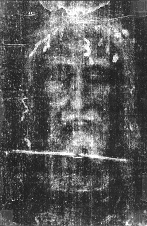
THE SHROUD of Turin is often considered as nothing more than a curiosity, especially by Protestants. However, its significance for the claim that Jesus was resurrected is arguably quite important.
Three claims need to be demonstrated in order to establish that anyone at all has come back to life. First, we need to show that they were indeed dead, not merely comatose or unconscious. This requirement reminds us of 19th century critics of Christianity who argued that Jesus was not dead when he was removed from his cross. However, few critics of Christian faith now assert that he was not dead; most take for granted that the Romans would not have let him get away alive. The New Testament descriptions of his last moments alive are generally taken to be historically accurate.
Second, we need to show that the dead person was seen alive after death. This is a point that the gospels go to some length to defend, and a point about which many questions have been raised. I argued in Visions of Jesus (Oxford, 1997) that some of these questions can probably be answered, and suggested that experiences in which Jesus is reported to have been seen after the biblical era support the post-resurrection appearance accounts in the gospels. We might say that the textual evidence for the appearances receive important corroboration from nonbiblical experiences.
The third requirement in defending a resurrection is showing that the corpse of the dead person no longer exists. This is particularly important in connection with resurrection claims when no one is present to see it happen.
In the case of Jesus, the fact that his corpse was not found in the tomb where he had been buried is sometimes considered sufficient to show that his body no longer existed. But it could have been in the next tomb, or in the gardener's shed, or in the ditch behind the cemetery, or in innumerable other places. The New Testament evidence on this point is weaker than is commonly thought. Moreover, no amount of textual evidence can plausibly establish that a corpse has gone out of existence. Something more is required.
X-ray
This is where the Shroud becomes important. The image of the man on its surface not only has properties of a photograph, which the world has known since 1898, but also has properties of an X-ray, seemingly from a body that broke apart at the atomic or subatomic level. The first disciples are said to have marveled at the cloth that wrapped the body of Jesus, but they could not have understood the meaning of its image, if they saw it. That meaning seems to require familiarity with 20th century physics. In the Shroud we might have even stronger evidence for the disappearance of the body of Jesus, as required in a resurrection, than the disciples had on the morning it happened.
Christianity is under close critical scrutiny in Western thought, in part because the achievements of science have taught all of us the importance of evidence, especially when historical claims are at stake. Moreover, the rise of biblical criticism during the last century and a half has shown that the New Testament documents will not be exempted from searching analysis.
We could perhaps say that the attempt to establish essentials of the Christian faith by texts alone -- what could be described as a Protestant project -- has come to an end. Textual evidence must be supplemented by ongoing experience and at least one relic -- the Shroud of Turin. The value of relics is clearly understood by both Catholic and Orthodox branches of the church.
Evidence
The evidence for the claim that a body breaking apart produced the image on the Shroud is complex and circumstantial, but it is impressive. John Jackson, a physicist from Colorado Springs, has done the most important work on the topic. He argues that a number of features of the image can be explained by this conjecture, including the pointillism found in the image, the faint images of bones and teeth and the three dimensional character of the image.
Jackson's conjecture has been expanded upon by Thaddeus Trenn, a historian of science who taught at the University of Toronto until his recent retirement. Trenn suggests that some external form of energy caused the bonds between the protons and neutrons in the atoms that formed the man's body to break apart a phenomenon he describes as weak dematerialization. These protons and neutrons bombarded the cloth immediately adjacent to the corpse, thus producing the pointillistic effect. This was followed by the portion of the Shroud on top of the man then falling through the mix of protons and neutrons, further contributing to the pointillism of the image.
This conjecture explains the three-dimensional character of the Shroud image, which has been known for more than 30 years but never well explained. The image of the nose and chin of the man on the Shroud are darker than his eyes, for example. These varying shades of light and dark depend upon the amount of subatomic material with which the surface was bombarded, which in turn produces enough information in order to create a three-dimensional sculpture of the man. The images of bones and teeth have been defended by Alan Whanger, for years a professor at Duke University Medical Center. They also have examined the enigmatic floral patterns found on the Shroud.
August D. Accetta, a bladder specialist in San Diego, has recently supplied an important corroboration of Jackson's conjecture. By injecting himself with a radioactive substance, having himself x-rayed, and creating a three-dimensional image of himself, he has been able to show that this image bears some important similarities to the three-dimensional image on the Shroud.
The Christian church has often feared the sciences that have grown out of the Enlightenment. However, more than two dozen scientific and technical disciplines are now involved in the study of the Shroud. Ironically, these sciences could prove to be more supportive of the claim central to Christian thought than anyone could have predicted.
Phillip H. Wiebe will present 'The Shroud of Turin: Authenticity and Significance for Theology,' November 15, 7:30 pm, at Block Hall, Neufeld Science Centre, Trinity Western University in Langley. Admission is free.
This negative, created by a photographer in 1898, shows the likeness of a man's face on the Shroud of Turin; markings on the shroud clearly match the various wounds suffered by Jesus of Nazareth. An in-depth analysis of the image is one of the key features of a book by Ian Wilson and Barrie Schwortz, titled The Turin Shroud: The Illustrated Evidence (McArthur & Company, 2000).