
December 2001
Tolkien: A model for Christian writers, artists alike
BC Christian News, · Top Stories
Three Rings for the Elven-kings under the sky,
Seven for the Dwarf-lords in their halls of stone,
Nine for Mortal Men doomed to die,
One for the Dark Lord on his dark throne
In the Land of Mordor where the Shadows lie.
One Ring to rule them all, One Ring to find them,
One Ring to bring them all and in the darkness bind them
In the Land of Mordor where the Shadows lie.
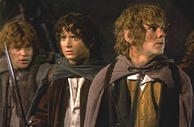
IF YOU'VE never heard or read these verses from the opening of J.R.R. Tolkien's fantasy masterpiece The Lord of the Rings, chances are you'll get your fill of these and all other things Tolkien as The Fellowship of the Ring, the first of three movies based on the series, is released December 19.
Director Peter Jackson has taken on the job that everyone -- and no one -- in Hollywood wanted: transforming the best-selling fantasy epic of all time into three feature-length films. Shot concurrently over a gruelling 14-month schedule (most films take three to four months to shoot) and for a reported budget of $270 million, the films may well become some of the top grossing movies of all time, thanks in part to a fan base that goes back 57 years and has purchased in excess of 100 million copies of the books in more than 40 languages. But only time will tell.
Commercial success aside, the true measure of success for the LOTR films rests in how they fare amongst Tolkien's legions of fans. These fans will no doubt debate and analyze the movies ad nauseum on websites, bulletin boards and newsgroups devoted to everything from working out the finer points of Quenya and Sindarin -- Tolkien's invented Elvish languages, spoken fluently by an estimated 500 -- 600 people worldwide -- to systematically cataloguing every discrepancy between Tolkien's books and leaked copies of LOTR screenplays. Some people have too much time on their hands!
But behind all of the Hollywood buzz and the frayed edges of obsessive fans, stands the man who unwittingly, and sometimes even with regret, started it all: John Ronald Reuel Tolkien (1892-1973). Why did he write The Lord of the Rings? What is the meaning behind the epic (if any) -- and why does the series continue to grow in popularity?
Although best known for The Lord of the Rings, The Hobbit, and numerous other writings related to Middle-earth, J.R.R. Tolkien was more than a mere writer of fantasy stories. Like his contemporary and close friend C.S. Lewis -- in whose conversion to Christianity Tolkien played a key role -- Tolkien was a widely respected Oxford professor, specializing in Old and Middle English. Though, by today's standards, Tolkien's academic publishing record seems rather sparse, what little he did publish had a profound impact on his field. Examples include a famous translation of Sir Gawain and the Green Knight; his lecture 'Beowulf, the Monsters and the Critics'; and his essay on the relationship between the English and Welsh languages.
Fascinated by languages from his youth, Tolkien quickly mastered the requisite Latin and Greek of the English school system and moved on to become competent in a number of other languages.
But Tolkien could do more than simply speak and write these languages. He had a gift for understanding how they worked. Rather than be content to simply learn existing languages, from the time he was 12 years old, Tolkien began inventing languages of his own, just for fun.
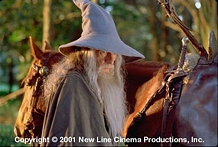
In his foreword to the second edition of LOTR (1966), Tolkien wrote that the epic was "primarily linguistic in inspiration and was begun in order to provide the necessary background of 'history' for Elvish tongues." Talk about turning your hobby into your day job.
Beyond his extraordinary academic and literary achievements, Tolkien was also a man of profound Christian faith -- a major detail of his life often passed over by fans and critics alike, who seem more interested in debating whether Balrogs (one of Tolkien's imaginary monsters) had wings or whether Tolkien should be taken as a serious literary scribe.
Although Church of England by birth, following the death of his father in 1896, Tolkien and his younger brother Hilary followed their mother, Mabel, into the Catholic Church. The move alienated Mabel and her children from the rest of the family; however, the call Mabel felt towards the Catholic Church was irrevocable. Tolkien and Hilary remained devout Catholics their entire lives, even after the early death of their mother when Tolkien was only 12.
As is the case with all who believe, Tolkien's faith could not help but spill over into his work. Just prior to publication of LOTR in 1954, Tolkien admitted that the epic was a "fundamentally religious and Catholic work; unconsciously so at first, but consciously in the revision." However, Tolkien also warned us not to look for any "inner" meaning or message in The Lord of the Rings, as you will find in the fictional writings of Lewis, for example. He claimed to "cordially dislike allegory in all its manifestations.
"I much prefer history, true or feigned," he said, "with its varied applicability to the thought and experience of readers. I think many confuse 'applicability' with 'allegory'; but the one resides in the freedom of the reader, and the other in the purposed domination of the author."
This is not to say that that LOTR is devoid of spiritual truths or insights. Tolkien's tale of Frodo -- a young hobbit (a man-like, decidedly unadventurous creature somewhat smaller than a dwarf) who embarks on a long and perilous journey to destroy the powerful 'Ruling Ring' before Sauron, the sorcerer who forged the ring, can get his hands on it and plunge Middle-earth into the darkest of all ages -- is full of Christian themes and imagery. As in our world, Tolkien makes it clear that the evil in Middle-earth is merely good that has been twisted or misdirected.
Even Gollum, one of the most striking and pathetic creatures in the book, was good before the ring took control of his life and eventually consumed his soul.
And, much like Pilgrim in Pilgrim's Progress, the humble and innocent Frodo is tempted by all manner of distractions along his journey to destroy the ring in the Cracks of Doom, not least of all by the terrible lust for power that the ring represents. But Frodo manages to stay the course and overcome evil through an incredible act of self-sacrifice, by which he manages to purchase a new future for Middle-earth.
While many readers have recognized and been drawn to the spiritual truths inherent in LOTR, (truth being a vital element of all great myths, according to Tolkien), many have pointed out the paradox that Tolkien's work is at once deeply religious but at the same time contains no trace of religious belief, ritual or theology. Tolkien said this state of affairs was intentional, calling Middle-earth "a monotheistic world of 'natural theology.' The odd fact that there are no churches, temples, or religious rites and ceremonies is simply part of the historical climate depicted. . . . I am in any case myself a Christian; but the 'Third Age' [in which LOTR takes place] was not a Christian world," he once said. Despite this lack of blatant religious symbolism, Tolkien believed strongly that the attentive reader would easily be able to deduce the author's religious beliefs merely from reading the story.
A lesson for believers?
The fact that Tolkien, a devout believer, has had his work embraced so warmly by mainstream culture is remarkable at a time when 'Christian' books, music and movies remain a marginal sub-category at best. Even runaway publishing phenomena like the Left Behind series only 'cross over' into regular bookstore chains through sheer volume of sales, not necessarily because they've been accepted as 'legitimate art' by mainstream culture. So how did Tolkien do it? How did this believer manage to 'slip in under the radar?'
Perhaps the secret to Tolkien's enormous popularity and influence lies in the fact that he didn't use his writing as a platform to preach or change the world.
Instead, he merely sought to "try his hand at a really long story that would hold the attention of readers, amuse them, delight them, and at times maybe excite them or deeply move them."
Herein lies a lesson for contemporary Christian (especially evangelical) writers and publishers who feel a story isn't a Christian story unless it depicts someone going through a conversion experience -- writers who write in the declarative sentences of the amateur, rather than taking the time to learn their craft and master the subtle devices of suggestion that only the best writers exhibit.
For many Christians today, fiction is not an art form; it is merely a tool (albeit one viewed with great suspicion) used to draw others into the faith. From this perspective, the message is everything. The fact that it is sometimes delivered in a somewhat shoddy package is a detail hardly worth considering.
What matters are results, not beauty or aesthetic virtue. Sadly, from this sometimes naïvely pragmatic perspective, a book's merit is ultimately measured quantitatively, as in 'number of souls saved,' rather than qualitatively -- is it true, noble, right, pure, lovely, admirable, excellent or praiseworthy?
Such a perspective is short sighted. Is it not enough for fiction to simply give people a taste of God and his creative energy by creating something truly beautiful of our own? To tap into our longing for Eden and close communion with the Creator by creating a myth that conveys these feelings more clearly and movingly than real life, and points us in the direction of their ultimate fulfillment?
To answer these questions, we need to compare the outworkings of the two philosophies. On the one hand, we have J.R.R. Tolkien, who believed that "the chief purpose of life, for any one of us, is to increase according to our capacity our knowledge of God by all the means we have, and to be moved by it to praise and thanks."
Following this philosophy, Tolkien went on to use his God-given gifts and talents to create a myth for the entire world that has affected the lives of tens of millions of people.
Compare that to the insular, little-read works produced by so many Christian fiction writers today; books that are so self-consciously evangelistic that the writers end up tripping over the gospel on the way towards perfecting their craft. The authors only gain an audience of sympathetic believers, who care only whether or not the message of the gospel was clearly presented. Publishing for the choir, so to speak.
Whether Peter Jackson's movies flop or not, The Lord of the Rings will live on. The myth did not die with Tolkien; in fact, it grew even larger after he was gone. Why? Because in creating Middle-earth, Tolkien created something far larger than himself.
And his legacy, of a life spent fulfilling the purpose for which he was created, will forever be available for all to enjoy. In this regard, J.R.R. Tolkien is truly an inspiration and a model for every Christian writer, artist or filmmaker who wishes to impact their world for Christ.