
April 2002
Drawing closer to Damien's ecstasy ... on site of Molokai's leper colony
"The day I died. Monday of Holy Week, 1889."
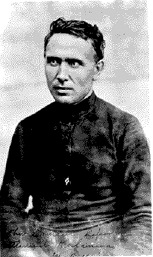
Exactly 100 years later -- Monday of Holy Week, 1989 -- I stood on rough board planks in a Richmond theatre and said those words. In my threadbare cassock and ill-fitting boots, I spoke Father Damien's thoughts as he recalled his final day on earth. "My roosters are crowing and it's getting light. Brother James helps me to sit up and while he is holding me I breathe for the last time. The farewell chant begins outside my door and spreads throughout the settlement, and soon every leper knows that Kamiano's spirit has departed."
An extraordinary experience, to relive moments so spiritually profound and historically significant, on precisely the moments of their centennial.
Five days later, the same sort of realization came over me as I relived the day when a younger Damien when he first encountered the exiled lepers of Molokai.
"The day before Easter, 1873. A cattle boat en route from Maui to Honolulu, Bishop Maigret and I aboard, stops long enough to land some lepers and 50 head of cattle in its hold. Leprosy and I are face to face at last."
The Catholic lepers crowd around the bishop and plead for him to send a priest.
Apart from occasional brief visits from various clergy, the people abandoned on this sour tongue of land are without a church, without a pastor, without spiritual or medical care.
When the young Belgian priest insists on staying, his superior refuses; "No one can put aside all human considerations and live, the one clean man among a thousand lepers."
But Damien does not seem to hear what he is saying. He only sees their need and knows what he must do. Opening his arms to the chaotic scene around him, he cries "This is my niche. This is what I was meant to do. This is why I was born."
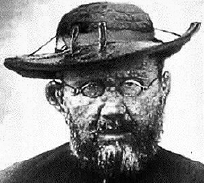
And there I stood, the day before Easter 1989, an actor speaking those same words from the same personal place that Damien spoke from. He was a man suddenly standing in the very centre of God's will for his life: it would cost him much, he would fail thousands of times, but he had found his place in the world. And there I stood, embodying this extraordinary, flawed Christian man, finding myself at the very heart of what God had made me for. I think we are two of the luckiest people ever to walk this earth.
In the summer of 2001 I spent two days at the Settlement on Molokai, walking where Damien walked, seeing the cliffs, hearing the surf I had imagined so many times in my actor's imagination. Kalaupapa is the name for the rocky peninsula of land where the lepers had first been isolated, a natural prison sealed off from the rest of Molokai by the highest sea cliffs in the world.
By an odd set of circumstances I found myself there without a dollar in my pocket, somehow an unexpected arrival even though I had made prior arrangements to be hosted during my visit. (Because Kalaupapa is still an active care facility for Hansen's patients, as people with leprosy are now called, overnight visitors are allowed only as guests of a resident.)
Lacking a guide to take me to the part of the peninsula where Damien had lived and worked -- indeed, lacking anyone whose presence would allow me to leave the immediate vicinity of the guest quarters -- I was at loose ends, and wound up helping a groundskeeper clear brush from an old, crumbling stone wall near the parsonage. As he saw my willingness to work and my interest in Father Damien, this rather taciturn man suddenly opened up about his life, his faith, his love for this place.
Randall Watanuki came to Kalaupapa as a carpenter, but even as he arrived felt that he was destined to live there the rest of his life. He eventually became a Catholic, and married one of the residents in 1995. I was delighted to learn that they had been married April 15 -- the anniversary of Damien's death. On their wedding day, I had given my second 'anniversary performance' as Damien.
Randall and his wife made their honeymoon trip to Damien's homeland of Belgium. Due in large part to the urging of Mother Teresa of Calcutta, Damien was about to be recognized a saint in the Roman Catholic Church. The couple attended the beatification ceremony for the leper priest.
It had been planned that some of the remains of Father Damien were to be returned to his original burial site next to the church he had built on Molokai, and protocol dictated that these relics would be handed over to an official of the church, probably the Bishop of Hawaii. But Pope John Paul, in keeping with Damien's own common humanity and devotion to 'his lepers' over and above any dignitaries or church functionaries, insisted on presenting the remains to residents of Kalaupapa. Randall and his new wife were chosen.
Aldyth Morris' one-man play, Damien, takes as its starting point the day in 1936 when the priest's remains were dug up and taken to Belgium for reburial on the site where he first entered the religious life -- a scene I had relived in performance scores of times. Now here I was cutting brush alongside the very man who had brought some of these remains back to Molokai, the place where Damien had always wanted his body to rest -- among his lepers, almost 3,000 of whom he had laid in the ground during his 16 years on the island.
Randall was only the first of many remarkable people I met during my 48 hours on Molokai. At early mass the next morning I was introduced to Paul, celebrating his 70th birthday that day. He had been brought to Molokai as a small child, separated from his parents and segregated on Molokai until, decades later, the isolation laws were relaxed and he was allowed to travel more freely off the tiny island.
But Molokai is still his home, and as we stood in the morning sun outside the church, this intelligent, outspokenly unsentimental man looked me in the eyes and told me that he thanks God every day for his leprosy: "Otherwise I never would have come here. I never would have known about Father Damien. I wouldn't have God in my life."
I met Father Joseph Hendriks, the 80 year old priest who was born a Flemish Belgian only miles from Damien's birthplace. One of his earliest memories is the day in 1936 when all of Belgium stopped work to mark the return of their national hero, when Damien's body arrived back in his home country.
As a young man, Hendriks entered the same order as Damien, taking Joseph as his religious name -- Damien's birth name. He lived and studied in Damien's childhood home, now part of the order's seminary, and served more than 50 years as a missionary priest in Hawaii before being called to Damien's own parish on Molokai.
This quiet little man seemed genuinely taken aback by the ferocity of this Canadian actor's appetite for details about their mutual hero. We would return again and again to the books which lined his shelves, the pictures on his walls, his own scrapbooks and photo albums, to dig for more and more connection to this remarkable man who had lived in that very place.
Father Joseph took me to the church which Damien built. I stood in the doorway where Damien gathered his parishioners the day he told them he himself had become a leper. I tried to climb the forbidding black cliffs that sealed off the lepers of Kalaupapa from the rest of Molokai. I walked across the lava flows where Damien walked, listened to the pounding surf that lulled him to sleep at night, imagined what it must have been like when as many as a thousand lepers lived in makeshift shacks on this barren, wind-whipped terrain.
It was an astonishing experience to touch the very things Damien touched, to see the places I'd so many times pictured, to smell the tropical smells brought on by the rain, to be startled by the sound of wild pigs in the brush, to feel the weight of isolation and sadness in this remote patch of land covered everywhere with graves marked and unmarked.
Now, as I write this eight months later -- during Holy Week, 2002 -- I'm in the middle of refreshing my lines, digging props and costumes out of storage, preparing for two more weeks of intensive rehearsals before we open Damien once again. And with each page of text I revisit I am flooded with new impressions of Father Damien.
Memories of Molokai surge back, and memories of past performances, and I am filled with a startlingly fresh sense of who Damien was, and of God's presence. And I wonder what our Lord will have to say to me through the words of his servant, Father Damien of Molokai, this time around.
Damien runs at Pacific Theatre April 12 - May 11. There will be special previews to benefit Union Gospel Mission April 10 and 11, and a special performance April 14 to honour Paul and Margaret Brand for their modern-day service to leprosy patients in India and the United States, with all proceeds going to help the Christian Medical and Dental Society to send their students to third world placements. Contact: (604) 731-5518.