
June 2002
Armenian culture and faith in the spotlight
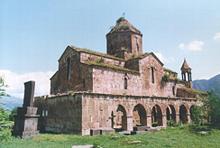
ARMENIA can lay claim to being the oldest nation with an established Christian faith. Last year, the 1,700th anniversary of Armenian Christianity was celebrated.
Recently, Armenian culture and history have been in the media spotlight, thanks to two very different works of art by consummate Canadian artists - both of whom are of Armenian extraction.
Ararat
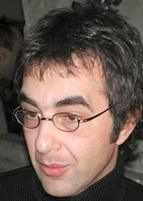
Ararat, the latest film by acclaimed writer/director Atom Egoyan, deals with the still-controversial events of 1915, during which hundreds of thousands of Armenians died.
Armenians claim that some 1.3 million of their countrymen were butchered by Turkish soldiers, under orders from the Ottoman government of the day. The Armenian community commemorates the events every April 24, on Genocide Memorial Day. Some observers believe that, because the claims of genocide were downplayed or dismissed at the time, the Nazi regime was later encouraged to attempt its own genocide of Jews.
According to a recent Canadian Press (CP) story, "Turkey acknowledges that 300,000 Armenians were killed as they were being relocated from the eastern front, to prevent them from helping the invading Russian army. At most, it says, 600,000 Armenians died, some of disease, famine or attacks by marauding bands during the war. But it says the killings were carried out by militias over which the government had no control at the time. "
Ararat portrays a contemporary filmmaker who is attempting to make an epic film about the 1915 events. Egoyan's film premiered May 20 at the Cannes Film Festival, and the director was greeted with intense questioning at a press conference.
"This is an indisputable piece of history, " Egoyan stated. "You look at the wealth of material, most incriminatingly from the American ambassador to Turkey at that time who wrote extensively about what was going on. "News reports from the time, he said, "speak about the trials held by the Turkish government against the perpetrators after World War I, in which they were all found guilty of crimes against humanity. "
Turkish groups have protested the film, as has the Turkish government. Ambassador Erhan Ogut, according to CP, stated that the accusations of genocide are based on distorted and exaggerated information.
"Certain segments of the Armenian population in the war front had been moved from that region, but not deported. Relocation would be a better word . . . It was a historical fact that some of the Armenian militia were fighting with the Russian forces against the Ottoman Empire, the state of which they were subjects . . . The Turks in the region suffered more losses than the Armenians, I assure you. "
"I tried to be as fair-minded as possible, " insisted Egoyan. To this end, he included at least one character in the film who disputes the claims of genocide.
Egoyan, who was born in Cairo and raised in Victoria, B.C., is best known for his drama, The Sweet Hereafter, and films dealing with alienation. Armenian Christianity forms the backdrop of one of his lesser-known works, Calendar; it depicts a Canadian photographer who travels to Armenia to photograph the country's historic churches.
Joyous Light
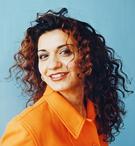
The Christian heritage of Armenia is celebrated in Joyous Light (CBC Records, 2002), the debut CD of rising operatic star Isabel Bayrakdarian.
Armenia was the very first nation to embrace Christianity as its state religion. According to tradition, the Armenian Church was founded in the 1st century by Thaddeus and Bartholomew, two of Christ's original apostles.
Armenian Christians underwent a certain amount of persecution in the early centuries.
One of the more notable persecutors was King Tiridates III - who was converted to Christianity by St. Gregory the Illuminator. In 301, Armenia officially became a Christian state - a dozen years before Rome, under emperor Constantine, ended its persecution of believers.
Joyous Light demonstrates the breadth of Armenia's Christian history by concentrating on liturgical music from the 4th, 5th, 10th, 12th and 13th centuries.
The focus of the album is squarely on the death, resurrection and rulership of Christ.
The title selection, featuring lyrics from the 1st century, sums up the overall meaning of the CD: "O joyous light of the holy immortal glory of the heavenly Father, the Holy giver of life, Jesus Christ. "
Isabel Bayrakdarian has made quite a name for herself in both Canadian and international operatic circles. For her first CD, she could easily have scored a triumph by recording the Mozart arias she has become known for. Instead, she chose to acknowledge her cultural and religious heritage in a deeply personal way.
Commenting on the music, she said: "It's always such an incredible and life-affirming feeling to stand beside my mother in the choir and sing this same beautiful sacred music that I've sung since I was three years old. Singing in the church choir is a family tradition for us, and remains one of the constants in our lives today. "
The music was exquisitely arranged by Armenian-born composer Petros Shoujounian; the singer is accompanied by the Toronto-based Elmer Iseler Singers and Chamber Orchestra, conducted by Raffi Armenian. Bayrakdarian demonstrates both extraordinary sensitivity and impressive vocal control. The results are simply sensational; Joyous Light is both an artistic and spiritual triumph.