
June 2002
Mercies for both physical and spiritual gardens
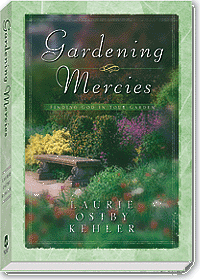
• Laurie Ostby Kehler: Gardening Mercies: Finding God in Your Garden, Bethany, 2001.
 |
I LOVE gardening, and nothing is more rejuvenating for me than to watch the garden come alive with the first signs of spring. My garden takes time and effort; but the results are beautiful to see, smell and touch.
Reading this book has made me aware of the many parallels between my garden and my spiritual life. Laurie Ostby Kehler presents gardening observations and tips - and then draws spiritual applications from them.
The book is divided into 25 short chapters with titles such as 'A Pleasing Aroma,' 'No Bees,' 'Staking,' 'Born-Again Rose,' 'Weeding' and 'Compost'. Each chapter begins with one aspect of gardening and ends with Bible references and 'Growing Point' questions.
For example, the dahlia produces beautiful big flowers; but without support, its stem bends and breaks - and the flowers end up in the dirt, where they are eaten by slugs and insects. Kehler compares this with our need for each other's support to bloom and be fruitful, referring to Romans 1:11-12 and Exodus 4:12-17.
Bees are another very important element in our gardens, because they pass on the pollen from one flower to the next. Without this pollination process, our fruit trees would not produce beautiful, delicious fruit (2 Corinthians 1:4). Kehler shows how the painful 'bees' in our lives - the addictions, disappointments, heartaches - can become 'pollinators' to our faith. For until we turn around and pass along what we have learned to another person who needs some comfort, we won't see or experience the joyful fruit it can produce.
The author tends to ramble a bit; but overall, the book is attractively laid out and appropriately illustrated - and is easy to read.
The attractive Victorian look of the book will, in my view, likely appeal more to the female reader.
I have picked up a lot of practical gardening tips from Gardening Mercies. Did you know, for example, that Epsom salt (magnesium sulfate) produces beautiful roses? And that there are roses that will grow well in semi-shade conditions - breaking all the rules about rose gardening? Another idea I got from this book, which breaks a rule you'll find in most instruction books, is to plant your bulbs underneath perennials and in clusters - so that, after they have finished blooming in early spring, the perennials can grow and camouflage their dying foliage.
I like Kehler's ability to apply God's creation and beauty to our spiritual lives in a very practical way.
To get the most out of my garden, I have to break some rules - just as Jesus broke some of the Pharisees' rules. Maybe, for God to display his glory through me, I have to allow him to break my rules and my ideas about the way he works.
Besides presenting us with helpful tips about plants and gardening techniques, the author has also given us many spiritual examples of how to keep our spiritual gardens healthy and beautiful.
This book makes for great personal devotional reading, and could be an excellent source for Bible and home fellowship study groups. I highly recommend it!