
September 2002
Reclaiming masculine values . . .through Christ
BC Christian News, · Top Stories
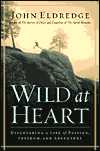
NOBODY knows if Todd Beamer had read John Eldredge's Wild at Heart: Discovering the Secret of a Man's Soul when he boarded United Airlines flight 93, last September 11. Nobody knows what he was saying to himself as he marched down the isle of the aircraft ready to go toe-to-toe with the plane's hijackers.
But through his actions, we know that Beamer displayed the kind of guts and passion that has men stirred up about the message sent out by Eldredge -- that God built guys to take risk, face danger and feel passionate about who we are and what we do. As the details have emerged over the past year, heroes -- from NY firefighters and police to businesspeople rescuing colleagues from the burning towers -- have been claimed as symbols in the war against terrorism.
Beamer has, for the time being, become the archetypal 'guy's guy': a man who, by all accounts, loved God and was committed to raising his family; and a gutsy guy who, along with at least three other like-minded men, gave his life while launching a counter attack against the terrorists who hijacked their plane.
The accolades come because he physically confronted evil. It was within his character -- this 'nice Christian guy' -- to spend his last moments brawling in an airplane cockpit trying to save lives.
Most everyone knows about Beamer's on-board phone conversation with a phone operator, where the last words heard were "Let's roll," as he put the phone down and joined a group of men who stormed the plane's cockpit. Those words -- which Beamer's wife, Lisa, says Todd often said to their two young boys -- have become the battle cry for a nation. The U.S. Air Force has painted their fighter jets with the slogan, a number of songs and charitable agencies have adopted the phrase, and it's the title of Lisa Beamer's book about the incident.
 |
In a sense, people are celebrating Beamer for his display of manhood, the same territory Eldredge is exploring in Wild at Heart.
His book is being passed around in men's meetings and between friends because its talking to men in a straightforward, forget the psychobabble, way. It's encouraging men to ask some tough questions about their hearts, their past relationships with their parents, with their kids, and with God. And, perhaps most frightening to the 'new age, sensitive set' it's a treatise for being, unapologetically, a masculine guy.
However, to merely emphasize bravado or 'chest thumping,' would be to miss the point. While some men are touting Eldredge's book as the next big thing, a la Promise Keepers hysteria in the mid-'90s, the author has written the manual on a subject many men have been talking about for years.
Namely, being a Christian man isn't about striving to be a homogenous, nice guy. To use an apt sports cliché: the bar is higher. The goal isn't to blend in and lose one's character, it's to find a 'wild' faith and to celebrate a God-given masculinity.
"Most men think they are simply here on earth to kill time -- and it's killing them. But the truth is precisely the opposite," he writes. "The secret longing of your heart, whether it's to build a boat and sail it, to write a symphony and play it, to plant a field and care for it -- those are things you were made to do. That's what you're here for. Explore, build, conquer -- you don't have to tell a boy to do those things for the simple reason that it is his purpose. But it's going to take risk, and danger, and there's a catch. Are we willing to live with the level of risk God invites us to? Something inside us hesitates."
No more Mr. Nice Guy
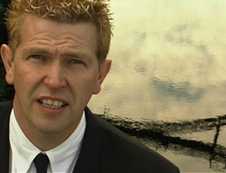
"Nice is what crème-cake is," says youth speaker Phil Cann in a rolling English accent. "Jesus wasn't nice, Paul wasn't nice. Nice, well-rounded people don't change history."
Cann is the host of Quest, a furiously paced, soon-to-be released video series aimed at a youth culture that craves the rush that comes from testing the boundaries. The videos, which resemble the Alpha series only in their attempt to demystify -- or de-churchify -- Christianity, are a collage of 'person on the street' interviews, loud music, clips from extreme sports and Cann's no-nonsense faith message.
With his dyed blond hair and tattooed arms, Cann gives his take on a "dangerous faith" while snowboarding, bungee jumping and riding a rollercoaster. No one would slot him into the 'nice guy' category.
"The bland, passionless Christian is one of the greatest weapons working against the kingdom of God," he told BCCN. "That [type of personality] is an insult to the nature of God."
"I've failed the nice test anyway . . . just ask my family," says Cann, adding that dispensing with the nice guy ideal doesn't give anyone license to be rude to people or become a boor either, it means you have a higher calling than simply being likable.
Cann says a lot of men have misplaced passions. They can spend a huge amount of energy and money on their hobbies, but don't have the will -- or, what Cann cites as the lamest of excuses, the time -- to go beyond the status quo with their faith. "If a guy's got four hours to go and chase a little white ball around a golf course, he's got time to put himself in a situation that's going to scare his pants off . . . It's not rocket science, is it?"
Next spring, he will be making the trek to New Orleans to help out a friend who runs a ministry during Mardi Gras. He won't be handing out sandwiches nor preaching fire and brimstone on Bourbon Street, though.
"I'll be sitting down and talking to people about a God I fell in love with," says Cann. It's the type of situation that can, he admits, be scary, but beats the alternative -- being comfortable and bored.
Cann isn't keen on drawing distinctions between genders when he's talking about faith issues, but there is little doubt that Eldredge would appreciate his view of the Christian life as an adventure.
In Wild at Heart, Eldredge explores the adventurous nature of God. After all, he created this world, full of natural dangers -- poisonous snakes, territorial grizzlies, volcanoes, raging rivers -- and wild places to explore. And he created a yearning in a man's heart that starts when he's a young boy, to get his hands dirty, to experience the world by getting out there and doing something, not just watch it flicker by on television.
The author also asks, isn't God a risk taker, having taken the ultimate risk: giving man free will? He knew it was dangerous, but it was within him to give the 'keys' to Adam and see what he would do with them.
Eldredge then enters controversial territory delves into God's ability to be a warrior, the side of the Creator that many Christians like to gloss over. He points out that virtually every book of the Bible tells us about God's "warring" activity.
"I wonder if the Egyptians who kept Israel under the whip would describe Yahweh as a Really Nice Guy? Plagues, pestilence, the death of every firstborn -- that doesn't sound very gentlemanly now, does it? What would Miss Manners have to say about taking the promised land? Does wholesale slaughter fit under "Calling on Your New Neighbors?"
Good guys finish . . .
Eldredge's point -- that today's Christian man is both "dutiful and separated from his heart" -- resonates with local counsellor Tony Dolfo-Smith, who has been speaking about what he calls "The good boy" for the past eight years. He's currently working on a book, The Death of a Good Boy.
"Have you ever met a really nice guy in your church but, after talking to him, feel like there really isn't anything there? That's the type of man that can be described as the good boy," he says, adding that his research suggests that churches often reward men who slip into the status quo.
"Men are praised in churches for toeing the line. They are put into positions of authority in the church more quickly then those who sometimes disagree with things." Those voicing dissenting opinions are "often sidelined for 'not being a good boy,'" he says.
He credits Eldredge with breaking ground on a number of fronts, but he thinks the author may be pigeon-holing men too much. "I think he's taking one stereotype -- the good guy -- and he points toward another type of man -- the macho guy -- and is exchanging one stereotype for another."
To Dolfo-Smith, there is a broader spectrum of character traits to draw from, beyond what's commonly classified as 'macho.'
"I don't think that's what all men aspire to," says the counsellor, who works for Living Waters Ministries. "We should give room for other types of masculine identity, including their artistic and creative sides."
Emotional rescue
Christian men often lack passion because we "teach our kids from the moment they go to church to be apathetic" according to Cann.
We tell them to be good and sit quietly so that, by the time they are starting to become adults "they've had 16 years of training to go to church and fall asleep." It's then that youth workers like him are charged with pumping them up about their faith again.
"Most men stop growing emotionally when they are little boys," says Dolfo-Smith. "They become good boys, not good men . . . When men come into faith they're still not engaging their emotions, they aren't fully engaging who they are as people."
In North American society, sports are seen as an acceptable forum for men to express their emotions -- either watching or playing. One of the church's closet skeletons is the unsportsmanlike behavior exhibited by members of church sports leagues. This could be the result of the lack a healthy connection to one's emotions, says Dolfo-Smith.
The good boy, he says, is forever "cutting off his emotions." In some cases, Christian athletes feel liberated on the field or rink, and allow an emotional dam to burst. The pressure to be a good boy has waned and, feeling free to express themselves within the confines of competition, the players let loose.
Bearing his image
According to Eldredge, men want desperately to test their manhood, although they are usually afraid of what the outcome of the test will be. They are afraid they won't measure up. So, we give up on our dreams, blend in with the masses and still try to be men. In the words of C.S. Lewis, reprinted in Wild at Heart, "We castrate the gelding and bid him be fruitful." In order to stop "playing the man," Eldredge exhorts us to look deep into our hearts and see how we bear the image of God. Something Todd Beamer likely did in his last few moments alive.