
November 2002
Anglican history complex and colourful
BC Christian News, · Top Stories
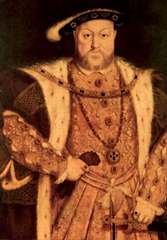
THE ANGLICAN Church is no stranger to controversies and divisions. The denomination has had a colourful history ever since King Henry VIII made himself and not the Pope the head of the church in England, nearly 500 years ago.
It is commonly believed that Henry assumed control of the Church of England so that he could be granted the divorce from his first wife which the Pope refused to give him, but this was just one of several issues over which Henry challenged the authority of Rome. And although Henry cut his ties with Rome in the 1530s, nearly two decades after Martin Luther launched the Protestant Reformation in Germany, Henry did not think of himself as a Reformer. For the most part, his rejection of the papacy aside, his theology remained consistent with Roman Catholicism.
The Church of England began to move in a more Protestant direction under Henry's son, Edward VI; that was when Thomas Cranmer, the Archbishop of Canterbury, wrote the first Book of Common Prayer and substituted English for Latin in the services. After Edward's short reign, his sister Mary -- called 'Bloody Mary' because she had Cranmer and other Protestants burned at the stake -- tried to reinstate the Catholic religion; but his other sister, Elizabeth I, struck a compromise between Catholicism and Protestantism after becoming Queen of England in 1558.
Under Elizabeth, the monarch was once again head of the church, but the liturgy retained something of a Catholic flavour. Richard Hooker wrote his Ecclesiastical Polity and advocated a 'via media,' or 'middle road,' between Catholicism and Protestantism, accepting anyone who wanted to worship God while emphasizing faithfulness to scripture, reason and tradition.This became the essence of Anglicanism, though other beliefs and practices came to the fore in the centuries to come.
Puritans
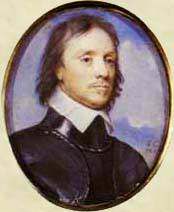
Puritanism began during the reign of Elizabeth as a movement within the Anglican Church that embraced some of the more radical ideas of Reformers like John Calvin and John Knox and sought to 'purify' the church of its more Catholic elements.
Puritans wanted to eliminate the role of bishops and to give the individual a more direct relationship to God through the scriptures. Famous Puritans include the colonists who founded various American colonies in the 1620s and 1630s, as well as Oliver Cromwell, who ordered the execution of King Charles I in 1649 and ruled England until his own death nine years later; the monarchy was restored soon afterward.
Latitudinarians
No zeal, please, we're British. John Tillotson, Archbishop of Canterbury in the 1690s, was one of a number of Anglicans who denounced religious 'enthusiasm,' including the sort of emotional fervour that was encouraged by some preachers. Latitudinarians, so called for their broad views on religious matters, considered reason and proper behaviour more important than matters of doctrine and liturgy, and believed that people should avoid bigotry and fanaticism and be more humane and tolerant.
Methodists
Although it is now a denomination in its own right, Methodism began as a movement within the Church of England when Charles and John Wesley founded the 'Holy Club' in Oxford in 1729. Their group opposed the spiritual apathy of the ruling class and emphasized piety and morality. John Wesley travelled over a quarter million miles on horseback and preached over 40,000 sermons, while his brother Charles wrote hundreds of hymns; George Whitefield, another early leader, preached in many parts of the British Empire, including the American colonies, and rekindled zeal for the faith during the 'Great Awakening.' Methodism was especially popular among the poor who worked in the new industrial areas, and it stayed officially within the Anglican Church until after John Wesley's death in 1791.
Episcopal Church
The American branch of the Church of England had to change its name and make certain changes to the Book of Common Prayer after the American Revolution expelled the British from the colonies in the late 18th century -- prayers for the king were replaced with prayers for the president, for example. It remains a part of the Anglican Communion today.
Evangelicals
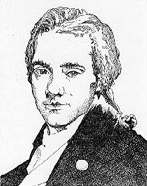
Sometimes called the 'Clapham Sect', because of the London suburb that was one of its strongest centres of influence, the Evangelical movement that arose in the late 18th and early 19th centuries emphasized the connection between a person's inward spiritual condition and the outward expression of that condition, on both an individual and a social level. Prominent evangelicals included William Wilberforce, who fought for the abolition of slavery; Robert Raikes, who started the first Sunday school to give working class children a religious education; and Lord Shaftesbury, who campaigned for a 10 hour work day and abolition of child labour.
Plymouth Brethren
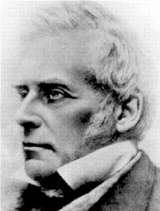
The Plymouth Brethren began as a small Irish movement in the 1820s, and earned their name when one of their leaders, John Nelson Darby, left the Anglican priesthood and moved to the English seaside town of Plymouth in 1830. The early Brethren met in private homes in Dublin and disagreed with clerical hierarchy and the idea of 'membership' in a particular church or denomination. Darby also introduced the rapture into premillennial eschatology; without him, there would be no Left Behind.
Oxford Movement
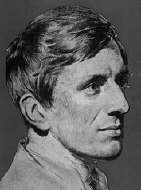
Also known as 'Tractarians,' these Oxford-based academics expressed their theological convictions through a series of publications called Tracts for the Times, beginning in 1833. Led by John Henry Newman, John Keble, Edward Pusey and others, the Oxford Movement embraced the writings of the early patristic church and took a stand against what they saw as weaknesses in the modern Anglican church, including the interference of the British government and the rise of 'liberalism.' The Oxford group was able to make common cause with the evangelicals for a while, but the alliance came to an end when Newman converted to the Roman Catholic Church in 1845.