
November 2002
'Traditional Anglicans'
BC Christian News, · Top Stories
WHILE THEY oppose the decision of the Diocese of New Westminster to bless same-sex unions, members of the recently-formed Anglican Communion in New Westminster (ACiNW) nevertheless still consider themselves very much a part of the worldwide, mainstream Anglican Church.
Past conflicts within Anglicanism, however, have sometimes led dissatisfied members to form alternative churches.
While these groups are often portrayed as 'breakaway' or 'dissident,' their members stoutly maintain that they are simply striving to perpetuate traditional Anglicanism, in the face of opposition from clergy they consider apostate. Several such groups are currently active in British Columbia.
Two of them recently held key events. The Anglican Catholic Church of Canada, which has nine churches in B.C., held a consecration ceremony October 12 at its new Vancouver facility. Rector Michael Shier told BCCN: "After years of living out of suitcases, we are at last able to open our own church building -- which is fully paid for."
The Richmond diocese of the Christian Episcopal Church consecrated its first bishop September 8, at the Church of Saint Saviour in Richmond. A press release described the new bishop, Robert D. Redmile, as "a successor of the apostles that Christ himself had chosen." Speaking to BCCN about the current state of Anglicanism, Redmile stated: "We are in the time of the falling away prophesied in scripture . . . the great apostasy that shall precede the rise of antichrist and the second coming of the Saviour."
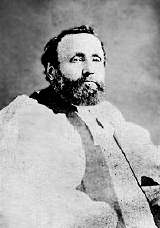
Conflicts within B.C. Anglicanism began in the 19th century, with the province's first Anglican pastor. The independent-minded Edward Cridge, dean of Christ Church Cathedral in Victoria, resisted what he considered unwarranted attempts to regulate his activities. A series of very public disputes culminated in 1874, when Bishop George Hills charged Cridge with 18 violations of the Church Discipline Act; the dean lost his license to preach, and left the Church of England.
Cridge joined the fledgling Reformed Episcopal Church (REC), taking many parishioners with him. The REC, which had been established in the United States in 1873, sought to emulate the 16th century Protestant Reformation by proclaiming the authority of scripture and a 1785 revision of the traditional Book of Common Prayer. The REC became well-established in B.C. -- and, curiously, played a key role in the charismatic movement of the mid-1960s.
Prior to the current controversy over same-sex unions, the key issue dividing the mainstream Anglican/Episcopalian church was the ordination of women. In 1973, this concern galvanized American clergy into incorporating the Fellowship of Concerned Churchmen (FCC).
The expected division came in 1976, when the General Convention of the Episcopal Church USA voted 51 percent in favour of the ordination of female priests. The FCC responded the following year with The Affirmation of St. Louis, which proclaimed their determination "to continue in the catholic faith, apostolic order, orthodox worship and evangelical witness of the traditional Anglican Church." This faith, they said, was based on the authority of scripture; the Nicene and Athanasian creeds; early church traditions; and revisions of the Book of Common Prayer.
A meeting was held in St. Louis September 11 - 13, to commemorate the 25th anniversary of the Affirmation; representatives of 30 groups attended -- including two B.C.-based bishops with the Anglican Catholic Church of Canada. In 1977, asserted FCC president Scott Kingsbury, "We wanted to continue genuine Anglicanism." Instead, he lamented, "we became 54 different jurisdictions worldwide." In the past quarter century, he said, there have been divisions "over various nitpicky things like liturgy and vestments." He said he felt the St. Louis event helped promote greater unity.
Like Kingsbury and Redmile, Michael Shier identified the ordination of women as the key reason for the establishment of the Anglican Catholic Church of Canada. "We were excommunicated . . . for being traditionally Anglican." Regarding the plight of the ACiNW, Shier said his church is "decidedly" in sympathy with the coalition. "History repeats itself. They are likely to find themselves thrown out."
"We feel for them," said Kingsbury. "They should come out of the official church. Instead, they're trying to fix the problems from the inside. We don't think that's possible." As for the same-sex issue, he said, "It's just another symbol of why we left in '77."
The ACiNW's struggle, Redmile asserted, "runs much deeper than the whole same-sex issue. That is only a symptom of a greater, deeper, illness in one part of the body of Christ . . . Acceptance of homosexuality is all of a piece with the acceptance of divorce and remarriage, of the ordination of women to the sacramental and preaching ministry, of the acceptance of abortion and euthanasia, and of all the evil practices embraced by the humanistic socialism which pretends to be liberal Christianity. It is not Christianity at all; it is a counterfeit, and it is a work of the evil one, and not of God."
Like Kingsbury, Redmile maintained that ACiNW should simply leave the mainstream Anglican church. The conflict, he said, "ought to lead to breaking communion with an heretical bishop . . . I cannot judge men's hearts; however, were I one of those clergy who could not accept the decision of the bishop and synod of the Diocese of New Westminster, I would have gone the next day to the bishop's office with my wardens, and would have deposited the keys to the church on his desk, and informed him that next Sunday we would be worshiping at the Holiday Inn. Back in the 1980s and early 1990s, that is what we had to do."