
December 2002
Former Regent prof wants to live where he can help
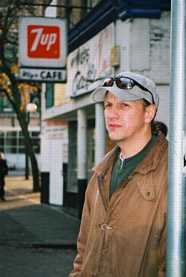
VANCOUVER'S notorious Downtown Eastside has attracted significant attention lately as safe injection sites became the focus of the mayoral race. Dave Diewert, a former full-time Regent College professor, lives with his family on Vancouver's east side in a community known as the Ranch. Dave shares his experience living in the Downtown Eastside and what it means to stand with the marginalized with BCCN.
BCCN: In April 2000, you resigned from a full-time teaching position at Regent College to focus on the east side area where you and your family were living. What precipitated this event?
Dave Diewert: In 1997, some people from Grandview Calvary Baptist were talking about getting a house in order to participate in something good about the [affordable] housing crisis. We wanted to develop a supportive living context, and decided to do cluster housing. Our family decided that we would live in one of the houses. All this time I was still teaching full-time at Regent.
Decisions like that have to do with both a leaving from and a going to. Teresa [Diewert's wife] was finishing her education degree and starting to teach. It just seemed crazy to be moving to a community house to be in a supportive, welcoming context for people, and never be home because you're working all the time. As Teresa began to have more work, it seemed now was the time for me to quit, to be more involved in community and in the neighbourhood, to be around the house a bit more.
One way to say it is just losing interest in the institutional context. There are lots of dimensions to that, but in the end it failed to hold my interest, really. It seemed more and more problematic for me to be out there teaching. So I made this move and I retired, and ever since then I've been terribly confused.
BCCN: What was problematic about the institutional context?
DD: The thing that struck me most was preparing to read Phil. 2 with a Greek class. This whole description there of how Jesus had this privileged position but he didn't hold onto that privilege, he relinquished it, became a human being, suffered death on a cross like a criminal -- there's this whole trajectory of downward mobility. I was thinking to myself, "Within an academic context, what I'm supposed to do is do endless research on this passage, publish a book and get a promotion." I thought to myself "No, this whole thing is set up to actually move you in the opposite direction of what the text calls you to." That tension got to be too great, I suppose.
BCCN: As that changeover took place, did you feel in someway misunderstood in your decision?
DD: I don't have much of a sense of what people thought of it. People may have said some things, but it didn't really register. I knew that in this decision, I was walking into the heart of my own weakness. I'm not a people person, I'm not an extrovert. I'm a kind of be-alone introvert, I prefer the anonymity and the study and so on. So to live in community was stupid, and being involved was in some ways against the grain of my natural inclination.
It's proven right. I'm often confused. I don't know where I fit. I've never pulled off a big project or accomplished anything. The misunderstanding was that I was going to do sort of ministry to the poor. I just sort of cringe at that, and my usual response is "I don't do ministry, I just live."
This was most important for me, because the biggest question was "How do you live?" It wasn't "What sort of ministry can I be involved in?" I don't have a ministry. I just live my life out in ways that are trying to be open and available, involved in, with and for people who are socially on the margins.
BCCN: Do you have a 'come and see' sort of approach to explaining your life -- is there an intentional movement away from didactic explanations?
DD: . . . What I think I shy away from is an effort to kind of package or promote [my lifestyle]. I would be passionate about my vision, but I wouldn't prescribe it.
But just maybe there's a place for someone trying to live against the grain, off the beaten path, imaginatively. Not saying "Everyone should live like I do," but perhaps me living this way opens up ways of thinking for other people. It opens up the possibility for them to say "I could do something different, if he's going to be an idiot like that, maybe I could live differently, stretch myself." It's kind of like positing a question mark about what we've always accepted as the way to go, and say "I think it's got to be different."
BCCN: Why did you decide to lease the building currently known as the Centre for Solidarity, Liberation and Resistance?
DD: Part of it is the struggle down there to hold onto space that is otherwise going for upscale development. Opening up that space for people to use -- space that is not tied to government funding so it can't get cut, that is there for the community to decide what to do with it.
The community has meetings there around housing, health or aboriginal issues, poverty issues. People groups can gather there to discuss what's important in their lives, how to bring about change, and what can be done. The idea was very vague when we started. "Let's get the space and we'll figure out what to do with it." It's emerged along those lines largely because we don't have any funding -- it comes through individual gifts.
. . . It's genuinely a place of welcome. There's no red tape, no rules, no regulations, it's all self-run by the groups who are down there. The only thing I organize down there is a Monday night coffeehouse. It is a place where people can come off the street and it has kind of a cool atmosphere. They can have a coffee and talk about what's most important in life. It's called "More than Coffee" because we're saying we are more than the labels that we carry. We're more than our financial statement or our addictions. We're human beings with dreams and pasts and stories. Let's meet at that level and develop a care for one another at that level.