
February 2003
Three outstanding Requiems
THE REQUIEM holds a time-honoured place in the choral repertoire. Based on the Roman Catholic Mass for the Dead, requiems have been created by most of the great composers.
• Claudio Abbado: Verdi -- Messa da Requiem, EMI Classics, 2001.
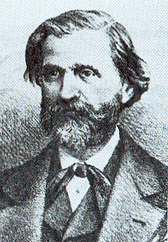
This immortal work is what you get when a giant among opera composers turns his considerable talents for evoking emotion to the most stirring of all mortal dilemmas: What happens after death?
The piece has a fascinating history. When Gioachino Rossini died in 1868, Giuseppe Verdi suggested that he and a dozen other Italian composers join forces to produce a requiem as a tribute to the great composer; but the resulting Messa per Rossini -- to which Verdi contributed an early version of his magnificent 'Libera Me' -- was not performed.
However, the 1873 death of Italy's leading poet, Alessandro Manzoni, inspired Verdi to write his own complete mass -- incorporating the 'Libera Me' -- which was premiered a year after Manzoni's death.
The Requiem begins exquisitely low, with one of the most mournfully sweet melodies ever written. As the soloists individually come in, the music gains in intensity. One of the most striking portions comes when the 'Dies Irae' (Day of Wrath) movement explosively begins; it's a truly jolting moment.
The 'Libera Me' (Deliver Me) section also includes a reminder of the furious opening of the 'Dies Irae.' Then comes the oh-so-delicate, famously aching melody, as the soloist sings: "Rest eternal grant them, O Lord, and may light perpetual shine upon them." It is spine tingling. Other highlights include the female duet in 'Recordare, Jesu Pie' (Recall, merciful Jesus); and the joyful 'Sanctus' (Holy). The soloists, including soprano Angela Gheorghiu, tenor Roberto Alagna, mezzo-soprano Daniela Barcellona and bass Julian Konstantinov acquit themselves very well. Conductor Claudio Abbado, the Swedish Radio Chorus and the Berlin Philharmonic deliver one of the most memorable versions of Verdi's masterpiece.
• Diego Fasolis: Gossec -- Grande Messe des Morts, Naxos, 2001.
This is a major work, written in 1760. Francois-Joseph Gossec is known as the first French composer to write symphonies. The Grande Messe des Morts (Great Mass for the Dead) reflects this; it is subtitled 'Symphony in 17 parts.' Some scholars believe this work influenced the composition of Mozart's Requiem; it also likely influenced the grand compositions of Berlioz. The mass was memorably performed in 1789 as a tribute to the people who were killed during the storming of the Bastille.
The magisterial opening features dramatic drums, followed by a hushed choral passage. Other highlights include the 'Confutatis Maledictus' (Let the cursed ones be confounded) section of the Dies Irae, featuring a loud and spirited choral passage; the 'Lacrymosa' (Tearful) section has an excellent duet featuring soprano Roberta Invernizzi and mezzo soprano Maite Arruabarrena; bass Claude Darbellay and tenor Howard Crook excel in the male duet during 'Pie Jesu' (Merciful Jesus); and the final chorus, 'Requiem Aeternam' (Eternal rest).
Conductor Diego Fasolis gets good ensemble singing from the soloists, and the Orchestra della Svizzera Italian and Gruppo Vocale Cantemus perform with distinction.
• Choir of St. John's College, Cambridge: Howells -- Requiem, Naxos, 1999.
Herbert Howells completed his Requiem in 1933 -- ironically, a few years before his beloved son Michael died of polio at age nine. As is typical of many 20th century requiems, there is no Day of Wrath movement. The content departs significantly from the traditional text in other creative ways, incorporating an interesting selection of Psalms, as well as a portion of the burial service from the Book of Common Prayer, and ending with 'I Heard a Voice from Heaven,' from Revelation 14:13. Most of it is in English, with the exception a few portions of the traditional Latin text. It is superb choral writing, especially the humble opening, and the Psalm 23 portion -- which presents a subtle and restrained expression of God's bounty.