
March 2003
Cultural diversity: the DNA of the gospel
BC Christian News, · Editorials
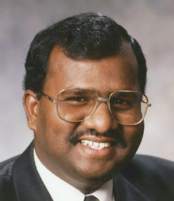 |
The Abbotsford-based Centre for Multi-Cultural Ministries is offering a seminar entitled 'Understanding Your Neighbours' -- dealing with the religious and cultural customs of various ethnic groups now living in B.C. The following is an overview of the topic by the ministry's leader, David McLauren.
THE CUL-DE-SAC where I now reside was once occupied exclusively by a dozen Caucasian families.
Then, some years ago, a Sikh family moved in; their next-door neighbours soon moved away, and within five years most of the other Caucasians were gone. Now the cul-de-sac is almost entirely filled with South Asian families. I have seen this phenomenon elsewhere in the Fraser Valley as well.
Is your next-door neighbour a mistake or an accident? Scripture reminds us that God is sovereign, and he is moving people around to accomplish his purposes: "From one man he made every nation of men, that they should inhabit the whole earth; and he determined the times set for them and the exact places where they should live" Acts 17:26.
This great diversity demands that we understand and comprehend our multicultural neighbours. There is a widespread tendency to characterize and stereotype other religious communities, usually focusing on their worst features or their most outspoken and often one sided-members.
Today, for example, Islam is attacked as militant, violent, intolerant and fanatical. The radical statements and actions of a relatively few Muslims are presumed to represent the views and behaviours of the world's 1.25 billion Muslims. Learning and understanding their religion and culture would expose the immense variety, depth and richness of their traditions.
We can touch the world when we positively influence our local multicultural communities. Imagine the impact, when a member of a B.C. immigrant community visits their country of origin, and tells of being treated with kindness and understanding.
At a time when every nation struggles with the inescapable reality of diversity and multi-culturalism, it is incumbent upon leaders to help people accept, understand and even welcome this reality. It is a fact of life.
According to Statistics Canada, from 1991 to 2001 there was a significant increase in the populations of various ethnicities in Greater Vancouver.
During that decade, the number of Chinese, Blacks and South Asians almost doubled; there were also significant increases in the number of Japanese and Arabs.
There are now twice as many Filipinos and Vietnamese, and almost three times as many Iranians, as there were pre-1991.
The most significant changes have been in the Korean (346 percent increase) and Jamaican (578 percent) populations.
The United States and Canada are the most culturally diverse nations on earth. They are becoming more of a 'tossed salad' than a 'melting pot.' Thousands of people from virtually every nation, culture and ethnic group are coming to our shores. How should Christians respond to this phenomenon?
The early church also knew this phenomenon, as was demonstrated when Greek-speaking Christians protested that their widows suffered neglect compared to Hebrew-speaking widows (Acts 6:1-6).
The 12 apostles chose seven Greek appointees to remedy the situation. This pastoral response to communal conflict was not just a demonstration of cultural sensitivity, but a recognition that all groups needed to participate in communal decision-making.
Once the community addressed this concern directly, "the number of the disciples in Jerusalem increased dramatically." (Acts 6:7). Cultural diversity is the very DNA of the gospel; whenever the gospel has been preached, it has attracted diverse communities.
After living in India for several years and traveling through Muslim, Hindu, Sikh and Buddhist countries, I am convinced that the greatest gift of such contacts has been two-fold: a greater awareness and perception of the faith and integrity of others; and a strengthening and deepening of my own Christian faith.
Jesus told his followers to "go and make disciples of all nations." Today, you don't need to be a missionary in another country to encounter these 'nations.' In your neighbourhood, workplace and shopping area, you probably run across many people with backgrounds vastly different from your own.
To have an effective ministry in Canada today, Christians need to be aware of how people's culture affects the ways they think and live. Talking about cultural diversity in churches is not an option; rather, it is a crucial element of fulfilling the Great Commission.
We must become aware of our own cultural assumptions, and learn special skills for communicating between cultures; we must think creatively and faithfully in the context of intersecting world cultures and religions.
Serious study of other beliefs is essential for the vitality of faith and the emergent vision of a multicultural world. By bringing us into contact with other cultures, God is giving us a glimpse of his future kingdom.
'Understanding Your Neighbours' will be held March 29 at Bakerview Church in Abbotsford. Contact: www.mclauren.org or 604-557-0246.