
June 2003
Steps toward sitting at the political table
BC Christian News, · Editorials
 |
In this excerpt from Jesus and Caesar: Christians in the Public Square (Castle Quay Books, 2003), Brian C. Stiller outlines ways Christians can make themselves heard on key social issues.
1. Get your facts straight
For a number of years, gullible Christians in North America were hoodwinked into writing to the U.S. Federal Commission on Communication, calling on the government to reject Madalyn O'Hair's alleged attempt to push Christian radio off the air. First, she has never worked to do this. Though it sounds like something she might have done, akin to her objection to the Lord's Prayer in public schools, she has not. Well-meaning people copy petitions in the effort to do something good, often all to waste, for one reason: they have not checked out the facts. This was an enormous waste of time and energy. The gospel is discredited when, in arguing for even a good idea, one works with the wrong set of facts.
2. Decide what the real issue is
If you are asking for parental involvement in the education of your child, do not allow yourself to get caught up in an argument over something like sex education. If the issue is to permit parents to have a voice in what is done in the classroom, stick with that issue. Raising other issues distracts and raises the wall of resistance. Deal with other issues at another time.
3. Digest other arguments and views
Take time to know and understand the other points of view. It will surprise opponents to know that you have taken time to understand their concerns. Knowing the essence of their view not only forces you to come to grips with what they believe, but provides you with a basis for response.
4. Test your approach with others
It is easy to assume that you know the arguments and have captured the essence of the debate; then, in the actual encounter, the arguments seem weak. What has gone wrong? You have not sufficiently refined your arguments in advance to test your rationale and logic in public.
5. Meet the major players
If your presentation is before the city council, meet the councilors earlier. If the issue is with a teacher, find out who that teacher is as a person.
6. Learn how the system works
Each community, governmental or political entity has its own way of functioning. Get to know how the municipal, provincial or national system operates.
7. Be at the table
Decisions are made at places and meetings. If there is occasion for input, or if there is opportunity for membership or participation, you must find the time and place and get permission to attend. Often a Christian voice is lost because the logistics have been neglected.
8. Build coalitions
Policy-makers make decisions within certain deadlines. The variety of interests, views and opinions must be analyzed and a decision made. From the varied positions, a final position will be hammered out. The issue may not be as much one of truth as of process. There will be pressures on the decision-makers to come up with answers and solutions that best fit the majority of views. In expressing your views, seek ways of developing liaisons with others. Don't compromise on the fundamental issues, but combine strengths in order to influence the decision in the right direction.
9. Learn the role of compromise
We have scrambled from interacting with those of opposing views because of the fear of compromise. But all of us, be it in our marriages or in personal relationships, must be willing to reduce our demands or expectations. Likewise, in public life one must modify expectations and demands in dealing in public matters. The line to draw is not whether or not to compromise, but on what grounds . . .
10. Finally, do not be weary in well-doing
The shaping of an idea and then the moving of it into the laws and policies of our society does not happen overnight. Remember that the takeover by ruling ideologies occurred over many years. If your concern is worth the effort, then use the opportunity and structure to pursue your agenda and goal.
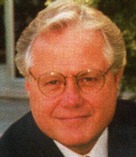
Brian Stiller is president of Tyndale College & Seminary and former president of the Evangelical Fellowship of Canada.