
Suffer the little children of Congo's war
BC Christian News, · International
Stories of massacres in Bunia, Eastern Congo, have brought attention to ongoing conflict in The Democratic Republic of Congo. What follows is a personal account from Philip Maher, an aid worker who recently returned from the region. Maher has traveled internationally on behalf of World Vision for 20 years.
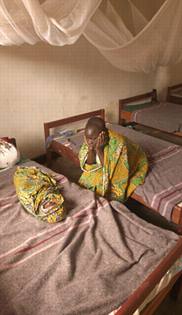
IT WAS mid-morning and I walked along the open-air corridors at the World Vision-supported hospital in Eastern Congo, peering at the empty beds lined along the wall like a military barracks. It was there I found Masika sitting completely alone at the far end of a ward.
Masika sat on the edge of her bed with her feet firmly planted and one hand supporting her chin. Her tears quietly fell to the ground. No matter what the culture, the posture of suffering is universal.
Her one year old daughter, Kahindo, lay in a coma at her side -- resting quietly as though having an afternoon nap. Like all sleeping children, her features had a cherubic quality. She was swaddled in a fresh, bright cotton blanket, her face framed tightly in the flame yellow fabric.
Both mother and daughter were enveloped in the same cheerful material. I thought perhaps it was purchased when life looked bright and promising. Today, they were homeless. When rebels attacked their village, Masika and her husband scooped up their three children, Kahindo, her twin brother Mbale and their four year old sister and ran. Fleeing for their lives, they left everything behind: their cooking pots, food and clothing.
Seeking refuge
People like Masika come to aid hospitals seeking refuge from the war that is ravaging their villages. Near the hospital is a feeding centre for children, one of 14 centres in a 200-kilometre stretch from Bunia to Belli, where unspeakable atrocities are flushing peopIe from their homes.
At first Masika and her children found refuge in a jungle village after walking a week from their home town. But then Kahindo fell sick She was anemic. The older ladies in the village told Masika to rush to the feeding centre. So the young family walked 18 kilometres through the bush to get there. With earlier medical care she might have survived, but by the time Masika made it, it was too late.
I talked briefly to Masika to ensure all had been done for her child who now hung by the thinnest of threads. The little girl would be gone soon. I knew it, and likely Masika knew it too. I left Masika with her thoughts and walked to the feeding centre 30 yards away. Ten minutes later, Masika appeared. She plopped herself down on the plastic tarp, picked up Kahindo's twin brother from a friend and began to feed him high-protein milk. Kahindo was dead.
No time to mourn
Wars do not provide time for mourning. Those caught in the middle are forced to trivialize the horrors their children suffer, and tend to the living. What other choice is there? After 10 or so minutes of grieving alone, it was time for Masika to care for her two remaining children and move on with life.
She appeared willing to talk, so I sat with her again. She told me she did not understand the conflict in Eastern Congo. She was from the Lendu tribe, which had been attacked by the Hema militia. Both accused the other of trying to take each other's land. This theme is common in Bunia.
Just south of where we sat, another struggle with another unrelated rebel group was raging on. Driving down the pockmarked mud paths are pickup trucks packed with soldiers aged 12 - 25, heady with power, armed and playing war. Except it's no game. It's a scary place, with hundreds of thousands of people just like Masika caught in the middle.
"We want to grow our cassava and live in peace," she said.
It was getting late and, for security reasons, I had to get to our compound before it got dark; but I wanted to ask about her dreams for the future before I left. I will remember our brief conversation for the rest of my life.
Masika told me how she would like to run a small business selling something by the side of the road. "But what about your children?" I asked, while I looked at her remaining son, cradled in her arms; She looked down at the green tarp where she sat, as though it were a diagram needing some study.
I was instantly sorry I had asked the question, but I waited. She appeared to be struggling with how to answer my inquiry. She had just left her dead child only steps away.
Then she responded stoically, "I want all my children to be alive." Clearly, this was her hope. We both knew it was already a wish that could not be fulfilled.