
September 2003
New life for early 'Jesus Music'
BC Christian News, · Arts
New life for early 'Jesus music'
By John Cody
 |
AS THE SIXTIES gave way to the seventies, Jesus Music was born. Young believers began using the music they grew up with - for the most part rock 'n roll, folk, and sometimes psychedelia - to share the gospel message. Always heartfelt, many efforts were naïve to the point of being laughable; others could be profoundly moving. Sadly, none of the genre's acts ever experienced anything approaching successful sales figures. Few groups released records, and if they did the pressings were invariably limited. Obscure and hard to find from the get go, nowadays, if they can be found at all, these artifacts often command exorbitant prices. Thankfully, CD technology has given many of these titles a new lease on life, and made them far more affordable.
• Glenn Schwartz and the All Saved Freak Band: My Poor Generation, Hidden Vision Records, 1998.
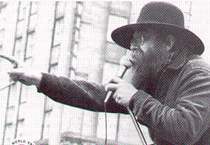
Based out of Ohio, the All Saved Freak Band featured guitarist Glenn Schwartz, who had been an original member of James Gang (pre-Joe Walsh). After being saved he moved to the west coast and formed Pacific Gas & Electric, which scored a #14 pop hit with the rockin' gospel original 'Are You Ready' in 1970. Soon after he returned to Ohio, and joined the All Saved Freak Band. The group had a wealth of talent; in addition to Schwartz, sisters Kim and Pam Massmann, who sang and played strings, boasted a strong musical pedigree - their father was conductor of the Cincinnati Symphony Orchestra.
The group's debut, My Poor Generation (1973) opens with 'Elder White,' which lets the listener know that this is no ordinary band. The musicianship is imp-ressive, and the breadth of influence is wide. 'Ancient of Days' echoes Fever Tree. Minimal packaging (with many spelling mistakes) leaves much to be desired; but it's the music that counts, and the transfer is fine. For that alone, this is worthwhile. hiddenvision.com o Wilson McKinley; Anthology Vol 1, Tanignak, 2000. o Mike Messer; Good Ol' Days, 1999.
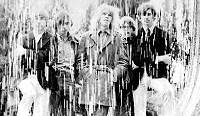
The material collected on Wilson McKinley's Anthology is from 1970 to 1973, and while the message was timeless, the music is certainly of its time. Based out of Spokane, the quartet's music stands as uncompromising, and sits well next to their contemporaries - 'Almighty God' sounds like a Crosby, Stills, & Nash outtake, and 'Warm Summer Day' could be a lost Big Star track.
A world away from later CCM acts which attempted to co-opt the culture without ever really understanding it, Wilson McKinley were the real deal. At its best, the band produced uncompromising, powerful music every bit as good as what was on the airwaves during its heyday. A highlight is the title track to the band's second release, Spirit Of Elijah, a six-minute mini-epic.
Almost three decades after the group's demise, lead guitarist Mike Messer has released his debut solo album. In a decidedly country rock vein, tracks like 'Restless Hearts' come across like latter period Byrds. A long time coming, the disc is an unexpected treat.
tanignak.com
• The Bridge: Best of the Bridge, Hidden Vision Records, 2001.
Best of the Bridge collects 14 tracks from the group's first three albums released between 1971 - 1973. They put out one final effort a few years later, but these three are the most indicative of the sound, which could be described as sweet - almost to the point of innocuous - folk/rock. Heartfelt to be sure, and like most of these releases, alternately touching, laughable and laudable.
hiddenvision.com
• The Exkursions: The Exkursions, Hidden Vision Records, 1998
The Exkursions were fronted by guitarist Mike Johnson. Based out of Chicago, the trio played a hybrid of jazz, rock and blues. Recorded in 1971, their self-titled debut album is certainly dated. The act was most likely quite impressive in its day, with some heavy - almost Grand Funk style - moments ('It's Been Set Down'), but a generation later, it stands more as a curio - a product of its time, rather than timeless.
hiddenvision.com
• Paul Johnson: Liquid Blues, Heyday Records, 2001.
• Duo-Tones; Surf Music Unplugged, Hepcat, 2000
• Various, American Surf Treasures Vol 1, Gee-Dee, 2000
• Various, American Surf Treasures Vol 2, Gee-Dee, 2000
While hardly a household name, Paul Johnson is one of the fathers of surf guitar. He wrote a genuine classic of the genre - 'Mr. Moto' - for his group the Belairs, and was asked to join the Beach Boys in 1963.
Staying true to his roots, over the years he's released a string of albums that offer variations while never straying too far from the beach. All tracks are instrumentals, and the only overt Christian content is limited to occasional song titles.
Two 80's albums, Guitar Heaven and California, were packaged together by Frontline in '93 -- and while long out of print, the disc is well worth searching out.
Liquid Blues features a large supporting cast, but it's Johnson front and centre, with first-rate playing and production throughout. The disc is divided into four sections: medium blues, light blues, dark blues, and the final title track. There's a palpable sense of joy, and while it might appear to be a rather limited canvas, the disc is enjoyable from start to finish.
Johnson and Gil Orr (the Chantays' 'Pipeline') are the Duo-Tones. With nothing but acoustic guitars - no other accompaniment - Surf Music Unplugged is the polar opposite of Liquid Blues. The two perform surf classics as well as a few choice covers, including jazz standard Horace Silver's 'Song For My Father.'
American Surf Treasures are two volumes of rare early recordings, including unreleased or obscure singles by a number of surf combos, most featuring Johnson.
Together, the discs contain 53 tracks. This is a treat for any serious surf fan. One caveat: these discs -- with different packaging but identical track listings -- were issued in 1995 as Rare Surf Vols 1 & 2.