
October 2003
Church planters hope to yield eternal crop
BC Christian News, · Top Stories
There's a saying sometimes repeated by church planting advocates: "If you want something to last a season, plant flowers. If you want something to last a generation, plant trees. If you want something to last forever, plant churches." Judging by the number of churches starting this fall, the Lower Mainland is fertile ground for an eternal crop.
By Jeff Dewsbury

AMONG THE churches planted locally this year are a Christian and Missionary Alliance church in Deep Cove, an Anglican church near UBC, an African Methodist Episcopalian church in Coquitlam, an Mennonite Brethren church in Cloverdale, a Chinese Baptist Church in Richmond and Good News Place, a nondenominational church in New Westminster.
All but one held their inaugural services last month. To church planting expert Murray Moerman of Outreach Canada, the diversity of these new congregations is exciting, yet they still only represent a portion of the work Canadian churches need to do to meet the needs of this country's population.
When it comes to the big picture, Moerman says every church needs to be serious about "going forth and multiplying."
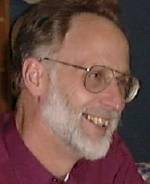
Every congregation must plant two churches in its lifetime. No church lasts forever. I wish that wasn't so, but it is." Those two seedlings represent one church planted to replace the established one once it is gone and one to evangelize the growing population. Moerman likens the planting concept to the human body. There are many things one can do in the short term to stay alive and healthy, but there's still an end, a death, to prepare for. "If I don't think beyond my lifetime, I'm being foolish," he says. Churches that are multiplying are planting to meet the needs of generations that have yet to be born.
In the case of Immanuel Westside, Anglican (Vancouver) the church plant began in an effort to meet the needs of a near instant population boom. An additional 50,000 people will eventually be residing at UBC as the university builds six new villages in the area.
Paul Carter, who has become a licensed priest in the Diocese of the Yukon since the fracas over same-sex unions in the local diocese, says his church will reach out to a large undergraduate population which is looking for answers.
Immanuel meets in Dunbar Heights Baptist Church 7:30 Sunday evenings, with an intergenerational service where there are "no books,"says Carter, preferring the more contemporary aspects of Anglicanism.
Carter was a chaplain in the British military for 16 years, working with 19 – 20 year-old paratroopers, so he's heard a lot about combat. And the pastor says Vancouver can be a tough battleground too.
"Many people, including those like Billy Graham, have recognized that Vancouver is a tough place spiritually, but the breakthrough is coming," he says.
Carter says new hope has been spearheaded by pastors being unified and coming to pray together. He also thinks the number of churches being planted shows someone is listening. "I think the power of prayer is causing the tide to turn, and some evidence is the church plants across all denominations."
Planting from scratch
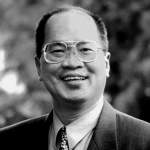
"Tom Tan is a veteran church planter who has now helped start six churches across several denominations, including an Iranian Alliance church, a multicultural Mennonite Brethren congregation and Laotian and Chinese churches.
The nondenominational Good News Place, which meets in Shiloh United Church in New Westminster, is what Tan calls an "intentionally intercultural" church.
The intercultural (as opposed to multicultural) model is designed to emphasize diversity of cultures from the beginning to ensure that no one particular culture dominates. Tan says the church started with a simple prompting from God to drive around the area June 7 of this year. He then enlisted the help of some local pastors to do prayer walks with him around the site. When he felt that God was telling him to go ahead, Tan says he acted on faith, not budgetary issues. "We feel that this is a church that should be planted on the basic practice of prayer and faith," he says. "We want this church to be on faith and prayer, not systems and methods . . . We have no other church supporting us and we're not a breakaway group from another church."
Last month's inaugural service was attended by approximately 60 people. Ethnicities represented included Africans, Koreans, Chinese, East Indians and Egyptians. To reinforce their commitment to bridge cultures, Good News Place will continually invite churches from different cultural groups to lead worship and to preach. In November, they will host a Punjabi church and the congregation will all take their shoes off before worship as is the custom of their guests. "We will keep reminding ourselves that we all worship the lord in different styles," says Tan. "We are coming to transform the city, not to start something for myself. We're the new kids on the block, we have fresh ideas and will try new things."
Stepping out
One of those fresh ideas is a desire to turn a vacant lot near the Braid Skytrain station into a community centre that Tan's congregation will help run. The centre could meet the needs of the community by offering daycare for Translink commuters as well as a cafeteria and a training school.
"I went to the city with the idea since the land is zoned for a community centre and church . . . They say 'if the church is willing to offer us revenue, then we will work with them."
Moerman says ethnic groups that plant churches are often quick to take action. "[They] have often have a sense that that "the gospel says 'do it', we're Christians, let's go for it" – period," he says, adding that North Americans are more of a "spreadsheet culture," taking more time to plant churches because of our aversion to risk.
Aside from starting new churches, Tan also teaches church planting and acts as a consultant to help churches become multicultural.
He'll be speaking on mixing Canada's 'new and old cultures' at the National Church Planting Conference at First Baptist Church, Vancouver November 19 – 21.
The conference, hosted by Outreach Canada, will include workshops on everything from the impact of 'house churches' to 24/7 prayer rooms, and 'coaching churches to health.' Among the many other speakers are Eddie Gibbs, author and professor at Fuller Theological Seminary and Wolfgang Simson, author of Houses that Changed the World.
"The church needs all of the streams that the Holy Spirit is using," say Moerman, from churches that use liturgy – which has seen renewed interest among some – to simple or house churches which grow no larger than 30 people before they start another congregation. "We need to love, affirm and encourage disciple-making communities to disciple our nation for Christ."
See www.outreach.ca or call 604-952-0050 for more about the November conference.