
November 2003
Kids' books tackle real issues, real solutions
BC Christian News, · Arts
 |
• Wendy A. Lewis, illustrated by Marilyn Mets and Peter Ledwon: In Abby's Hands, Red Deer Press, 2003.
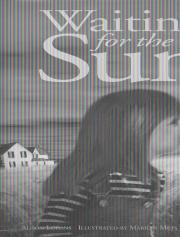
• Alison Lohans, illustrated by Marilyn Mets and Peter Ledwon: Waiting for the Sun, Red Deer Press, 2001.
RED DEER Press has a knack for publishing books that capture a child's thoughts and anxieties over life's little dramas. While their kids books are written with mainstream appeal, the stories often centre around themes that celebrate life and faith in God. In Abby's Hands tells the story of a young girl who misses the friendship and guidance of her recently deceased grandmother. To add to Abby's worries, grandpa isn't feeling well either and her yellow lab, Opal, is about to give birth to puppies.
On the day the story takes place, grandpa overexerts himself on the farm and Abby's mother has to take him to the hospital. While they're gone, Opal goes into labour and Abby must struggle to overcome her own feelings of inadequacy in order to help the new puppies into the world. She turns to her faith for comfort before she rolls up her sleeves to get the job done. "Not knowing what else to do, she gently stroked Opal's side and softly sang, 'He's got Opal and Abby in His hands . . . He's got the little bitty puppies in His hands . . .' Inside she prayed, 'PLEASE get home soon.'"
While many children's books rely on stereotypical images of farmers and rural families, In Abby's Hands and Waiting for the Sun – another book which celebrates new birth (this time human) from a young girl's perspective – farmers are shown in a more complex vein, having a greater connection to the land and the seasons of life than most. Both books are illustrated by Marilyn Mets and Peter Ledwon, who add to the story with their rich, photographically surreal images.
• Brad Jersak, illustrated by Ken Save: Children, Can You Hear Me?, Fresh Wind Press, 2003.
I don't know Brad Jersak, but if I ever meet him I'm going to thank him. The Aldergrove author (and pastor at Fresh Wind Community Church) has written one of the most insightful and comforting books about a child's relationship with God that I have ever read. Children, Can You Hear Me? is a book that has Jesus speaking directly to kids about how they can recognize his voice, how he cares about their inner fears, dreams, thoughts and characters and how that relationship can become closer every day. The book is a children's version of Jersak's book on listening prayer, titled Can You Hear Me?
Children,Can You Hear Me? isn't moralistic, didactic or wishy-washy. It talks to kids in a vein that respects their intellect, understands their imaginations and reveres their childhood insight into spiritual matters. That's what makes it so compelling.
Each page includes a description of where and how kids can meet God, and it challenges them to take in every detail of the experience. At the bottom of each page of text is an accompanying Bible verse (paraphrased by Jersak).
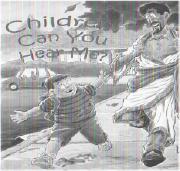 |
For example, the page about Christ's place in one's heart reaches into the imagination and, with simplicity, goes beyond the clichés that are often used when describing the phenomenon: "One of my favorite places is your heart. Can you believe that? Your heart is where I live. I've made it my special home. Close your eyes, what does your heart-place look like? Some people see a sturdy castle. Others see a cozy cabin or a fancy playhouse. What do you see? Can you see me there? What am I doing? What am I saying? What shall we do? What shall we play?" The accompanying illustration shows a young boy standing on a castle wall with Jesus, both of them towering over an army of toy medieval soldiers who carry banners with the words anger, worry and fear. The boy is holding a wooden sword and Jesus is preparing to lob a water balloon with the word "blessing" written on it.
Illustrator Ken Save captures the joy and awe of both the realms of childhood and spirituality and his drawings also include insights that kids will pick up on.
Jersak recommends the book be used as a way of introducing your kids to listening to God and there is an excellent guide at the back for doing just that. After one reading, my five-year-old was already using the descriptions in the book as a basis for his own questions about how God communicates with him in his life.
I, too, feel blessed – through both reading the book on my own, and by using it to interact with my oldest son. While we've read many entertaining books together, I can't recall one that has acted as such a catalyst for both of us as this one has.
Children, Can You Hear Me? is self-published by Jersak's Fresh Wind Press.
See www.freshwindpress.com or email info@freshwindpress.com
• Max Lucado, illustrated by Sergio Martinez: Best of All, Crossway Books, 2003.
Like all his compatriots in Wemmicksville, Punchinello is a Wemmick, a puppet-like being carved from wood. All of the Wemmicks know where they came from. Eli (also known as The Maker) carved each one of them by hand. However, until the much revered Bess Stovall – who is "famous for being famous" – came to town, all the Wemmicks never paid attention to the fact that Eli had carved them from different woods. Stovall is quick to make a big deal about each Wemmick's ancestry. The elite – those carved from maple – are given golden letter Ms to wear around their necks and are invited to a special club. The others are derided for being from "knotty timber," "inferior groves" or "the wrong side of the mountain."
When the Wemmicks fall into social classes, Punchinello discovers he is the only one made from willow, the bottom of the barrel because it is "soft and easily bent." It's not until Miss Stovall needs the help of someone flexible that Punchinello understands why Eli purposely chose to make him the way he did.
Lucado's book has an obvious message. And while there's always the danger of becoming preachy when writing a modern-day fable, the author comes close, but manages to avoid crossing completely into that territory.
• Osborne, Wooding, Strauss: Bible Wars and Weapons, Zonderkidz, 2002.
• Osborne, Wooding, Strauss: Bible Heroes and Bad Guys, Zonderkidz, 2002.
It's not good form to judge a book by its cover, but that advice isn't going to stop a casual observer from surmising that these two books are not going to grace the shelves of the pacifists among us.
Written by local authors Ed Strauss, Marnie Wooding and Rick Osborne, the books are part of Zonderkidz 2:52 series (which also includes the Bible for Boys). The publisher is upfront with the fact that 2:52 is marketed to the testosterone set; and the 2:52 moniker comes from Luke 2:52 where Jesus is said, according to Zonderkidz' paraphrase of the verse, to become "smarter, stronger, deeper and cooler."
The books are illustrated by Michael Moore (Wars and Weapons) and Jack Snider (Heroes and Bad Guys) and their work seems heavily influenced by the artwork in the Marvel and DC comic books that many of the parents – presumably men – who will be buying the books for their sons, grew up with.
The books don't simply glorify war and brawn – although readers might be surprised to see how guys like Job and Elisha are drawn to look like muscular pugilists. Rather, the authors make deeper connections, between well-known biblical heroes and battles and the providence of God in historical events. Bible Wars and Weapons also includes chapters on spiritual battles ('Unseen Warfare') and Armageddon.
There's lots of biblical history here, written in short snappy sentences that will keep boys reading – in spite of the fact that they will actually be learning something at the same time.
The description of Joshua's army is a good example of the tone of both books: "What type of army did Joshua have? Not a very well-armed or well-trained army, that's for sure. The Israelites had rock-hard muscles – they had done hard labour all their lives – but they had little training as fighters. Maybe Joshua found some skilled soldiers who had fought in the Egyptian army and still had some of their gear.
"They might have had maces (heavy balls on chains), long spears, bows, bronze-tipped arrows, bronze daggers, axes, swords, shields and body armour. But most of Joshua's recruits had been stone-chiseling, mud-pit-stomping, brick-making slaves and didn't have proper weapons.
"So – were they doomed? Nah. They had God on their side. Hey, better a bad weapon with God's help than a great weapon without him."
Parents, especially those of boys who are reluctant readers, should consider these books this Christmas. Each chapter includes a wealth of information about key biblical characters and events, yet the text is succinct and divided into short segments surrounded by eye-catching maps, diagrams and depictions of battles and conflicts.
If your family is anything like mine – you've watched your boys run around the house and have drawn parallels between them and the young men in William Golding's Lord of the Flies – these books should be in your home.