
January 2003
Dead Sea Scrolls and James 'bone box' in spotlight
BC Christian News, · Top Stories
THE LEGENDARY Dead Sea Scrolls -- some of which are now making their first appearance outside of Israel, at a Canadian museum -- were a key element of a major biblical archaeology conference last month.
At the same event, an Israeli archaeologist presented evidence which gave added credibility to the biblical accounts of King David; and controversy -- again involving a Canadian museum -- continued to simmer over what could be an extraordinary New Testament artifact.
Scrolls in Canada
Some of the most significant finds in the history of archaeology are on exhibit until April 12 at the Canadian Museum of Civilization in Gatineau, Quebec.
'Ancient Treasures and the Dead Sea Scrolls' is presenting some 100 extremely rare artifacts from the biblical period in Israel -- ranging from 1200 to 600 BC. Highlights of the display are three of the most important Dead Sea documents: the War Scroll and a copy of Isaiah, which will be exhibited outside of Israel for the first time; and the Community Rule scroll, not seen outside Israel since 1954.
Other items include relics linked to King Solomon, King David, the notorious Queen Jezebel and the prophet Jeremiah.
Bible Fest
The scrolls -- which are the oldest extant copies of the biblical books -- were examined from a variety of perspectives at Bible Fest, held November 21 -- 23 in Atlanta. Sponsored by the Biblical Archaeology Society (BAS), the conference covered a vast landscape of knowledge. Many in the listening audience took notes feverishly, as they attempted to absorb more than two dozen lectures by widely-respected scholars.
Topics included 'The Patriarchs and Matriarchs of Ancient Israel'; 'Was there Anti-Semitism in Antiquity?'; and 'Was There an Exile to Babylon?'
Peter Flint, co-director of the Dead Sea Scrolls Institute at Trinity Western University, gave a presentation on 'The War Scroll, the New Jerusalem Scroll and the Book of Revelation.' Stephan J. Pfann of the University of the Holy Land in Jerusalem outlined the use of new technology to enter into the ancient monastic world of the Dead Sea cult of the Essenes, the proposed copyists of these 2,300 year old documents.
Pfann's paper presented recent revelations regarding the biblical scrolls, demonstrating that DNA testing has bolstered the documents' reputation as faithful reproductions of the original texts.
King David
Another important lecture featured Israeli archaeologist Rami Arav, of the University of Nebraska. Arav has recently uncovered the city known as Bethsaida, once the capital of the kingdom of Geshur.
This city, located at the northern edge of the Sea of Galilee, was made famous by Jesus' visit; in his day, it had a significant social position in Galilee. According to some Bible critics, King David was likely a mythical figure; they also dismiss the kingdom of Israel as an insignificant conglomeration of villages with the occasional city, not a kingdom worthy of the reputation it has in the Bible.
According to Arav, the Bethsaida discoveries prove the biblical accounts true on some important points. He maintained that King David went to the King of Geshur to covenant with him -- to join in the final defeat of the Philistines, the sea people who had invaded that area. David, he said, began a 40-year battle with the Philistines around 1020 BC.
Arav maintained that, because of the cooperation between David and the King of Geshur, nothing more was ever heard of the Philistines after 980 BC.
In addition, David married Micha, the daughter of the Geshurite king; and his first son, Absalom, was born out of this union.
James 'bone box'
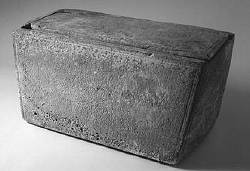
Another Bible Fest presentation fed a controversy which began more than a year ago. The so-called James Ossuary, or 'bone box,' which was made public in 2002, is a limestone burial receptacle -- which some claim once contained the remains of James, the first-century bishop of Jerusalem, who is considered a blood relative of Jesus.
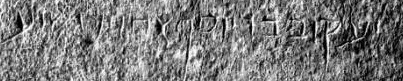
The most extraordinary feature of the box is an Aramaic inscription, which reads: "James, son of Joseph, brother of Jesus." If proven to be genuine, the box could be seen as a very concrete affirmation of the Bible's account of Jesus' family background.
The box was championed by the BAS, and declared authentic by several teams -- including personnel at the Royal Ontario Museum (ROM), where the box was exhibited last year in conjunction with a BAS conference. Many experts consider it one of the most significant artifacts related to the New Testament.
In June, however, the Israel Antiquities Authority (IAA) declared that, while the box was an authentic artifact, the inscription was a modern forgery. The IAA conclusion has since been hotly disputed.
Several people addressed the issue November 23, including Biblical Archeology Review (BAR) editor Hershel Shanks and André Lemaire, of the Sorbonne in Paris.
Shanks declared: "I don't know for sure whether this is a forged inscription, and I'm sort of cast as a defender of the inscription. I'm not. What I do know is, Israeli authorities have badly managed the affair."
While a wide variety of scientific complexities are fueling the debate, the central point of contention is the message inscribed on the box. According to IAA member Amos Kloner, "The inscription appears new. The writer tried giving the letters an ancient appearance by using samples from contemporaneous [first century] inscriptions."
His colleague, Jacques Neguer, said the inscription "appears to have been written by two different writers using different tools."
In the latest issue of BAR, Lemaire insists that the inscription "does not raise any paleographic, linguistic or orthographic (spelling) problems, and there is no reason on these grounds to cast doubt on its authenticity."
Edward J. Keall, a member of the ROM team which did a detailed analysis of the box, has stated: "The studies we conducted have convinced us that the ossuary and its inscription are genuinely ancient and not a modern forgery. This conclusion, of course, is consistent with the findings of leading Semitic paleographers and Aramaic linguists, as well as the Geological Survey of Israel, and contradicts those who assert that the inscription must be a forgery simply because it is 'too good to be true' or because it surfaced on the antiquities market rather than having been found in a professional archaeological excavation."
The BAS is promoting a petition demanding that the IAA allow the box to be examined by an independent investigating team.