
February 2004
Galileo and the keys to truth
BC Christian News, · Top Stories
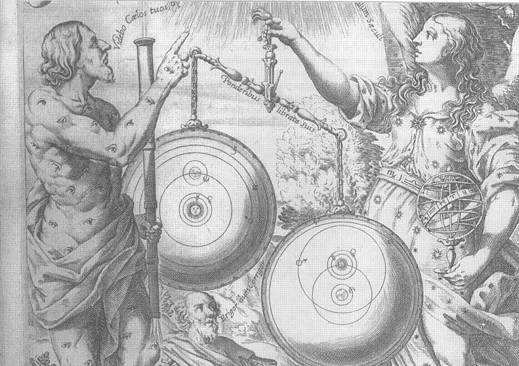
The plight of 17th century astronomer Galileo Galilei has long fascinated Owen Gingerich. Senior astronomer emeritus at the Smithsonian Astrophysical Observatory, Gingerich is a leading authority on 16th century cosmologist Nicholas Copernicus, who first proposed the theory that the solar system is heliocentric -- ie, that the earth and other planets revolve around the sun. The fact that Galileo came into conflict with Roman Catholic authorities for advocating Copernicus' theory has frequently been cited by critics as proof that religion and science are incompatible. BCCN asked Gingerich to outline some key aspects of Galileo's life.
BC Christian News: What were Galileo's chief accomplishments?
Owen Gingerich: Galileo used the newly invented telescope to make a series of key astronomical discoveries: the craters on the moon, the satellites of Jupiter, and sunspots. He also formulated some of the basic rules of motion, for example, the way a projectile travels in a parabolic path, also the fact that heavy bodies fall at the same speed as lighter ones , and he demonstrated that period of a pendulum depends only on its length. His Dialogue of the Two Chief World Systems did not include much new science, but it made it intellectually respectable to believe in a sun-centred cosmology.
BCCN: Was Galileo a devout Christian?
OG: Very much so, and it was his strategy to persuade the Catholic hierarchy to leave open the option of a heliocentric system lest they end up betting on a losing horse, so to say.
BCCN: What were the key reasons why Galileo came into conflict with the religious establishment?
OG: To defend a system in which the earth is moving and the sun at rest, Galileo had to come to terms with certain scriptural passages, such as Psalm 104, which said that God had laid the foundations of the earth that they not be moved forever. Galileo said that the Bible teaches how to go to heaven, not how the heavens go, and that people should not expect the scriptures to be used as a scientific textbook. Because the Catholic theologians in Rome were fighting what they called the Protestant heresy, they wanted to keep a unified front and did not want an amateur theologian telling them how to interpret scripture. Galileo got in trouble not so much for his Copernican beliefs as for a turf battle about who had the keys to truth.
BCCN: What were the specific charges leveled at Galileo by the Roman Catholic church, and how was he punished?
OG: Galileo had been ordered not to hold or teach the Copernican system. He thought that nevertheless he had permission from Pope Urban VIII to write about the heliocentric astronomy, but the Pope felt betrayed when Galileo wrote a popular book in the common language -- Italian rather than Latin -- and Galileo was placed under house arrest for disobeying orders.
BCCN: Do you think the church of Galileo's time had any real appreciation of science?
OG: While there were a number of Jesuits who were very competent astronomers, in general the churchmen had little appreciation of the way science was moving.
BCCN: Some have speculated that the church' s treatment of Galileo was not as severe as had been supposed. What is your view of this claim?
OG: By the standards of the day Galileo was treated with kid gloves, but from our modern vantage point the punishment seems very harsh.
BCCN: What should Galileo' s story tell us about science and faith?
OG: The idea that the Bible teaches how to go to heaven, not how the heavens go, is something very much worth while keeping in mind today.
Gingerich will present 'Dare a Scientist Believe in Design?' February 11 at UBC, and 'Galileo: Hero or Heretic' February12 at Trinity Western University. Contact: www.csca.ca