
March 2004
Opening up to the arts
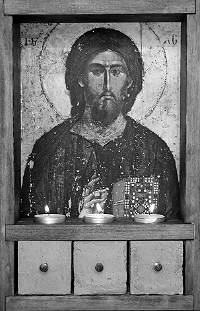
THE RECENT fever pitch of support for Mel Gibson's The Passion of the Christ among evangelicals throws into sharp relief the ambivalent view of the arts seen in much of the Christian community. In the view of many artists, their work tends to be ignored, sidelined or used for mere decoration -- unless it is deemed useful as an evangelistic tool.
For many decades, Christian artists have been hoping for greater understanding, and increased opportunities for expression in the church. Though some say this is beginning to happen, others argue that a little interpretive dance and a few paintings in the sanctuary do not add up to a true release of creativity.
A number of local churches and groups are attempting to bring about more openness in the area of the arts, while artists are giving more expression to the struggle to voice their art and faith within the context of the evangelical community.
Actor Erla Faye Forsyth, who has appeared in numerous professional theatre productions, expresses the feelings of many Christian artists. She recalls that, some years ago, she offered to create a mask piece for use in a church -- but was told "we're not ready for that."
"As an artist, your work is so much an extension of yourself, that a rejection of your work feels like a rejection of you," she said, adding that although she believes it is a church's right to set their own parameters around art, the comment felt more like "we're not ready for you."
This sentiment is understood by Rob Des Cotes, director of Vancouver Arts Network (VAN), an association of Christian artists established in the early '90s.
"Churches are often so busy asserting themselves and managing who they are, they don't have time for exploration . . . so they look for low risk or 'safe' artists," he said.
He added that VAN has a "high tolerance for artistic risk," and said he resists the idea of the arts fitting themselves into a church-- or simply providing sermon illustrations.
"This is a block for artists," he said. "We need to start with the artist, and who they are, and what motivates them. Why are they called to a particular art form, what is the spiritual connection?"
VAN initiated ManiFest Arts in 2000, an annual arts festival in Vancouver that features a variety of visual and performing artists. Des Cotes said the purpose of this festival is to discern the culture of contemporary Christianity, not to declare it or exegete anything.
"Our strategy is to encourage new work so we can further discern who we are and to facilitate the creation and presentation of art, to discover more of what the Spirit is saying to this generation and region," he said.
Des Cotes also leads a series of 'arts-expressed' and contemplative liturgical services on alternate Saturday evenings, in partnership with Fairview Baptist in the south Granville region of Vancouver. The services feature artists, ranging from jazz and blues singers to poets and dancers.
Des Cotes said the "flagpole" of VAN draws him into a network of touring Christian artists of high standard, who share a sense of community worldwide. One of VAN's most recent visiting Christian artists was Jason Carter, a professional guitar player from England with an eclectic mix of flamenco, jazz and classical stylings that has taken him around the world, including upcoming concerts and projects in Hong Kong and Helsinki.
Youth outreach
Another organization with quite a different mandate holds a similar view. The Warehouse is a new youth outreach located in a building just south of Broadway Church on Slocan Avenue in Vancouver. The property is owned by the church, but operated by the distinct CityReach Care Society.
MikeVoll, program director for The Warehouse, stated: "The arts are untapped by the Christian community." Within the array of the society's social outreach programs, they have a place for photographers, painters, recording artists and actors to "give back" by using their talents to serve the community.
"There's a lot pent up in the youth culture; and through the arts, kids can express themselves and let what's deep inside out," said Voll. "It can help build true relationship. Creativity creates depth." It also gives a context "to discover what is happening at school and in the family." Voll downplays the idea that The Warehouse is a Christian organization, because "we care about the community, so we want to lower the fence of first contact . . . We don't want people to feel that they are to be preached at . . . or [that] they're just another notch on the belt. The whole model is servanthood."
Voll has created a strong relationship with Vancouver Technical Secondary School across the street, and has made it clear to school staff that he is not around to proselytize. This assurance, he said, has "intensified" the relationship. Many of the students frequent activity rooms at The Warehouse.
Cam Milliken, chair of CityReach, affirmed that the society wants to avoid aligning itself strictly with the evangelical community.
"We don't want to be looked at as just a Christian outreach. We want people's lives to be touched -- and have an open door to everyone, with both believing and non-believing volunteers," he said.
He also stressed the importance of creativity -- as studies show that involvement in the arts restores self-esteem.
"We hope that kids would use the arts to do that," he added, "because where do creative kids go? They are often outcasts."
The Warehouse has developed partnerships with eight organizations, in order to strengthen its community programming. One of those groups is Reel Light, a Vancouver-based group of Christians in the entertainment industry.
In exchange for the use of meeting facilities, Reel Light has put on a performance of the musical Anne -- based on Anne of Green Gables -- at The Warehouse, as a fundraiser for the CityReach Care Society. The group will continue to find ways to partner through performances and workshops.
Community
Debra Sears, one of the founders of Reel Light, says the organization was formed by a group of friends in the industry who were feeling marginalized on two fronts: they were not understood and supported in their careers by the church, because Christian values are not typically upheld in mainstream entertainment; and they were also ostracized by co-workers for their faith.
"The word 'community' has emerged as a focus, and we have seen a community of believers develop, a group that calls on one another for support and prayers -- and increasingly, Reel Light attendees are working on projects together," she said.
Sears also indicated that Reel Light is reaching some 'seekers' in the industry, and is attracting believing artists internationally through their website, www.reellight.org.
The primary role of the group is encouragement. It has several offshoots, including a writers' group; a Bible study; and an intercessory group connected with the Hollywood Prayer Network.
A sense of 'double marginalization' of artists is also felt by theatre artist Stephanie Autumn Anderson. A pastoral assistant in liturgy and the arts for Tenth Avenue Alliance Church, she maintains that the artistic community is generally more supportive -- and often acts more like church than the church does.
She sees her pastoral role as one of mediating God's healing to artists who have been on the margins of the church -- to encourage them as they pursue their creative giftings. She maintains that many artists who disaffiliate from church often do so because of the lack of quality art in most churches.
"When I became a Christian and saw 'Christian theatre,' I shuddered at what I saw -- and came to see those two words as an oxymoron. It might have been 'Christian,' but it definitely was not authentic, quality theatre -- it was propaganda under a thin guise. It was nothing I wanted to be associated with as a professional actor or director."
Anderson also felt she had to "make a choice to leave my study and work in theatre, and 'choose God,' when this choice had nothing to do with sin -- but had more to do with a narrow view of art, of unbending church and Bible study schedules that favoured nine-to-fivers over shift workers, and completely missed God's calling to many in difficult secular workplaces."
Financial bias
This also showed up in a bias against the "starving artist," in which "anyone without a steady source of income has their character constantly questioned. Do we question our missionaries when they are not at their full funding level, if they are following the will of God? Of course not! But when an actor asks you to pray for more auditions, or a painter for more commissions, we treat them like they must be out of God's will if they are struggling . . . and perhaps they should look for a 'real' job."
Anderson was part of a small group who initiated a monthly meeting called Arts @ Tenth: Redreaming the Arts, a "bridge between artists and the church" for encouragement, pastoral care, healing and reconciliation. Another initiative has been to host outings to arts events. This provides another bridge between artists and non-artists, as well as believers and non-believers -- and can be a way to "bless the city," she said.
"It's an organic group, not a program -- we strive to listen to the needs of our artists and respond to the work of the Spirit among us."
Stepping out
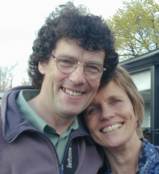
Theatre artists Nick and Joy Hunter have also been watching the emergence of creativity in the church. However, said Nick, "Some artists must step out of the church for survival, because the atmosphere is too stifling and they cannot breathe. Nobody is prepared to listen, to try to understand or accommodate the artist. The church is often wary of mystery or imagination."
The Hunters recently moved to Sidney, B.C. from Toronto. Originally from England, where they trained as professional actors, the two have been using their drama skills for the past 16 years in a place where it has been readily accepted -- the prison system.
"We come in the side entrance, where people's defences are down," Joy stated of the couple's ministry, 'Down to Earth' -- which involves performing drama workshops in various venues, to "invite people to re-imagine their lives . . . for a more authentic Christian faith and worldview."
Over the past six months, the two have peformed their "drama therapy" in William Head Institution on Vancouver Island and at Mountain Institution in Agassiz.
"The church," Joy commented, "doesn't look after its artists the way it does its missionaries. They have fallen through the cracks. Instead of thinking outside the box, we create God in our image . . . there are no curves or surprises. But it is the artist's whole business to see things in a different way."
"But if the artist brings something that doesn't 'fit,' then we ignore it or even destroy it," asserted Nick. "The artist sometimes sees beyond -- and although beyond may not be pleasant, we must be true to the vision."