
May 2004
Books offer powerful insights into Christ's passion
BC Christian News, · Arts
THE PASSION of the Christ is a cultural phenomenon. Among other things, Mel Gibson's extraordinary portrait of Jesus' suffering has become a catalyst for the release of several insightful books on the subject.
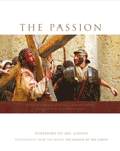 Utilizing dramatic photos from the film, The Passion (Tyndale, 2004) distills the key elements of Christ's ordeal. In his foreword, Gibson says he conceived of the film a decade ago, after a period of "terrible, isolated emptiness." He was also inspired by a concept embodied in the classical Greek term aletheia -- which means 'unforgetting.' His film, he says, is "contemplative in the sense that one is compelled to remember (unforget) in a spiritual way which cannot be articulated, only experienced." That experience is powerfully evoked in this fine book.
 In Experiencing the Passion of Jesus (Zondervan, 2004), a study guide for the film, Lee Strobel commends Gibson for "making it impossible for me -- or anyone else who sees his film -- to ever gloss over the severity of Christ's sufferings again." He cites other perceptive views on the passion -- such as this from Dorothy Sayers: "It's curious that people who are filled with horrified indignation whenever a cat kills a sparrow can hear the story of the killing of God told Sunday after Sunday -- and not experience any shock at all."
 In Behold . . . the Man! (W Publishing Group, 2004), Charles Swindoll movingly evokes Jesus' plight: "Beaten beyond recognition, blood seeping from head to foot, thorns digging in his head, fragments of flesh torn off his body, the carpenter from Nazareth . . . was a long way from Bethlehem's manger."
He also shares important insights into the theological meaning of the crucifixion. "One of the seven phrases Jesus uttered from the cross was 'My God, my God, why have You rejected Me?' Believe it or not, he was quoting from Psalm 22."
Swindoll points out that, in this scripture, King David predicted that the suffering Messiah's "hands and his feet would be pierced. None of his bones would be broken. His garments would be divided, and they would cast lots for his clothing. He would be the object of scorn and mockery. Remarkably, David penned all of those details over 900 years before they actually happened, right down to the final details."
 Recently reissued in paperback is John MacArthur's The Murder of Jesus (Word Publishing, 2000), one the very best assessments of all the events surrounding the crucifixion.
"This was the worst miscarriage of human justice in the history of the world," MacArthur writes, adding: "The crucifixion of Christ was also the greatest act of divine justice ever carried out . . . The death of Christ secured the salvation of untold numbers, and opened the way for God to forgive sin without compromising his own perfectly holy standard."
The author emphasizes that the Jewish justice system was originally a model of fairness. Then he demonstrates that this system had become extraordinarily corrupt in Jesus' day. Christ's trial, he writes, was "unjust and illegal by virtually every principle of jurisprudence that was known at the time."
Among other things, "criminal trials were not to be convened at night, and if a trial was already underway when nighttime fell, court was to be recessed until the following day." This, and many other principles "were openly flouted in the trial of Christ."
MacArthur identifies the high priest, Annas, as the chief architect of a blatant frame-up worthy of a Humphrey Bogart flick. Annas, he states, "functioned very much like a modern organized crime boss." The priest and his sons "had grown wealthy at the expense of people who came to worship God [They] had managed to turn the high priesthood into an incredibly profitable business," involving the money changers and animal merchants in the Temple.
MacArthur convincingly concludes: "No wonder Annas was so determined to eliminate Christ. Jesus had repeatedly been a threat to Annas' business interests."
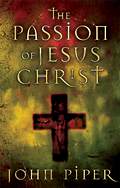 In light of the unfair accusations of anti-Semitism levelled at Gibson's film, John Piper's The Passion of Jesus Christ (Crossway, 2004) is especially welcome.
"It is a tragedy," he writes, "that the story of Christ's passion has produced anti-Semitism against Jews and crusading violence against Muslims." He confronts the sad fact that centuries of anti-Jewish misinterpretations of scripture promulgated notions which led directly to the Holocaust.
This leads to a profoundly compassionate and challenging passage: "Is it possible to think, not of Christ's passion leading to Auschwitz, but of Auschwitz leading to an understanding of Christ's passion? Is the link between Calvary and the [concentration] camps a link of unfathomable empathy? Perhaps only Jesus in the end can know what happened during the 'one long night' of Jewish suffering. And perhaps a generation of Jewish people, whose grandparents endured their own noxious crucifixion, will be able, as no others, to grasp what happened to the Son of God at Calvary."
We can only be grateful that Mel Gibson's classic film has given a public platform to such thought-provoking ideas.