
CanIL opens major new linguistics facility at TWU
BC Christian News, · Top Stories

NAMED AFTER John Wycliffe, the first person to translate the Bible into English, Wycliffe Bible Translators has been operating for seven decades.
Wycliffe's educational arm in this country is the Canada Institute of Linguistics, based in Langley. Last month, CanIL opened a permanent facility on the campus of Trinity Western University.
The significance of the new building is more than just new facilities, according to director Mike Walrod. "It helps us meet the need to recruit and train many, many more people for the still so enormous task of Bible translation worldwide."
The cross-cultural scope of CanIL's programs is enhanced by its increasing appeal to students from around the globe; in recent years, students have come from 30 nations.
"This actually helps us in that we have our students interacting with fellow students from different nations right on campus," says Walrod.
CanIL's programs include translation, language and culture learning, linguistics and literacy. It integrates scholarship with service to language communities worldwide.
In addition to their affiliation with Christian organizations, CanIL faculty regularly contribute papers to Canadian and American linguistic associations and are regularly requested to present and publish papers on their research and work in linguistics.
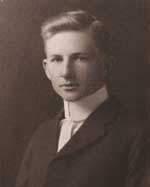
Wycliffe's work had its origins in 1917, when American evangelist Cameron Townsend unsuccessfully attempted to sell Spanish Bibles to the Cakchiquel people of Guatemala. Upon discovering that they had no written form of their own unique language, he began living among them. He set out to learn the language, then created a written alphabet for it. Within 10 years, he had translated the New Testament into Cakchiquel.
Inspired by this experience, Townsend established Camp Wycliffe in Arkansas in 1934. His aim was to train young people in linguistic skills and translation techniques. The following year, he and five others began work in Mexico. From that point on, Wycliffe grew to become a widely-respected ministry with thousands of people operating in many parts of the world. The organization now works with various universities, non-profit agencies and governments to bring scripture to indigenous peoples -- often in cultures where standard missionaries are not welcome.
One of their most recent projects was the completion of a New Testament translation for the Dogrib people of Canada's North West Territories.
Wycliffe has further connections to the academic world through its sister organization, SIL International. Begun in 1942 as the Summer Institute of Linguistics, SIL has established itself as a credible entity in the secular realm.
"SIL is highly respected and highly visible in linguistic circles, at least in the fora I am privileged to attend," says Jerold A. Edmondson, who was for several years chair of the linguistics department at the University of Texas in Arlington (UTA). "I have worked with very competent [SIL] people in the field, who have great local language skills -- and who have been able to work 'within the system' in some difficult countries, such as China . . . I would say that the reputation of SIL has grown over the last 20 years."
-- additional reporting by Audrey Martin