
'Secular saints' offer real spiritual insights
BC Christian News, · Arts
 |
• Steve Stockman: The Rock Cries Out, Relevant Books, 2004.
HOSTING The Gospel Show, an Irish radio program that featured "the best of what was happening in contemporary Christian music," Steve Stockman found himself repeatedly showcasing artists with no Christian commitment whatsoever.
As his source material changed, Stockman, a Presbyterian minister, was surprised. "I regularly discovered that those without a faith had said something more spiritual than those claiming to be making 'Christian' music." The show's title was eventually changed to the more appropriate Rhythm and Soul.
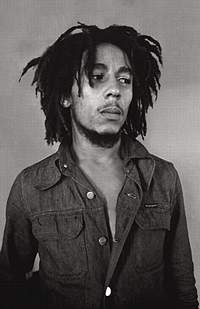
Except for Lauryn Hill, the artists profiled in The Rock Cries Out -- whom he describes as 'secular saints' -- have never publicly professed a Christian faith.
Stockman is hard on the church, and rightly so. At the outset, he declares: "This book isn't just about rock criticism, it's about changing the world." He observes how Christianity "has had a marvelous ability to dismiss anything for which an opposing ideology or faith view stands." Thus, the socialism of the New Testament -- giving to those in need -- is equated with Marxism.
As an example of biblical thinking appearing suspect, Stockman cites Martin Luther King, who worked with the leading lights of the folk establishment (Bob Dylan, Odetta, Phil Ochs, Peter, Paul & Mary) to help banish government--sanctioned racist policies in the U.S. during the 1960s.
During the same era, the more conservative Southern Baptist Convention spent millions sending missionaries to Africa, yet refused church membership to blacks living in America.
Stockman maintains that King's influence -- taking Christ's radical message to the streets -- eventually helped inspire Bob Dylan's conversion to Christianity. Bob Geldof is quoted on how Dylan "scooped the whole of American folk music . . . and married it to the Psalms, the poets, the Old Testament and hurled it at my head, articulated the inchoate urge I was feeling."
Dylan -- who never claimed to be a prophet -- was far more effective in reaching his generation than those who professed to have the answers. He came across like a figure straight out of the scriptures, blasting truth in the form of popular song. 'The Times They are a Changing,' 'Ballad of a Thin Man' and others warned of changes coming fast and furious, which either took you up or left you behind. For those who had ears to hear, the floodgates had opened.
When one of his students asked about Christian artists who incorporate political messages and righteous anger, Stockman replied: "The Christian industry would never allow songs on such subjects."
Ani DiFranco created her own label to release discs simply because they needed to be heard. Profit was never the bottom line. If only Christian record labels would take the same initiative.
Stockman argues that CCM discs are marketed in a dubious manner -- aping the worst of the mainstream, with good looking young people mimicking what's already popular -- when "the world is in need of an alternative, and where you would expect it, the opportunity is ignored."
Since becoming a father, Bruce Springsteen's songs, once coloured with Old Testament retribution, are far more likely to be filled with a New Testament grace. Springsteen's most recent DVD, Live in Barcelona, is a celebration of life, with a sense of joy too often missing or contrived in the CCM world.
Artists like Bob Marley, a Rastafarian, were always clear about their faith. He may not have been an orthodox Christian, but many of his spiritual insights and prophetic lyrics continue to have tremendous power.
Rastafarians rejected Christianity as the white man's slave religion, but Marley still drew heavily on the Old Testament and, in particular, reflected God's love for the poor and oppressed. Asked what it takes to be a Rastafarian, Marley replied: "You must start by being born again." We may differ on what exactly that means, but he -- as so many others in this book -- shares a glimpse of God's kingdom with us.
David Gray, Kurt Cobain, Jackson Browne, Radiohead, Joni Mitchell and Tom Waits are also profiled in Stockman's book.