
Hope for the Downtown Eastside
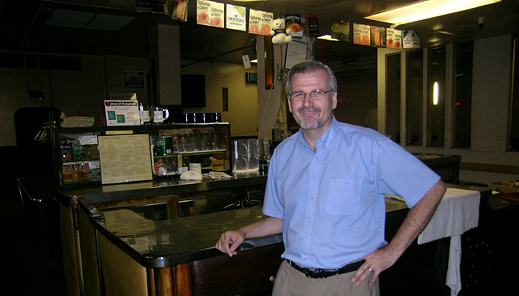
VANCOUVER'S Downtown Eastside is a "spiritual gift to the city" says social activist and poet Bud Osborn.
While Osborn is intimately familiar with the long list of physical, social and spiritual ills rampant throughout the area's residents, he sees something that many outsiders don't -- that there is still a real community to be found amongst the addicts, prostitutes and criminals. It's not just a dumping ground.
Call him a 'silver lining' kind of guy, but Osborn's not the only Christian working in the city's own compact third world who sees that community as more than just a place that needs to be either cleaned up or cleared out. There are others, including those who call themselves "social entrepreneurs," who are not only renovating buildings in the area, but are transforming lives in the process. They all know how daunting the task is, but they are seeing progress in one small segment of the population (or portion of a block) at a time.
When the Christian community talks about transformation, spiritual change is most often the focus. However, most will agree that that spiritual change can take many forms. In this context, many transformation efforts now gaining momentum are based on transforming the literal landscape first.
Gordon Wiebe is a former pastor of Langley's Christian Life Assembly, who obeyed the call to his own Nineveh.
Wiebe took a room in a skid row rooming house last year. At the same time, Vancouver businessman Hart Molthagen was praying for a "retired pastor" who would be willing to live in and run the rooming house he and business partner David Ash were renovating. The three joined forces, and now Wiebe and his wife help oversee the Dodson Rooms on Hastings, and the Jubilee on Main. The workers in the establishments are all indigenous to the neighbourhood.
Climbing Everest
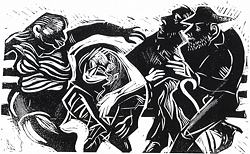
This summer, Wiebe took the final step. He and his wife sold their Langley residence, and now call the Downtown Eastside home. He likens moving downtown from the suburbs to climbing Mount Everest. "First we had to establish base camp, until we got used to the air down here," he says.
Rooming houses, which offer the only form of affordable housing, remain a central focus of the drive to stabilize and improve the community. Last month, city officials closed down both the Marr and American hotels because of what they called "deplorable" conditions. The two hotels were also reportedly linked to organized crime.
In order to make such headlines a thing of the past, Wiebe and his associates are promoting a 'best practices' initiative among the single-room occupancy hotels. Best practices refers to high standards in areas such as improving the quality and quantity of physical space, making the onsite pub cater better to nutritional needs, and hiring indigenous staff. The sites, he says, should be "clean, safe, affordable and supportive." The National Housing Initiative is studying the concept.
"Where people live, that's where the differences can be made," says Wiebe. He calls the best practices idea a "tipping point," which indicates how the community is doing.
"A facility adopting best practices can change the entire block. One way it helps is by turfing out organized crime."
Gentrification
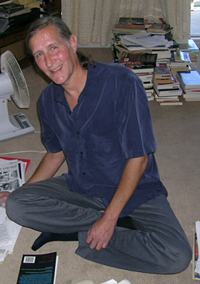
Along with stemming the tide of crime, the community -- if it is to exist at all -- must also resist "gentrification," says Osborn. If developers move in and increase the value of the real estate there, residents will disperse because they will no longer be welcome, he believes. "How the Woodward's building goes really determines how everything goes," he says. "It will determine what will ultimately become of the community."
In his estimation, if a non-profit, community-minded group wins the bid to take over the central landmark building, the area's future will look brighter. If a developer who plans to 'upscale' the building wins, the current community will be displaced. "It will send a strong message one way or another. For instance, even coffee shops that are now geared to people on welfare will change and start catering to people with much higher incomes. Poor people begin living in 'islands' in communities that are highly upscaled."
 |
Osborn says many Christians have been involved in the fight to keep Woodward's from being upscaled. Those people are not all from the staunch left-wing, social justice arm of the church. He points out that 300 letters supporting social housing for the building were sent to City Hall by members of St. Augustine's in Kitsilano, after he spoke to the congregation there.
Another group, led by Christians for Reconciliation, seeks to help the aboriginal population in the area establish an 'Indian Town' -- much like Chinatown -- where the large aboriginal population can "find pride in practicing their own culture, even in the business side" says spokesman Bill Chu. The group includes a long list of supporters, including the Japanese Citizens Organization, the Union of BC Indian Chiefs, the Chinatown Revitalization Association and the Chinese Merchants Association.
Beyond charity
 |
Many different ministries have a long heritage of aiding the people of the Downtown Eastside. The Salvation Army and Union Gospel Mission are two of the stalwarts, but there are also many smaller groups and churches that have been doing their part to make sure people are clothed, fed and housed. But that model is only one way to help the neighbourhood. "The community, if it only had a charitable response, would be lost," says Osborn. "There also has to be room for social justice and confrontation."
According to Wiebe, there are basically three 'models' at work in the area. From his perspective, there doesn't seem to be a lot of optimism from those touting a social science model -- often secular -- meant to stabilize and eventually clean up the neighbourhood. And many of the church groups, who have run on the charitable model for decades, are becoming "fatigued." But the social entrepreneurs are optimistic that their way of doing things is making new headway.
One notable element of that model is the freedom from being dependent on donations and the chance to take a few risks. For instance, when Molthagen and company bought the Dodson, the hotel came with a pub and liquor license. "We could have taken the prohibition approach and closed the pub, or we could have leased the pub out and lost control of the situation," says Wiebe.
Instead, they opted to run the pub themselves, introducing a healthier, more neighbourly atmosphere and more nutritional food. "The rooms are so small, that the residents kind of see the pub as their living room." Wednesday nights, when the pub hosts a karaoke night and the main server runs the machine, Wiebe's wife even helps out by pouring beer -- not exactly a typical midweek scenario for a Pentecostal pastor's wife.