
John the Baptist's cave found?
BC Christian News, · International
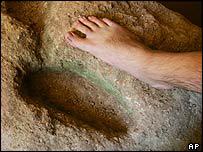
A BRITISH archaeologist says he has found a cave used by New Testament prophet John the Baptist. Shimon Gibson spent five years excavating the site near Jerusalem, unearthing objects apparently used in ancient purification rituals, according to a report from the British Broadcasting Corporation.
The BBC reports that images carved on the walls include that of a man with wild hair carrying a staff, said to be reminiscent of John -- whom the Bible says baptized Jesus. Some biblical scholars have questioned the find, which they say is inconclusive, the BBC said.
The 24-metre-deep cave is situated on present day Kibbutz Tzuba, about four kilometres from John's birthplace of Ein Kerem.
The BBC said Gibson's team found a quarter of a million pieces of pottery -- apparently from artifacts used in the immersion process. The explorers also uncovered 28 steps leading to a chamber containing an oval stone with a foot-shaped indentation and a niche -- apparently through which oil would flow, thus anointing a worshipper's foot.
"John the Baptist, who was just a figure from the gospels, now comes to life," said Gibson.
A wall carving appeared to depict John, who belonged to a sect which forbade followers from cutting their hair, the BBC said. Another carving of a face was symbolic of a severed head; John was decapitated by Herod Antipas, who ruled the Holy Land at the time of Jesus. According to a Reuters report, the wall carvings "stem from the Byzantine period, and were apparently made by monks in the fourth or fifth century."
"Nothing like this has been found elsewhere," Gibson said. "It is the first time we have finds from the early baptismal period . . . It is an amazing discovery that happens to an archaeologist once in a lifetime."
But some biblical scholars are treating Gibson's claim with caution, the BBC said. Stephen Pfann, president of the University of the Holy Land in Jerusalem, said the find was intriguing -- but that more work needed to be done.
Gibson told Reuters he believed the cave may have been inhabited in the early years of the Baptist's ministry, "when John sought solitude 'in the wilderness.'"
He also asserted: "In addition to John the Baptist, there's a possibility that Jesus used this cave as well." He did not elaborate.
- Assist News Service