
Christian Zionism not 'the Way,' says Palestinian priest
BC Christian News, · International
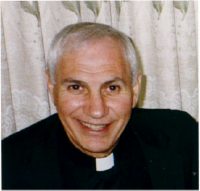 |
SABEEL is Arabic for 'The Way.' Sabeel Ecumenical Center for Liberation Theology in Jerusalem was established a decade ago "to develop a spirituality based on justice, peace, non-violence, liberation and reconciliation." Sabeel founder Naim Ateek, who has been an Anglican priest for 30 years, gave a lecture at SFU Harbour Centre in Vancouver October 12 He also spoke to BCCN about the Israeli-Palestinian conflict.
BCCN: What is the background of the Middle East conflict?
Naim Ateek: The Zionist movement started in the end of the 19th century; they were planning to take over Palestine long before the Holocaust. In 1948, Zionists forced the partition of Palestine into two countries. The Zionists also engaged in several massacres of unarmed people before the creation of the state of Israel. The most famous incident happened April 9, 1948 at Deir Yasin. My own family was driven out of their town a few days before the creation of Israel in May.
But the problem was not having more Jews coming to live in Palestine. Palestinians have said: "We've always had a Jewish community in the land. What's wrong with having more Jews in the land?" The problem is that the intention of the Zionists was to drive all Palestinians out of the land.
BCCN: What is your view of Christian Zionism?
NA: They are using certain passages in the Bible in a way that can't be justified. These passages reflect a very exclusive theology of land. Christians must look at the issue through a New Testament perspective. Jesus opens up the kingdom of God, in an inclusive way. God so loved the world – not just the Jewish people.
BCCN: Some Palestinian leaders have stated that Israel has no right to exist. What is your view?
NA: Personally, looking at the situation today, I would say Israel has a right to exist. It needs to exist. We must be concerned about the safety and freedom and security of the Jewish people there. But back in the 1940s, I would have said there was no need for Israel to exist. At that time, most Jews didn't want to go to Palestine. The promised land for them was America. It is not right for a group of newcomers to displace a people. Three quarters of a million Palestinians were displaced. I don't believe a God of justice would accept that. Christian Zionists say that it's all a fulfillment of prophecy; but they believe in a God who is biased.
BCCN: Is there a realistic possibility of the creation of a Palestinian state?
NA: I believe it could happen tomorrow. The state must be established on the West Bank and Gaza Strip, and must include Eastern Jerusalem; altogether, this is 22 percent of the land the Palestinians originally had. If that is achieved, Israel will be secure.
BCCN: Some Christian Zionists maintain that the concept of 'the Palestinian people' is a modern construct, with no real historical basis, no truly identifiable culture going back for centuries. What is your response?
NA: These are myths the Israeli government has created. Palestinians are a mixture of many different bloods, like the U.S. It's a mix of Roman, Greek, Armenian, Assyrian, Phoenician, Jewish and others; in fact, there is probably more Jewish blood in Palestinians than in the Jews from Russia. We've been known as Palestinians since the second century AD; after the second Jewish revolt, the Romans changed the name of the land to Palestine.
BCCN: According to some Christian Zionists, the real problems of the Palestinians are caused by corrupt leadership. How do you respond?
NA: We have corruption. We all recognize that these leaders need to be replaced. We haven't been able, because of the occupation, to have another election to get rid of them.
BCCN: To what extent are the suicide bombings of Israeli civilians motivated by an extremist interpretation of Islam?
NA: To a great extent. But that's not how it began. Before 1993, we did not have any suicide bombers. The occupation began in 1967. There was not one suicide bombing between '67 and '93. The original motivation was not religious; it was despair. Some of the bombers are secular; they are laying down their life for their people. [Some] Palestinian Muslims consider anyone who sacrifices himself – for the good of the country and the cause of God – to be a martyr. Also, because Israel is killing women and children – innocent people, not just combatants – they feel that doing the same is justified. But we must stop all of that. It is wrong.
BCCN: Some associate 'liberation theology' with armed struggle. What does this concept mean to you?
NA: I use the term because I believe the Bible is about liberation. Jesus is the great liberator – from sin, evil and injustice. It's not about armed struggle; it's about following the way of Jesus. I see this all throughout the New Testament.
Canadian Friends of Sabeel can be contacted at: Sabeel.ca