
Intriguing truths about the First Christmas
BC Christian News, · Christmas
The First Christmas (Kregel, 2001) is both a well illustrated and scholarly treatment of Christ's nativity. Author Paul L. Maier is one of the Christian community's most respected academics, specializing in ancient history and apologetics. He is best known to Canadians for his edifying appearances on 100 Huntley Street. His books include The First Easter; Josephus: The Essential Works; and A Skeleton in God's Closet.
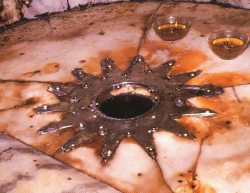
In The First Christmas, Maier explores all the key elements of history's most important birth, ranging from the Roman census and King Herod's violent tendencies to the Star of Bethlehem and the actual date of Christ's coming. In this excerpt, he gives his assessment of the famous Church of the Nativity in Bethlehem.
THE DOMINANT question in the mind of any thinking contemporary visitor to the shrine must be this: Did it all really happen here – at this spot? Though final proof is necessarily lacking, the surprising answer lurks closer to probably than possibly.
Where there is no direct archaeological evidence – and there could be none in the case of the birth of Jesus – nothing is more important in establishing the authenticity of an ancient site than antiquity: the place must have been regarded as such from earliest times.
If the Church of the Nativity had been built here in AD 600, for example, its claims to mark the authentic site of the birth of Jesus would be almost worthless. But Constantine the Great, the first Christian emperor of Rome, erected the original Church of the Nativity at this place in AD 326, over the very grotto that had been identified as the true site by the early church father Origen – and before him, Justin Martyr, writing in AD 150. Justin stated that Jesus was born in a cave that was used as a stable (not the typical stone or wooden stable so familiar in Christmas art).
Earlier still, in the 130s, the pagan Roman emperor Hadrian tried to desecrate the Jewish and Christian holy places in Palestine – but, ironically, thereby preserved their identity! After he had put down an insurrection by the Jewish nationalist and would-be Messiah, Bar-Kokhba, in AD 135, Hadrian expelled the Jews from Jerusalem and paganized all known holy places of Jews and Christians, erecting a temple to Venus at the site of the Holy Sepulcher in Jerusalem and a grove dedicated to Adonis over the Grotto of the Nativity in Bethlehem.
After visiting the latter . . . Origen later wrote: "In Bethlehem, the grotto was shown where Jesus was born. . . . What was shown to me is familiar to everyone in the area. The heathen themselves tell anyone willing to listen, that in the said grotto a certain Jesus was born – whom the Christians revere" (Contra Celsum, 1.51). – DFD